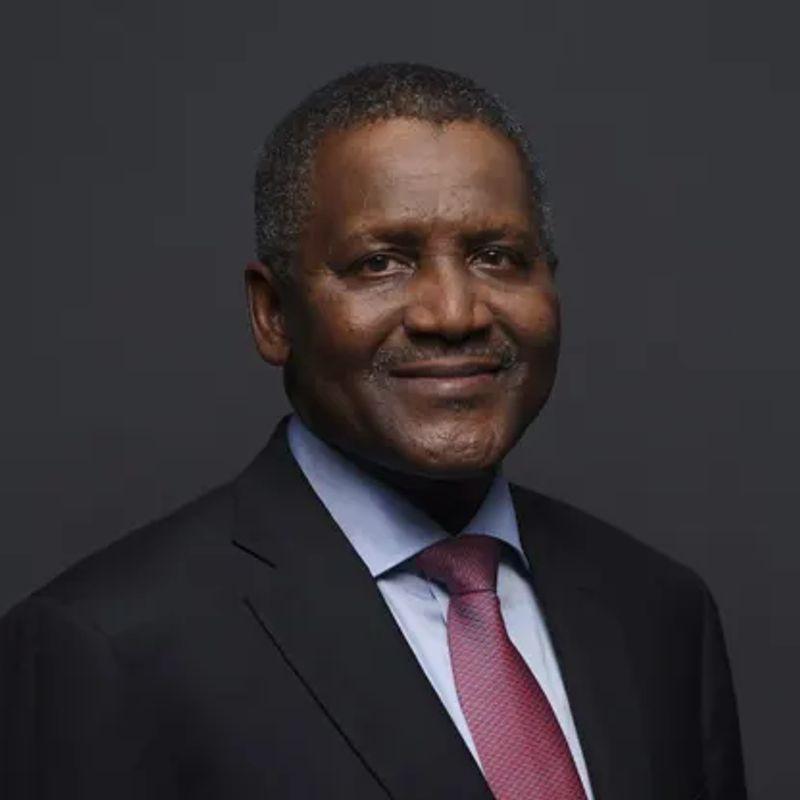
- Aliko Dangote has retained his position as Africa’s richest person, with his net worth rising to $28.5 billion
- Africa’s 23 billionaires collectively added $20.3 billion to their wealth in the past year, pushing their combined net worth to $126.7 billion, a 21% increase from 2025
- Nigeria maintained strong representation on the list with four billionaires including Dangote, Mike Adenuga, Abdulsamad Rabiu, and Femi Otedola
Africa’s richest individuals recorded a major rise in their fortunes over the past year, with the continent’s elite “three-comma club” adding billions to their collective wealth.
According to the latest Africa Billionaires Ranking released by Forbes on Monday, March 9, Africa’s 23 billionaires are now worth a combined $126.7 billion, marking a 21% increase from 2025.
Their fortunes grew by $20.3 billion in the last year, largely driven by strong equity market performances and stabilising currencies across the region.
Nigeria remains strongly represented on the list with four business leaders, Aliko Dangote, Mike Adenuga, Abdulsamad Rabiu, and Femi Otedola, ranking among the continent’s wealthiest entrepreneurs.
Dangote retains Africa’s richest title
Industrialist Aliko Dangote continues to hold the top spot as Africa’s richest man, with his net worth rising to $28.5 billion, an increase of $4.6 billion within the past year.
Shares of Dangote Cement surged by nearly 69% since March last year, following a strong financial performance that saw the company double its profits in 2025 to a record N1 trillion.
Dangote also recently announced a $400 million agreement with a Chinese machinery firm aimed at accelerating plans to double the production capacity of his refinery by 2029.
Rabiu records biggest wealth jump
Among the continent’s billionaires, Abdulsamad Rabiu recorded the most significant gain. His wealth surged 120%, an increase of $6.1 billion, bringing his fortune to $11.2 billion.
The BUA Cement chairman has now moved up to become Africa’s third-richest person, rising from sixth place last year. He now trails Johann Rupert, the South African luxury goods tycoon whose wealth is estimated at $16.1 billion.
Shares of BUA Cement climbed 135%, outperforming the Nigerian Stock Exchange, which gained 81% during the same period.
Another notable gainer was Michiel Le Roux, founder of Capitec Bank.
Shares of the Johannesburg-listed lender rose 57%, beating the 45% increase recorded by the local exchange.
Meanwhile, Nassef Sawiris of Egypt was the only billionaire whose fortune remained unchanged this year at $9.6 billion.
Sawiris holds stakes in Aston Villa and sportswear giant Adidas, where he is expected to become chairman in May.
Billionaires who lost wealth
Despite the overall surge, four African billionaires saw declines in their fortunes.
Moroccan property magnate Anas Sefrioui lost about $300 million after shares of Group Addoha dropped more than 30%.
Nigeria’s Femi Otedola also saw his wealth fall by $200 million, although he returned to the ranking after selling most of his stake in Geregu Power. Both men are currently valued at $1.3 billion.
On the overall rise in wealth, Forbes noted:
“The members of the continent’s three-comma club, which surpassed $100 billion in combined wealth for the first time last year, are richer than ever, having added a collective $20.3 billion to their combined fortunes as major equity markets across the continent rally and regional currencies stabilise. In all, these 23 dealmakers and moguls are worth $126.7 billion, up 21% from 2025.”
Self-made billionaires dominate list
Out of the 23 individuals on the list, 14 (61%) are self-made, while no women were featured in this year’s ranking.
With seven billionaires, South Africa has the highest number on the list, followed by Egypt (five), Nigeria (four) and Morocco (three).
The youngest billionaire remains Mohammed Dewji of Tanzania at 50 years old, while all others are over the age of 60.
Forbes explained that the ranking only includes billionaires who live in Africa or run their main businesses on the continent, excluding globally based figures such as Mo Ibrahim, Ivan Glasenberg, Clive Calder, and Elon Musk.
Net worth estimates were calculated using stock prices and currency exchange rates as of March 1, 2026, and compared with Forbes’ 2025 Billionaires list.
Privately owned companies were valued using revenue and profit estimates alongside comparable public company ratios.