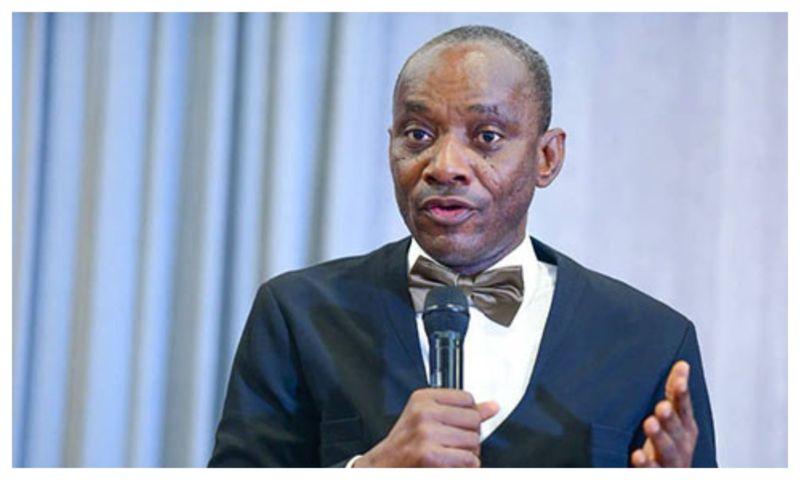
- Sam Amadi said Nyesom Wike is the driving force within a key PDP faction
- He claimed Wike holds more political influence than Bukola Saraki
- The remarks followed the PDP’s recent national convention in Abuja
The Director of the Abuja School of Social and Political Thought, Sam Amadi, has described the Minister of the Federal Capital Territory, Nyesom Wike, as the central force within a key faction of the Peoples Democratic Party (PDP).
Amadi made the remarks on Monday during a live appearance on Prime Time, a programme aired on Arise Television, while analysing developments following the party’s recently concluded national convention in Abuja. The PDP convention came shortly after that of the ruling All Progressives Congress (APC), drawing renewed attention to internal party dynamics.
According to Amadi, Wike’s influence within the PDP is not necessarily derived from formal hierarchy but from his role as the driving force behind a faction that continues to shape the party’s direction.
“Wike tried to be smart. He tried to say, we are all leaders. But clearly he didn’t fight back not because of hierarchy,” Amadi said, suggesting that the minister’s authority stems from his political effectiveness rather than official titles.
He further argued that former Senate President, Bukola Saraki, would likely concede to Wike’s influence, citing what he described as a disparity in political gravitas and institutional capacity.
“But again, the moving force behind this brand of PDP is Wike,” Amadi added. “Saraki… will concede that at this point, perhaps Wike has more political gravitas, more social capacity than he does.”
Amadi also suggested that Saraki has adopted a more conciliatory and less assertive role within the party, positioning himself as a unifying figure rather than a dominant force.
The comments highlight ongoing debates about leadership and influence within the PDP, as the party continues to navigate internal alignments ahead of future electoral contests.
Political analysts note that Wike’s reputation for decisiveness and his ability to mobilise resources have made him a significant figure within the opposition party, even as discussions about unity and cohesion persist.
As the PDP recalibrates following its convention, questions remain about how competing interests within the party will be balanced and who will ultimately shape its strategic direction moving forward.