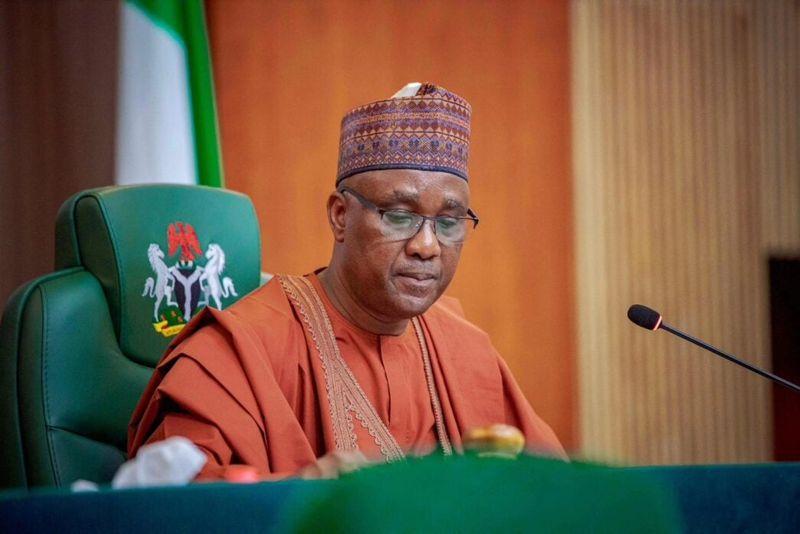
- The Speaker of the House of Representatives, Tajudeen Abbas, has said that the National Assembly approved a hybrid system of electronic and manual result transmission to prevent voter disenfranchisement ahead of the 2027 general elections
- Abbas argued that Nigeria’s limited internet penetration and unstable electricity supply make exclusive real-time electronic transmission impractical
- According to the Speaker, relying solely on electronic transmission could exclude millions of voters and reduce overall turnout
The Speaker of the House of Representatives, Tajudeen Abbas, has defended the National Assembly’s decision to adopt a hybrid system for transmitting election results, saying the move is aimed at preventing voter disenfranchisement and reducing apathy ahead of the 2027 general elections.
Abbas explained that the amended Electoral Act, recently signed into law by President Bola Tinubu, allows for both electronic and manual transmission of results, depending on the availability of infrastructure.
According to him, Nigeria’s limited internet penetration and unstable power supply make it unrealistic to rely solely on real-time electronic transmission nationwide.
The Speaker made the remarks on Sunday, March 1, during a courtesy visit by the Ambassador of Spain to Nigeria, Felix Costales, at the National Assembly complex in Abuja.
Addressing concerns over the system, Abbas said, “Sometimes, people scream far beyond the exact level of the issue.
“A lot of people think that we need to embrace electronic transmission in real-time in Nigeria, but within the very short period that you’ve been in Nigeria, you should be able to speak on the quality of our internet network.
“You should know that even in advanced cities like Abuja, you are not guaranteed stable internet services all the time.”
Citing data from the Nigerian Communications Commission (NCC), he added, “Based on the NCC report, they said Nigeria is still underserved by almost 40 per cent, which means 40 per cent of territories at large in Nigeria are not covered by the internet.
“Now, tell me, for those who are saying we should go ahead and do that…if we are to introduce only the electronic system, it will further reduce the number, because 40 per cent of the country will probably not be able to vote, as they don’t have adequate internet services.
“It means what we should be expecting is not only disenfranchising the voters, as in denying some people the right to vote, but we will also record, perhaps, the lowest number of voters in the next elections.
“These are all avoidable. That is why we said, in our wisdom, the Electoral Act should be hybrid, a combination of both the manual and electronic systems. Where it is feasible to use the electronic, use the electronic transmission; where it is not possible, use the manual.”
Abbas maintained that critics of the amendment are aware of the country’s infrastructural gaps.
“The opposition, even though they know the truth, they are Nigerians, they live in Nigeria, they travel all over Nigeria, they know that the level of internet penetration in Nigeria is inadequate.
“There is no way you will be able to have transparent elections using an inadequate system, and, due to our energy crisis in the country, as well, we do not have enough electricity. The internet is always backed by energy.
“How do you power the entire country on the day of the election to have phones that are working and internet that is working, backed by adequate electricity? All those are challenges that, for now, will not be able to provide us the opportunity to do transmission in real time online.”
Describing Nigeria’s democratic journey as progressive, he said, “In our entire democracy, we will continue to improve year after year, election after election. I believe Nigeria, with the support of countries like Spain, will do better.
“We expect you to continue to guide us and give us all the technical advice and support to do better, particularly in the National Assembly, through collaboration between your country and our parliament.”
In his response, Costales said his visit was aimed at strengthening legislative diplomacy and deepening bilateral relations between Spain and Nigeria.
He expressed readiness to support Nigeria’s democratic process.
“You can count on us, whatever we can do to deepen Nigerian democracy. Yes, there may be challenges, but you can count on us in any way possible,” he said.
The amended Electoral Act clarifies the legal framework for transmitting election results, formally authorising both electronic and manual methods based on infrastructure availability.
While supporters have described the hybrid approach as pragmatic and realistic, critics warn that it could undermine transparency if not carefully implemented and monitored.