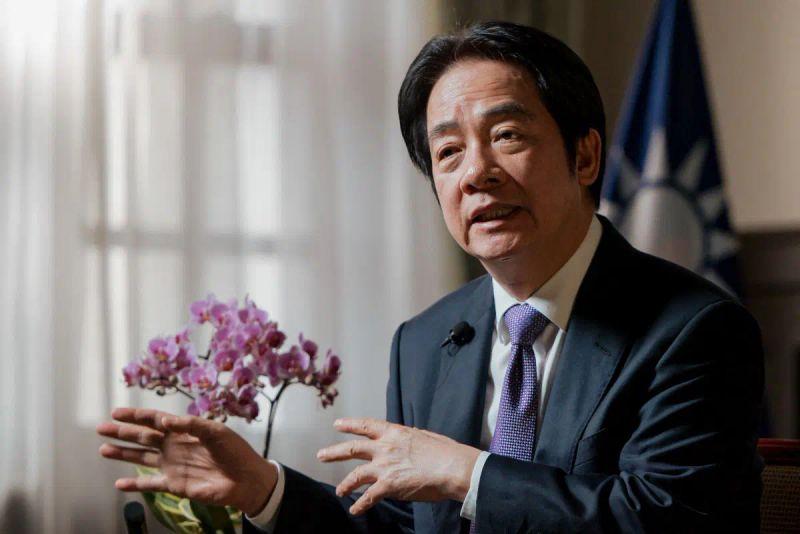
- Taiwan declared that it is already a sovereign and independent democratic nation
- The statement followed comments by Donald Trump warning Taiwan against formally declaring independence.
- Meanwhile, Chinese President Xi Jinping reportedly warned that mishandling the Taiwan issue could spark conflict
Taiwan has reaffirmed its status as an independent nation following comments by the United States President, Donald Trump, warning the island against making a formal declaration of independence.
The response from Taiwan came shortly after Trump concluded a state visit to China, where Chinese President Xi Jinping urged the United States not to support Taiwanese independence.
In a statement released on Saturday, May 16, Taiwan’s Foreign Ministry insisted that the self-ruled island is already a sovereign democratic nation and is not under the authority of Beijing.
“Taiwan is a sovereign and independent democratic nation and is not subordinate to the People’s Republic of China,” the ministry stated.
The ministry also defended continued US arms sales to Taiwan, describing them as part of Washington’s long-standing security commitment under the Taiwan Relations Act.
Trump, during an interview with Fox News, said he wanted both sides to ease tensions and avoid any action that could trigger conflict in the region.
“I’m not looking to have somebody go independent,” Trump said.
“I want them to cool down. I want China to cool down. We’re not looking to have wars.”
The US officially recognises Beijing as the government of China and does not formally support Taiwan’s independence.
However, Washington remains Taiwan’s most important security partner and is legally required to provide the island with defensive weapons.
During his meeting with Trump, Xi warned that mishandling the Taiwan issue could lead to serious conflict.
China continues to regard Taiwan as part of its territory and has repeatedly vowed to reunify with the island, by force if necessary.
Taiwanese President Lai Ching-te has maintained that Taiwan is already independent, making any formal declaration unnecessary.
Taiwan’s Presidential Office later highlighted repeated assurances from the United States, including statements from Trump and Secretary of State Marco Rubio, that America’s policy toward Taiwan remains unchanged.
Presidential spokesperson Karen Kuo said Taiwan looked forward to continued cooperation with the United States under the Taiwan Relations Act.
The comments also came amid discussions over future US weapons sales to Taiwan. Before the summit, Trump indicated he would discuss the matter with Xi, a move seen as a shift from previous US policy, which traditionally avoided consulting Beijing on Taiwan-related arms deals.
Taiwan’s parliament recently approved a defence spending package worth $25 billion, with a significant portion expected to fund military purchases from the United States.
Lawmakers say the spending will help cover an $11.1 billion arms package previously announced by Washington, alongside a proposed second phase of weapons sales valued at over $15 billion.
Speaking to reporters aboard Air Force One on Friday, May 15, Trump said a decision on future arms sales would be made “within a fairly short period of time.”
Taiwan’s Foreign Ministry stressed that the arms purchases are crucial for regional security and deterrence amid increasing military pressure from China.
Trump vows to press Xi to open China to US firms at high-stakes Beijing summit
Meanwhile, TheRadar earlier reported that the United States President, Donald Trump, had said he will urge Chinese President Xi Jinping to “open up” China to American businesses as he arrived in Beijing on Wednesday, May 13, for a crucial summit expected to address trade tensions, Taiwan, artificial intelligence, and the ongoing Iran conflict.
Trump, who described Xi as “a Leader of extraordinary distinction,” said he hopes American tech companies can gain greater access to the Chinese market.