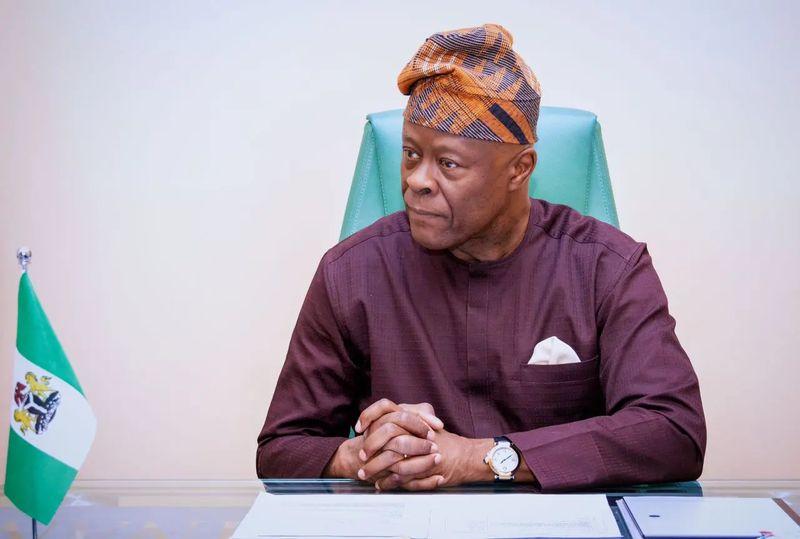
- Wale Edun emphasised Nigeria’s ability to refine crude locally as a key advantage during global economic uncertainty
- He noted private sector investment has been central to sustaining domestic refining and reducing reliance on imported products
- Analysts welcomed Edun’s remarks, saying local refining strengthens economic resilience and could boost industrial growth
The Minister of Finance, Wale Edun, has urged Nigerians to be grateful for the nation’s capacity to refine crude oil into petrochemicals and petroleum products, highlighting it as a key factor in the resilience of the economy.
Edun made the remarks on Wednesday during an interview on Channels Television’s programme, Politics Today, where he addressed the current state of Nigeria’s economy and its underlying strengths.
According to the minister, the ability of Nigeria to refine crude domestically, largely driven by private sector investments, is a critical advantage at a time of global economic uncertainty.
“I think we should be thankful at this time for the capacity we have in Nigeria to refine crude into petrochemicals and petroleum products,” Edun said. “America is now rushing to open another refinery.”
He emphasised that this domestic refining capacity has helped cushion the Nigerian economy against external shocks, particularly fluctuations in global oil prices. With Nigeria being a major crude oil producer, the ability to process crude locally into various petroleum products not only reduces dependency on imported refined products but also generates economic value within the country.
Edun’s comments come amid ongoing discussions about the state of the Nigerian economy, which has faced challenges including inflation, currency volatility, and declining foreign reserves. Analysts have noted that Nigeria’s refining capacity, though still limited compared to its crude production, provides a strategic advantage that could be leveraged to boost industrial growth and reduce pressure on foreign exchange.
The minister also pointed out that private sector involvement in refining is essential for sustaining this capacity, highlighting the importance of continued investment and policy support to expand the industry. By enhancing local refining capabilities, Nigeria could not only meet domestic demand but also position itself as a significant exporter of refined petroleum products in the region.
Economic observers have welcomed Edun’s remarks, noting that domestic refining has long been seen as a solution to recurring fuel shortages and as a means to stimulate economic diversification. They argue that maximising Nigeria’s refining potential is critical for long-term stability and for building resilience against global energy market volatility.
As Nigeria continues to navigate economic challenges, the Finance Minister’s emphasis on appreciating domestic refining capacity underscores the need to leverage existing strengths while seeking strategic solutions for sustainable growth.