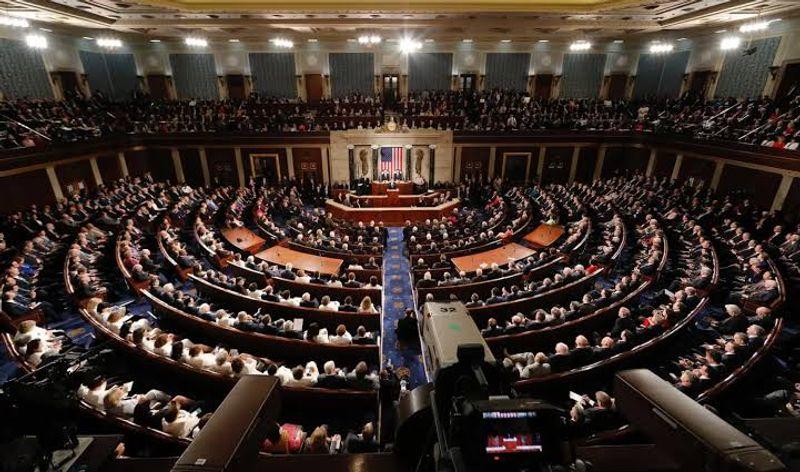
- US Congressmen Riley Moore and Chris Smith introduced the Nigeria Religious Freedom and Accountability Act of 2026 to strengthen accountability for human rights abuses
- The bill proposed sanctions on Fulani militias and former Kano State Governor Rabiu Kwankwaso over religious persecution
- Lawmakers said it aimed to protect vulnerable communities while reinforcing US commitments to global religious freedom
Washington, DC — A group of United States lawmakers has introduced new legislation aimed at increasing accountability for human rights abuses in Nigeria, in a move that could see targeted sanctions against Fulani militias and a prominent Nigerian political figure.
The proposed Nigeria Religious Freedom and Accountability Act of 2026 was formally unveiled by Republican Congressmen Riley Moore and Chris Smith, and is designed to strengthen the impact of previous US actions related to religious freedom and security cooperation in Nigeria.
The announcement was made via a post on X by Congressman Riley Moore, who emphasised the bill’s focus on defending religious freedom globally.
“Today, I am proud to introduce the Nigeria Religious Freedom and Accountability Act of 2026 with Rep. Chris Smith,” Moore wrote. He went on to stress what he described as the United States’ commitment to supporting persecuted religious communities abroad, stating: “The US is a Christian nation. As such, we must stand with persecuted Christians around the world.”
The bill comes against the backdrop of heightened international concern over sectarian violence and religiously motivated attacks in parts of Nigeria, particularly in regions where clashes between pastoralist communities and farming populations have escalated in recent years.
Lawmakers behind the legislation said it builds on earlier US actions, including former President Donald Trump’s designation of Nigeria as a Country of Particular Concern under religious freedom statutes, and the recently announced US–Nigeria Security Framework Agreement, meant to deepen bilateral cooperation on security issues.
According to supporters of the bill, it contains provisions that would empower the US government to impose sanctions on individuals and groups accused of perpetrating severe human rights abuses, especially those targeting religious communities. Among those mentioned in legislative discussions as potential targets of such measures is former Kano State Governor Rabiu Kwankwaso, who has faced criticism from some quarters for his administration’s implementation of Sharia criminal law.
Senior Counsel for Global Religious Freedom, Sean Nelson, lauded the initiative, describing it as a significant step in reinforcing accountability mechanisms. “Today Representatives Chris Smith and Riley Moore introduced a new bill on religious freedom in Nigeria increasing accountability measures, including recommendations for sanctions against Fulani militias and former Kano State Governor Kwankwaso, who introduced Sharia criminal law there,” Nelson said.
The bill, if passed, would direct the US administration to implement visa restrictions, asset freezes and other measures against specified actors deemed responsible for religious persecution, violent attacks or policies that significantly restrict freedom of worship.
While proponents argue the legislation is necessary to advance human rights and protect vulnerable communities, critics have cautioned against measures that could be perceived as foreign interference or that might complicate diplomatic relations between the United States and Nigeria.
The Nigeria Religious Freedom and Accountability Act of 2026 is now expected to be formally introduced on the floor of Congress, where it will undergo committee review and debate in both the House of Representatives and the Senate.
As debates unfold in Washington, the developments are likely to attract close attention in Abuja and across Nigeria’s political and civil society sectors, where discourse on security, religious freedom and international engagement continues to evolve.