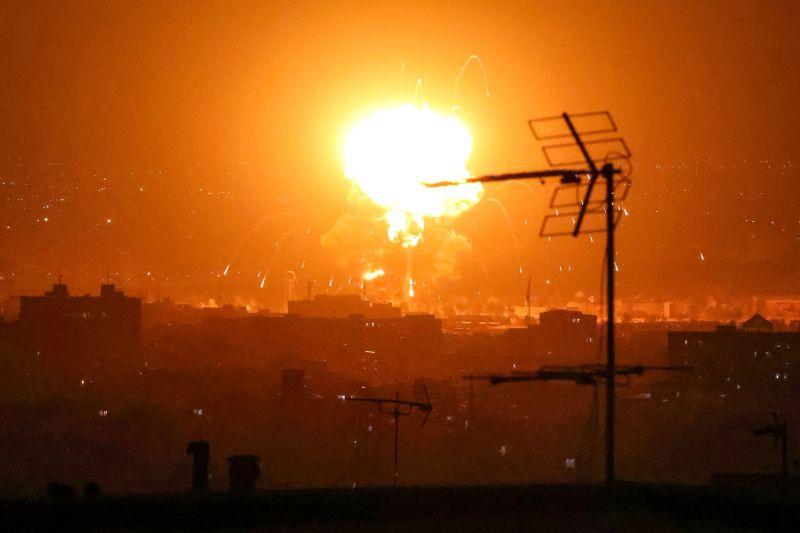
- The United States and Israel carried out overnight air strikes on five oil facilities in Iran, including sites in Tehran and Alborz Province
- Iran’s National Iranian Oil Products Distribution Company confirmed that four oil depots and a petroleum products transport centre were targeted
- Iranian officials insist fuel distribution remains stable, saying the country still has “sufficient gasoline reserves”
Joint strikes by the United States and Israel on oil facilities in Iran have killed at least four people and triggered fires across areas in and around the capital, Tehran, Iranian officials said on Sunday, March 8.
Explosions were reported overnight after air strikes targeted multiple oil depots and fuel infrastructure in Tehran and the neighbouring province of Alborz Province.
Thick smoke blanketed parts of the capital as residents woke to a dark haze and the lingering smell of burning fuel.
According to the CEO of the National Iranian Oil Products Distribution Company, Keramat Veyskarami, five facilities were hit during the attacks.
“Last night, four oil depots and a petroleum products transport centre in Tehran and Alborz were attacked by enemy aircraft,” Veyskarami told state television.
“Four of our personnel, including two oil tanker drivers, were killed in the incident,” he added, noting that the facilities “were damaged” but the “fire was brought under control.”
Despite the damage, Veyskarami said the country still has adequate fuel supplies, stressing that Iran’s oil depots have “sufficient gasoline reserves.”
Iranian media reported that the strikes sparked large fires at several major fuel storage and refining sites.
Among the facilities targeted were the Aghdasieh oil warehouse in northeast Tehran, the Tehran Refinery in the south of the capital, the Shahran Oil Depot in western Tehran, and another depot in the nearby city of Karaj.
The Iranian state-linked Fars News Agency said the strikes also hit an oil production transfer centre between Tehran and Alborz.
Witnesses reported that oil leaked from the Shahran depot into surrounding streets as firefighters and security forces worked to contain the blaze. Iranian authorities said fuel distribution across the country had not been disrupted.
Israel confirmed it carried out strikes against “a number of fuel storage facilities in Tehran” that were used “to operate military infrastructure.”
The latest attacks come as the conflict between Iran and the US–Israel alliance entered its ninth day, marking a major escalation in the regional war.
The fighting began on February 28 when the United States and Israel launched large-scale strikes across Iran that killed the country’s supreme leader, Ayatollah Ali Khamenei, according to Iranian authorities.
Iran responded with drone and missile attacks targeting Israel as well as US-linked facilities across the Middle East.
Officials say the war has already claimed more than 1,300 lives in Iran and around 300 in Lebanon, while about a dozen people have been killed in Israel.
Reporting from Tehran, Al Jazeera journalist Tohid Asadi said the strike on fuel infrastructure was a major escalation.
“This is not the first time. Back in June, during the 12-day war, we saw fuel depots being targeted, but this is unprecedented,” Asadi said. “We are dealing with a critical situation in terms of war and environmental circumstances in the capital.”
He described witnessing unusual environmental effects after the strikes.
“I saw black raindrops on my windows early on Sunday morning,” he said, warning that “there is a high risk of being surrounded by toxic air.”
Asadi also raised concerns about civilian casualties, noting that earlier reports already placed the death toll in Iran at about 1,300 people, a number likely to rise due to continued strikes.
Another Al Jazeera correspondent in Tehran, Mohamed Vall, suggested the strikes on oil infrastructure could be intended to pressure Iranian society.
He said the attacks appear to be part of a “psychological war” against Iranians, “to frighten them and make them believe that it’s really going to be the end for them.”
According to Vall, targeting fuel depots may also aim to restrict the movement of Iranian military forces.
“The Israelis are probably planning to cause a situation of crisis in terms of fuel in Iran, and Iranians will consider this as an act of aggression and terrorism,” he said.
However, he noted that Iran’s vast territory and multiple fuel facilities make it unlikely that the attacks alone would trigger a nationwide fuel shortage.
The strikes have further intensified fears of a broader regional conflict, with global powers already being drawn into the war and disruptions spreading across international energy and transport markets.