- The Supreme Court of the United States voids global tariffs imposed by Donald Trump, including duties on imports from Nigeria
- The Court ruled that congressional approval was required, limiting presidential authority over sweeping trade tariffs
- Trump criticises the decision, calling it “deeply disappointing” and blaming lack of courage among some justices
President Donald Trump has rejected the ruling of the Supreme Court of the United States, which struck down his global tariff policy affecting Nigeria and 184 other nations.
The court ruled on Thursday, February 19, that the tariffs imposed by Trump last year were unlawful.
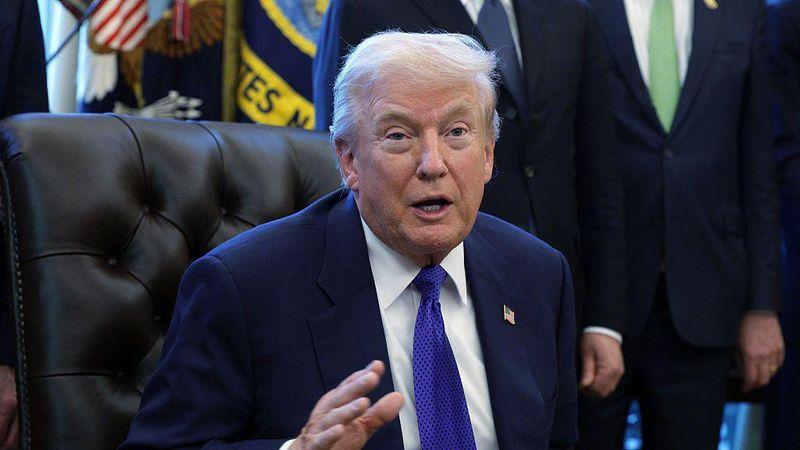
Reacting to the verdict at the White House on Friday, February 20, Trump expressed strong disapproval.
Reports from Al Jazeera quoted him saying, “The Supreme Court’s ruling on tariffs is deeply disappointing, and I’m ashamed of certain members of the court, absolutely ashamed, for not having the courage to do what’s right for our country.”
Trump had introduced a 10 per cent baseline tariff on imports from all countries on April 2, 2025, a date he called “Liberation Day”, alongside additional tariffs ranging from 11 per cent to 50 per cent on nations with large trade deficits with the United States.
His administration relied on the International Emergency Economic Powers Act, a law that allows presidents to regulate imports during national emergencies. Under the policy, imports from Nigeria were subjected to a 15 per cent tariff.
The tariff measures targeted countries such as China, Cambodia, and Japan, with duties rising as high as 50 per cent on trading partners including India and Brazil, and up to 145 per cent on China in 2025.
However, in a 6–3 decision, the Supreme Court ruled that Trump exceeded his authority by using an emergency law to impose broad tariffs without congressional approval.
Chief Justice John Roberts stated that allowing the administration’s approach would upset the constitutional balance between Congress and the executive branch on trade policy.
“Allowing the administration to prevail would replace the longstanding executive-legislative collaboration over trade policy with unchecked Presidential policymaking,” Roberts wrote.
He further rejected the argument that the emergency law permitted unilateral tariff decisions.
“The president asserts the extraordinary power to unilaterally impose tariffs of unlimited amount, duration, and scope. In light of the breadth, history, and constitutional context of that asserted authority, he must identify clear congressional authorisation to exercise it.
“The President must point to clear congressional authorisation to justify his extraordinary assertion of the power to impose tariffs. He cannot,” he said.
The ruling applied only to the “Liberation Day” tariffs and not to other tariffs imposed under separate legal authorities.
However, it left unresolved questions about whether funds already collected from the tariffs, estimated at $134 billion, should be refunded.
Data from US Customs and Border Protection and filings before the US Court of International Trade show that over 301,000 importers challenged the duties.
In his dissent, Justice Brett Kavanaugh warned that the decision created uncertainty about how the government should handle the collected revenue, noting that the process “is likely to be a mess.”
The case is considered one of the most significant economic disputes in recent years, questioning both the “Liberation Day” tariffs and broader duties on imports from China, Mexico, and Canada.
The government defended the tariffs as essential for economic competitiveness, while business groups argued that such levies required congressional oversight.
Legal analysts note that the president still retains certain statutory powers to impose tariffs, though those powers are more limited and subject to conditions such as time restrictions and sector-specific applications.
Lower courts had previously ruled against the emergency tariffs. In one case involving New York-based wine importer V.O.S. Selections, the trade court determined that the emergency law did not authorise the duties, a decision later upheld on appeal.