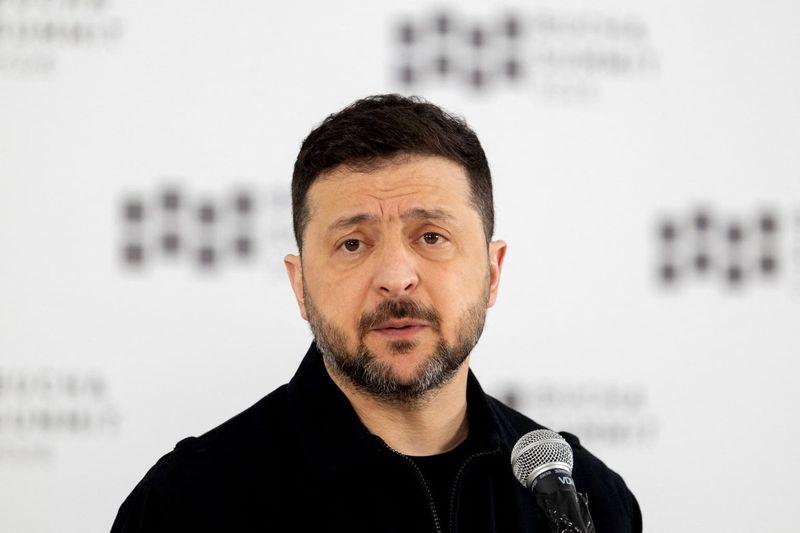
- Ukraine has offered to help secure and reopen the Strait of Hormuz using its Black Sea maritime experience
- Ukraine President Volodymyr Zelensky emphasised Ukraine’s expertise in naval drones, sea-lane protection, and counter-drone systems
- The Strait of Hormuz handles about 20% of global oil and LNG, making its disruption a major global concern
The President of Ukraine, Volodymyr Zelensky, has said Ukraine is ready to help restore safe navigation in the Strait of Hormuz, as tensions in the Middle East disrupt global energy supplies and trade routes.
Speaking in remarks made public Friday, April 3, Zelensky revealed that Kyiv has already signaled its willingness to support Gulf nations using its wartime maritime experience.
“No one has involved us specifically in the issue of the Strait of Hormuz. During my visits, I told representatives of the Middle East and Gulf countries: Ukraine is ready to help with everything related to defence,” Zelensky said.
Ukraine leverages black sea experience
Zelensky pointed to Ukraine’s success in reopening shipping corridors in the Black Sea following Russia’s blockade during the early stages of the war.
Kyiv has since developed advanced maritime tactics, including naval drones and coordinated sea-lane protection strategies, which it now believes could be applied in the Gulf.
“I believe that we have changed the attitude of the Middle East and the Gulf region toward Ukraine for many years ahead,” Zelensky added.
Ukrainian officials say their experience in countering drone threats, particularly those similar to Iranian-designed systems, positions them as valuable partners in securing critical waterways.
Hormuz crisis threatens global economy
The Strait of Hormuz, a narrow but vital chokepoint, handles roughly 20% of global oil and liquefied natural gas shipments. Its disruption has already driven up oil prices and raised fears of supply shortages worldwide.
Iran’s move to restrict access to the waterway comes in retaliation for recent U.S.-Israeli strikes, escalating a broader regional conflict and rattling international markets.
Ukraine has drawn parallels between the situation and Russia’s earlier blockade of the Black Sea, describing both as the “weaponisation” of key global trade routes.
Diplomatic push and security talks
Kyiv’s offer comes amid intensified diplomatic efforts to reopen the strait. Ukrainian Foreign Minister Andrii Sybiha joined a multinational meeting involving about 40 countries focused on restoring maritime access.
At the same time, the United Nations Security Council is preparing to debate a Bahrain-backed resolution that could authorize “defensive” force to protect shipping in the region.
Bahrain’s UN ambassador, Jamal Alrowaiei, stressed the urgency of the situation, warning that global economic stability is at stake.
Expanding Ukraine’s strategic role
Ukraine has also been strengthening ties across the Gulf. Zelensky recently visited multiple Middle Eastern nations and signed defence agreements with countries including Saudi Arabia and Qatar, while holding talks with others such as the United Arab Emirates and Jordan.
Kyiv is promoting its defence innovations, including counter-drone systems and maritime security expertise, as part of long-term security partnerships in the region.
Zelensky also noted that Ukraine’s National Security and Defense Council would soon present further details on ongoing cooperation efforts.
Risks and global implications
If accepted, Ukraine’s involvement could lead to multinational maritime patrols integrating its naval drone capabilities, potentially deterring further disruptions in the strait.
However, analysts warn that direct Ukrainian participation could provoke Iran or complicate relations with Western allies wary of escalating the conflict.
Meanwhile, U.S. President Donald Trump has indicated that countries facing fuel shortages may need to act independently, saying they should “go get your own oil” in the Strait of Hormuz.
As global powers weigh their options, Ukraine’s proposal highlights its growing ambition to extend its influence beyond Eastern Europe and position itself as a key player in international security.