
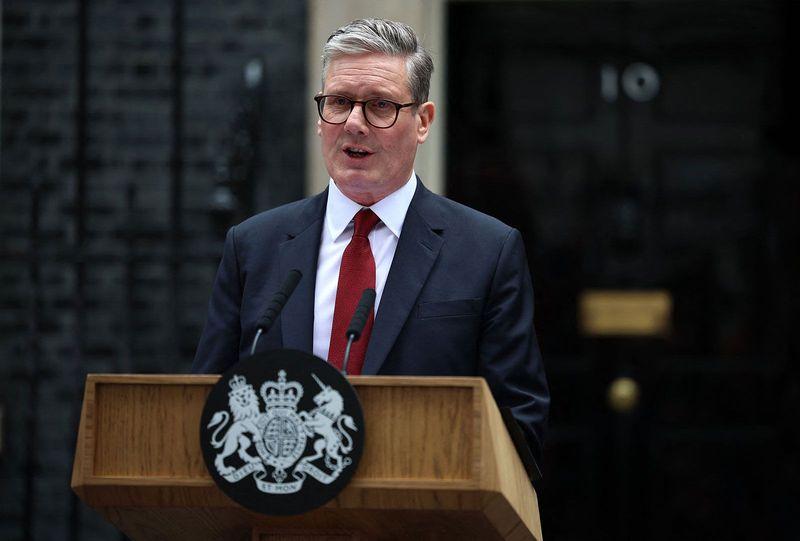
- The Prime Minister, Keir Starmer, announces the dissolution of NHS England
- Over 10,000 NHS England jobs are expected to be cut, with senior officials, including Chief Executive Amanda Pritchard, stepping down
- The move aims to eliminate bureaucracy and reinvest funds into frontline healthcare
The UK government, led by Prime Minister Sir Keir Starmer, has announced the abolition of the National Health Service England, marking a significant overhaul of the country’s healthcare system.
The move, aimed at streamlining bureaucracy and redirecting funds to frontline services, will see NHS England’s responsibilities absorbed into the Department of Health and Social Care (DHSC).
Starmer emphasised that bringing the NHS under ministerial control would enhance accountability and efficiency.
He described the restructuring as a way to put the NHS "back at the heart of government where it belongs" and remove unnecessary administrative layers that have contributed to inefficiencies.
The decision reverses the controversial 2012 NHS reforms introduced by former Conservative health secretary Andrew Lansley, which separated NHS management from direct government oversight.
The Health Secretary, Wes Streeting, described the move as the “final nail in the coffin” of those reforms, which, according to him, led to the longest waiting times, lowest patient satisfaction, and the most expensive NHS in history.
He stated that the shake-up would save "hundreds of millions of pounds," which would be reinvested in doctors, nurses, and patient care.
NHS England, established in 2013, has managed an annual budget of £200 billion but has faced criticism for inefficiency and administrative bloat.
Its workforce of approximately 15,000 employees and a £2 billion administrative budget have been cited as key factors contributing to rising costs.
Streeting highlighted that duplication of work between NHS England and the DHSC, such as separate communications and strategy teams, was slowing down decision-making and diverting resources away from patient care.
Job cuts and leadership changes
The restructuring is expected to result in up to 10,000 job cuts, with a 50% reduction in NHS headquarters staff.
Several senior board members, including NHS England’s Chief Executive Amanda Pritchard and Chief Medical Officer Sir Stephen Powis, are stepping down.
Sir James Mackey, who has been named as the transitional chief executive, acknowledged that the changes might be unsettling for staff but welcomed the clarity it would bring.
He stressed that the reforms would help shift the focus toward improving healthcare delivery.
Concerns over disruption and effectiveness
While the government argues that the changes will lead to better resource allocation and faster healthcare delivery, some experts and unions have raised concerns about potential disruptions.
Hugh Alderwick, Director of Policy at the Health Foundation, described the move as a “watershed moment” but warned that reshuffling NHS management structures has historically been distracting and rarely delivers the intended benefits.
He cautioned that expected cuts to local NHS management budgets could hinder the government’s ability to implement its healthcare improvement plans.
A former health minister expressed skepticism, stating that the government already had the power to direct NHS England and that abolishing it might be more of a political statement than a substantive reform.
“All that matters is whether they use technology to radically improve how the NHS is coordinated and uses data, without that, nothing will change,” he said.
Starmer reassured the public that the reforms were not a return to austerity but rather an effort to maximise efficiency.
He outlined three key priorities for the NHS moving forward:
- Transitioning from analogue to digital systems
- Shifting the focus from sickness to prevention
- Strengthening community-based healthcare over hospital-based care.
Despite some concerns, the opposition parties did not strongly challenge the move.
The Conservative Party did not object to the abolition of NHS England when Streeting addressed Parliament.
The Liberal Democrats acknowledged the need for major NHS reforms but urged the government to prioritise overhauling social care as well, warning that the NHS cannot be fully fixed without addressing challenges in that sector.
NHS approves £1.65 million sickle cell treatment with 96.6% cure rate
Meanwhile, TheRadar earlier reported that the National Health Service (NHS) approved a pioneering £1.65 million treatment for sickle cell disease in England, offering patients a remarkable 96.6% cure rate.
The new therapy is set to revolutionise the management of the inherited blood disorder, providing a potential long-term solution for those living with its painful and life-threatening complications.
