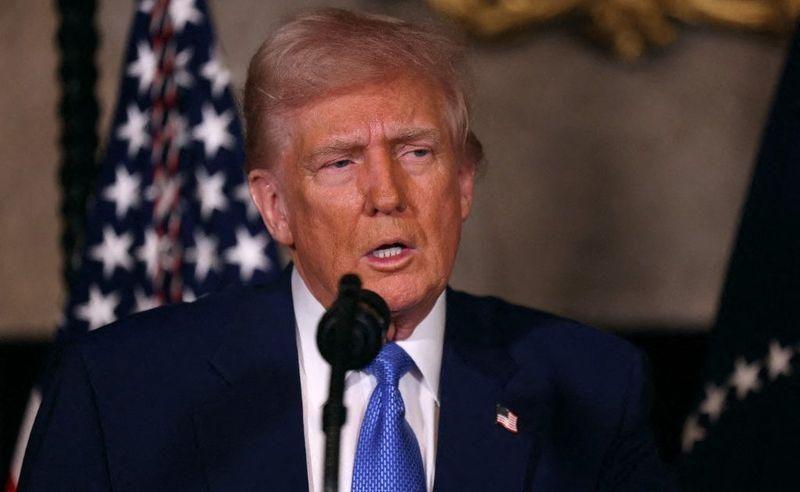
- The United States President Donald Trump has reshared a Truth Social post proposing the Strait of Hormuz be renamed the “Strait of Trump”
- The post featured a map relabeling the globally strategic oil route, sparking backlash and renewed controversy
- The post comes amid heightened U.S.-Iran tensions and renewed concerns over maritime security in the region
The United States President Donald Trump has triggered fresh controversy after resharing a Truth Social post proposing that the Strait of Hormuz be renamed the “Strait of Trump,” a move widely seen as provocative amid mounting geopolitical tensions.
The post, shared on Wednesday, April 29, featured a map of the strategically critical waterway relabeled with the suggested name, drawing swift global attention because of the Strait’s central role in global energy security.
Linking the Persian Gulf to the Gulf of Oman, the Strait of Hormuz remains one of the world’s most important shipping lanes, carrying a major share of international crude oil exports each day.
Although the gesture appears symbolic, it lands at a highly sensitive moment in U.S.-Iran relations.
The Strait has long served as a geopolitical flashpoint between Washington and Tehran, repeatedly emerging in disputes over sanctions, maritime security and freedom of navigation.
Trump’s latest post has therefore been interpreted less as policy and more as political provocation.
The reshared image also revives earlier comments in which Trump floated the idea of renaming the waterway, a suggestion that was broadly dismissed as inflammatory rather than serious diplomatic policy.
Despite the symbolism, any attempt to unilaterally rename the Strait would carry no legal force, as international waterways are governed by long-established conventions and globally recognised naming systems.
Even so, the timing of the post has unsettled already fragile energy markets. Investor concerns over possible disruptions to crude supply pushed oil prices higher, with Brent crude climbing to its highest level since mid-2022 as uncertainty surrounding the Strait intensified.
As reported by the Economic Times on Thursday, April 30, oil prices rose further as fears deepened over a prolonged U.S. blockade on Iranian exports and stalled nuclear negotiations, both of which have heightened concerns about tightening global supply.
Brent crude extended gains after reports suggested the Trump administration was unwilling to ease pressure on Tehran.
According to Axios, Trump rejected Iran’s proposal to reopen the Strait of Hormuz, signalling that the blockade could remain in place until a broader nuclear agreement is reached.
The standoff has further amplified market anxiety, with traders closely watching every signal from Washington and Tehran as fears of prolonged disruption in one of the world’s most vital oil corridors continue to grow.
Iran banks first Strait of Hormuz toll revenue as war standoff deepens
Meanwhile, TheRadar earlier reported that Iran had confirmed receiving its first proceeds from tolls imposed on vessels navigating the strategic Strait of Hormuz, marking a significant escalation in its economic response to the ongoing conflict involving the United States and Israel.
A senior Iranian lawmaker, Hamidreza Hajibabaei, that “the first revenue received from the Strait of Hormuz tolls was deposited into the Central Bank account,” according to state-affiliated media.
However, authorities did not specify the amount or the number of ships affected.