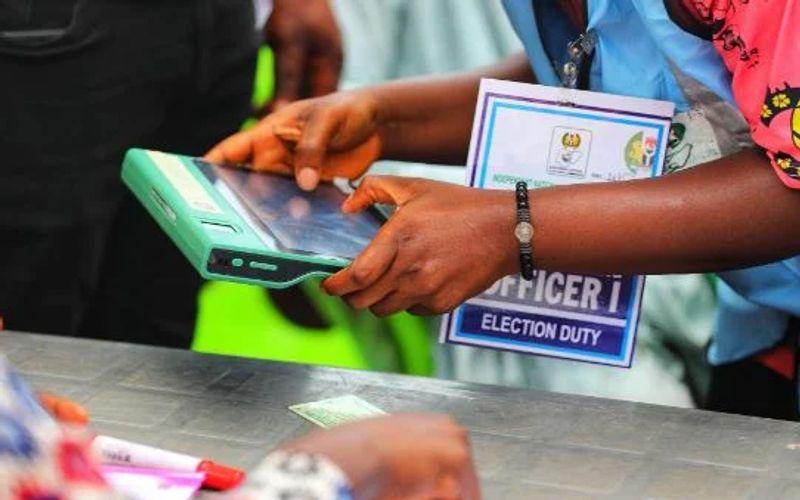
- PDP and ADC agents allege vote buying at Polling Unit 035 in Nyanya during FCT Area Council elections
- Opposition agents claim suspected APC intermediaries offered ₦1,000 to voters on the queue
- Allegations reignite concerns over voter inducement and electoral integrity in Nigeria
Agents representing the Peoples Democratic Party and the African Democratic Congress on Saturday accused the ruling All Progressives Congress of attempting to induce voters with cash at Polling Unit 035 in Nyanya, Abuja, during the ongoing Federal Capital Territory Area Council elections.
The allegation led to a brief disruption at the polling centre as opposition party agents openly challenged what they described as attempts by suspected APC intermediaries to distribute money to voters on the queue.
An opposition agent, who requested anonymity, claimed that certain individuals approached voters and allegedly offered them ₦1,000 in exchange for their support.
“Some people we suspect to be APC intermediaries came to speak with voters. They were giving ₦1,000, but we openly rejected and spoke against it. That was why the situation became unruly for a while, but calm was restored after they left,” the agent said.
An ADC agent also criticised the development and questioned the role of security personnel at the polling unit.
“They are sharing ₦1,000 per voter and security personnel are watching. How can such a thing be allowed? We will not tolerate it,” the agent said.
The confrontation momentarily unsettled the orderly voting process, as voters engaged in heated exchanges along party lines. At one point, a voter appealed to the protesting agents, warning that their actions could result in the cancellation of results from the polling unit.
Order was later restored after security operatives from the Nigeria Police Force and the Nigeria Security and Civil Defence Corps intervened and maintained surveillance at the scene, allowing voting to continue peacefully.
Commercial activities around the area were largely suspended due to the elections, with most shops and businesses closed. However, essential services, including the Nyanya General Hospital, remained operational.
Allegations of vote buying have continued to surface in Nigerian elections, raising concerns about the credibility of the country’s democratic process.
Electoral observers, civil society organisations, and the Independent National Electoral Commission have consistently warned that financial inducements compromise the conduct of free and fair elections.
Vote buying typically involves distributing cash, food items, or other incentives to voters either directly at polling units or through intermediaries.
The practice is often reported in closely contested local and off-cycle elections, where political actors seek to secure support through material rewards.
Although Nigeria’s Electoral Act criminalises voter inducement and prescribes penalties for offenders, enforcement remains a significant challenge.
Analysts have linked the persistence of vote buying to poverty, unemployment, and inadequate monitoring systems, which make some voters susceptible to financial influence.
In recent elections, monitoring groups have also highlighted increasingly subtle tactics, including coded exchanges, electronic transfers, and the deployment of agents near polling centres to facilitate inducement.
As efforts continue to strengthen Nigeria’s electoral system, stakeholders have called for stricter enforcement of electoral laws, enhanced voter education, and greater accountability to tackle the problem and rebuild public trust in the democratic process.