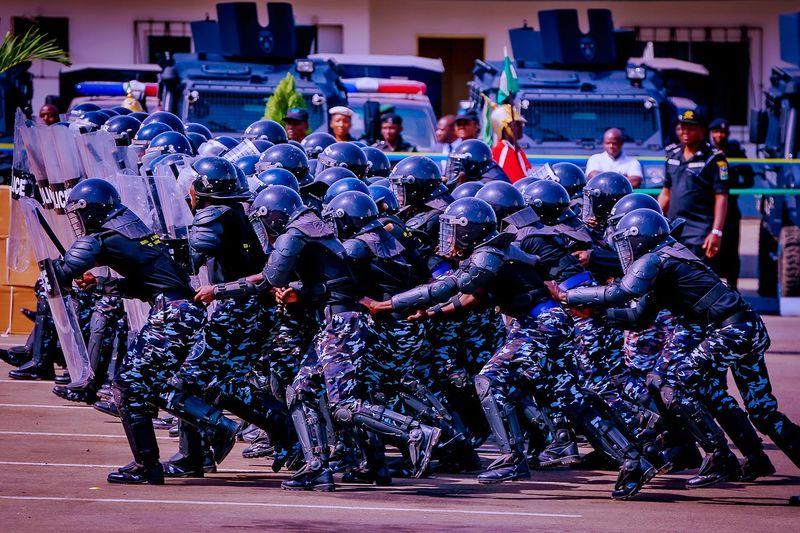
- Nigeria may soon operate two separate policing systems, a Federal Police and State Police structure
- The proposed state police framework would allow each state to establish and manage its own police force while still meeting national standards
- Supporters believe state police could improve local security responses, while critics worry about possible political interference and uneven policing standards across states
7 things to know about the proposed state police in Nigeria (and why it could change security forever).
If you live in Lagos, you’ve probably heard this line too many times: “Police are not coming.”
Now imagine a system where your state actually has its own police force, separate from the federal one.
That’s exactly what the proposed state police in Nigeria is trying to introduce, and it’s way bigger than just “adding more officers.”
Let’s break it down.
7 things to know about the proposed state police
1. Nigeria is about to run two police systems
Under the proposal, Nigeria would officially have Federal Police and State Police (one per state)
Yes, that means every state gets its own police body created by state law.
But the State Police won’t just “start working” automatically, they must first meet national standards set by the National Assembly before they can even operate.
So it’s not total freedom, it’s structured autonomy.
2. Who actually controls security now?
The Federal Police would still handle nationwide security, public order, and major federal issues, but State Police would focus on local crime like community disturbances, area-specific security issues, and local theft and violence.
However, the Federal Police can still step in, but only under strict conditions like total breakdown of law and order, a request from the Governor, or approval from a national policing body.
3. Governors are about to gain serious security power
Under the proposal, each State Police will be led by a Commissioner of Police (CP) appointed by the Governor.
But the Governor can’t just pick anyone. They must get recommendations from a national council and get confirmation from the State Assembly.
Even removal isn’t easy. A CP can only be removed through strict conditions like misconduct or incapacity, and still requires heavy approvals.
4. There’s a new “security boss level” coming
To prevent chaos, the proposal creates a powerful oversight body: the National Police Council.
Think of it as the “final authority” for policing decisions across Nigeria. It includes Federal officials, State Attorneys-General, human rights bodies, labour unions, traditional rulers, and retired police officer
Its job is to set standards, resolve disputes, and regulate both federal and state policing systems.
5. Money matters: Who funds state police?
Security is expensive, and this proposal knows it.
The Federal Government may provide grants to state police systems, but only on recommendation and with National Assembly approval. So states will still likely shoulder most of the financial burden.
That raises a big question:
Will app the states have the capacity to properly run their own police?
6. States can now “do their own thing” — but with limits
State Assemblies will now be able to create their own police laws, set funding structures, and build internal oversight systems, but they cannot go below national minimum standards.
So while states get flexibility, the federal structure still sets the baseline.
7. Why this matters more than most people realise
Right now, Nigeria operates under a heavily centralised policing system. The proposed change shifts the country toward localised security control, faster response to community issues, and reduced pressure on federal forces.
It also introduces risks of possible political misuse at state level, uneven policing quality across states, and coordination challenges between federal and state forces.
The proposal still depends on constitutional amendments passing through multiple layers of approval, National Assembly, State Houses of Assembly, and political negotiations.
Nothing is final yet, but one thing is clear:
Nigeria’s security structure is on the edge of its biggest transformation in decades and whether that change becomes a breakthrough or a battleground… will depend on how it is implemented.
The idea of state police in Nigeria sounds simple on paper as it brings security closer to the people, but in reality, it’s a power shift that touches politics, money, governance, and even trust in leadership.
And if you think this debate is going away anytime soon…
You might want to keep watching closely.
IGP Tunji Disu inaugurates committee to drive state police rollout, policing vision
Meanwhile, TheRadar earlier reported that the Inspector-General of Police (IGP), Tunji Disu, inaugurated an eight-member committee to oversee the implementation of state police and advance his broader policing vision, marking his first formal engagement with senior police officers since his confirmation as the 23rd indigenous IGP.
He stressed that professionalism, accountability, and human rights are the guiding principles for the Nigeria Police Force.
The reforms aim to empower internal oversight bodies and strengthen community engagement amid rising security challenges.