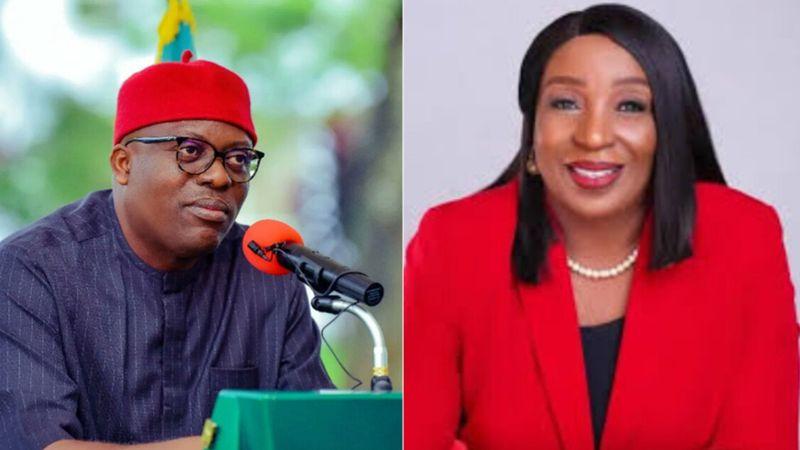
- The Rivers State House of Assembly had commenced impeachment proceedings against Siminalayi Fubara and Ngozi Odu, citing allegations of gross misconduct, including extra-budgetary spending and defiance of a Supreme Court ruling
- Chief Judge Simeon Amadi declined to constitute an investigative panel, referencing a subsisting High Court order obtained by the governor and his deputy restraining further action
- After mediation by Bola Tinubu and renewed talks involving Fubara and Nyesom Wike, the Assembly suspended the impeachment process, signalling a possible easing of political tensions in Rivers State
The Rivers State House of Assembly has suspended impeachment proceedings against Governor Siminalayi Fubara and his deputy, Ngozi Odu, following the intervention of President Bola Tinubu earlier this month.
The decision was taken on Thursday during plenary at the Assembly’s resumed sitting in Port Harcourt, bringing a temporary halt to a political crisis that has unsettled the oil-rich state since the start of the year.
At its first sitting of 2026, the House formally commenced impeachment proceedings against the governor and his deputy, citing allegations of gross misconduct. During the plenary session presided over by the Speaker, the Majority Leader, Major Jack, read a notice detailing the claims levelled against the state’s top executive officials.
Among the allegations were the demolition of the Assembly complex, extra-budgetary spending, and the alleged withholding of funds designated for the Assembly Service Commission. Lawmakers also accused the governor of refusing to comply with a Supreme Court ruling on the financial autonomy of the state legislature, alongside other actions deemed to constitute gross misconduct under the law.
The Assembly stated that the notices were issued pursuant to Section 188 of the 1999 Constitution (as amended), which outlines the procedure for the removal of a governor or deputy governor from office. In a letter dated 16 January 2026, the House requested the state Chief Judge, Justice Simeon Amadi, to constitute a seven-member panel to investigate the allegations.
However, Justice Amadi declined the request, citing a subsisting High Court order restraining him from taking further action on the matter. Governor Fubara and his deputy had filed separate suits at the High Court in Port Harcourt challenging the impeachment process and secured injunctions preventing the Chief Judge from constituting the investigative panel.
In his response to the Assembly, the Chief Judge further noted that the Speaker and the Rivers State House of Assembly had appealed the restraining order granted by the High Court.
The impeachment proceedings were initiated amid escalating political tensions in the state, days after the Minister of the Federal Capital Territory, Nyesom Wike, accused Governor Fubara of reneging on a peace agreement brokered by President Tinubu in 2025.
Efforts to resolve the impasse intensified on 8 February, when President Tinubu met with Governor Fubara and Mr Wike at his official residence in Aso Rock, Abuja. Following the meeting, Mr Wike expressed optimism that the protracted political crisis in Rivers State was close to a lasting resolution, describing the President’s intervention as decisive.
The Assembly’s decision to suspend the impeachment process is widely viewed as a direct outcome of the President’s engagement, signalling a potential thaw in the strained relations between the executive and legislative arms of government in the state. Political observers say the coming weeks will determine whether the pause leads to a durable settlement or merely postpones further confrontation.