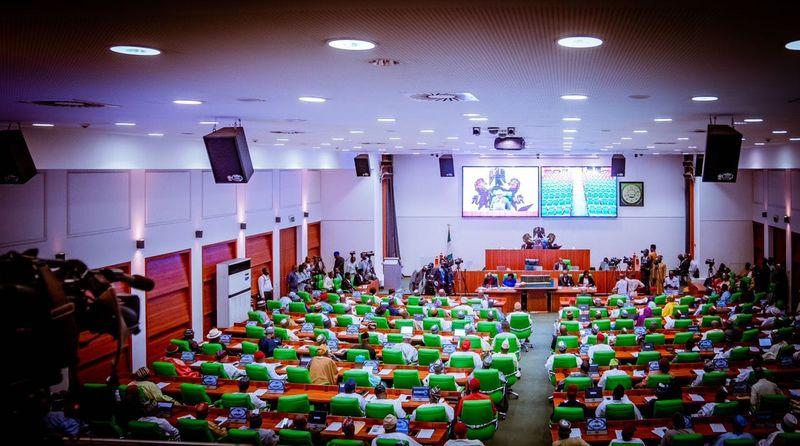
- The Nigerian House of Representatives has called for an investigation into the NNPCL's alleged withholding of N8.48 trillion in petrol subsidy claims
- The House will also probe the NNPCL’s failure to remit $2 billion in taxes, as part of a broader inquiry into the under-recovery of oil revenue between 2020 and 2023
- Lawmakers also clashed over oil price benchmarks and production targets for 2025
The Nigerian House of Representatives has called for an investigation into allegations that the Nigerian National Petroleum Company Limited (NNPCL) withheld N8.48 trillion in petrol subsidy claims.
The resolution came after reports from the Revenue Mobilisation Allocation and Fiscal Responsibility Commission (RMAFC) were presented, alongside a revelation from the Nigeria Extractive Industries Transparency Initiative (NEITI) that the NNPCL had failed to remit $2 billion (approximately N3.6 trillion) in taxes to the Federal Government.
In a move to address these concerns, the House has tasked its Committees on Finance, Petroleum (Upstream and Downstream) to conduct an inquiry into these claims.
The committees are expected to verify the total cumulative amount of unremitted revenue (under-recovery) from the sale of petrol by the NNPCL between 2020 and 2023.
The investigation comes as the House prepares for the presentation of the 2025 Appropriation Bill, following the approval of the 2025-2027 Medium Term Expenditure Framework (MTEF) and Fiscal Strategy Paper (FSP).
During the discussion of the MTEF and FSP, the issue of the oil benchmark for 2025 raised significant debate. While the government set the benchmark for oil prices at $75 per barrel, with oil production projected at 2.06 million barrels per day, some members expressed concerns over the realistic nature of these figures.
Minority Leader Kingsley Chinda argued that the government should retain the 2024 oil benchmark of $77.96 per barrel, pointing out that oil prices had exceeded this in early 2024, reaching $85 per barrel.
He warned that reducing the benchmark for 2025 could lead to overly conservative projections that may not align with the global oil price trends.
However, Chairman of the House Committee on Finance, Abiodun Faleke, defended the $75 benchmark, calling it a responsible estimate given the volatility of the global oil market. He emphasized that crude oil prices are not controlled by any country and that Nigeria’s oil revenue projections should remain cautious to avoid bloating expectations.
Another contentious issue was the projected increase in domestic oil production, from 1.78 million barrels per day (mbpd) in 2024 to 2.06 mbpd in 2025, with further increases expected in the subsequent years.
Chinda questioned the feasibility of achieving these targets, especially given that current production levels were significantly lower, around 1.05 mbpd.
Faleke, however, argued that the production targets were achievable, pointing out that Nigeria’s oil production was improving and that pushing for higher targets would encourage greater effort from oil operators. He referred to past achievements, including when production reached 2.5 mbpd during the Goodluck Jonathan administration.
The House also discussed the proposed exchange rate for 2025-2027, which is pegged at N1,400 to the dollar. This proposal sparked concerns about the country’s currency volatility, particularly given Nigeria’s dependence on the dollar for many economic activities.
A lawmaker from Nasarawa State, Gbefwi Gaza, warned that if the exchange rate was not realistic, the government might need to increase borrowing to cover any deficits. He questioned what steps would be taken to strengthen the naira and reduce reliance on the dollar in light of the ongoing energy transition.
In terms of inflation, the House adopted projections of 15.75%, 14.21%, and 10.04% for 2025, 2026, and 2027, respectively.
Diaspora voting bill passes second reading in the House of Reps
Meanwhile, TheRadar earlier reported that a Bill for diaspora voting passed a second reading in the Nigerian House of Representatives.
The lawmakers debated the importance of extending voting rights to Nigerians outside the country.