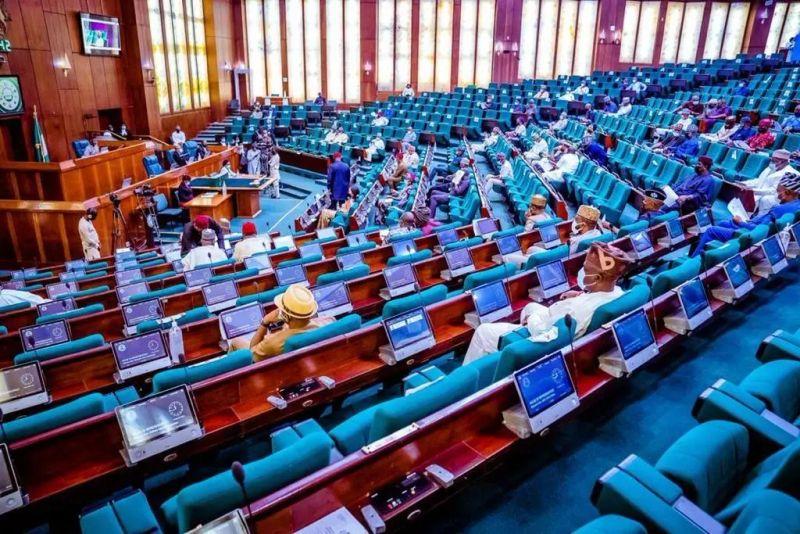
- The House of Representatives passed a motion urging the FG to address hunger through coordinated poverty and food security initiatives across Nigeria
- Lawmakers highlighted that about 61% of Nigerians live below the poverty line, with millions at risk of food insecurity, particularly in the North East
- Committees were mandated to oversee agricultural recovery and support for displaced farmers, ensuring timely access to inputs, credit, and value-chain development
The House of Representatives has urged the Federal Government to address rising hunger in Nigeria by coordinating the country’s various poverty-reduction and food-security schemes.
The call followed the adoption of a motion of urgent public importance moved by Yobe lawmaker, Mrs Khadija Ibrahim, during Thursday’s plenary session. The motion highlighted the severity of food insecurity and poverty across the nation, particularly in conflict-affected areas.
Recent estimates show that about 139 million Nigerians—around 61 per cent of the population—live below the national poverty line, with projections suggesting this could rise to 141 million by 2026 amid inflation and slow economic growth. The United Nations World Food Programme has warned that approximately 35 million Nigerians could face severe food insecurity in 2026, the highest in Africa.
Mrs Ibrahim noted that millions of Nigerians are struggling to afford basic food and essential services, worsening malnutrition and food insecurity among women, children, the elderly, and internally displaced persons. She stressed that the North East, a predominantly agrarian region, remains the worst hit due to years of insurgency that destroyed farmlands, displaced communities, and undermined agricultural productivity.
“Even with improved security, many farmers cannot resume full-scale agricultural activities due to limited access to inputs, credit, extension services, irrigation, storage, and rural infrastructure,” Ibrahim said, warning that failure to reintegrate displaced farmers could deepen poverty, hunger, and dependency, with negative consequences for national food sufficiency and economic stability.
Following the motion, the House directed the Federal Ministry of Agriculture and Food Security, along with relevant agencies, to mainstream North East farmers into recovery programmes by providing timely access to farm inputs, mechanisation, credit, extension services, irrigation, storage facilities, and value-chain development.
The House also mandated its relevant committees to intensify oversight of agricultural recovery, poverty alleviation, and food security interventions, particularly in conflict zones, and report back for further legislative action.