
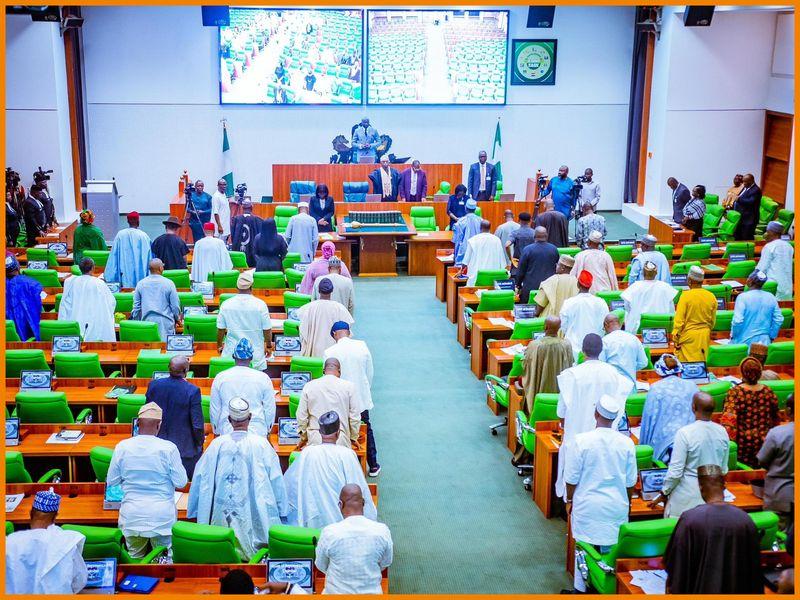
- House of Representatives urges the Ministry of Solid Minerals Development to boost funding for the Nigerian Geological Survey Agency to improve lithium exploration and mapping
- The motion advocates for the establishment of a Nigerian Lithium Production Agency to develop infrastructure and a lithium value chain policy
- Lithium is important in producing energy-dense rechargeable batteries, which positions it as critical for the global clean energy transition
The Nigerian House of Representatives has urged the Ministry of Solid Minerals Development to increase funding for the Nigerian Geological Survey Agency (NGSA) to enhance mineral mapping and accurately estimate the country’s lithium deposits.
This initiative aims to unlock the revenue potential of Nigeria’s largely untapped mining sector.
The resolution followed the adoption of a motion titled “Need to Upscale the Lithium Industry and Value Chain as a Catalyst to Drive Energy Sufficiency and Economic Growth”, moved by Rep. Victor Obuzor (PDP-Rivers) during plenary.
The motion emphasised the need for NGSA to conduct advanced radiometric and electromagnetic surveys to quantify Nigeria's lithium deposits, a move expected to significantly boost national revenue.
Obuzor highlighted Nigeria's vast but underutilised mineral wealth, lamenting the mining sector's decline, which once contributed 4-5 per cent of GDP in the mid-20th century but now accounts for less than 0.8 per cent. He attributed this decline to the prioritisation of oil and gas exploration.
“Nigeria has abundant mineral resources, including metallic ores, energy minerals, and gemstones, deposited across various geological groups. However, our mining sector remains severely underdeveloped,” he said.
The motion also advocated establishing a Nigerian Lithium Production Agency as provided under Part II Section 4(P) of the Nigerian Minerals and Mining Act of 2007. This agency would oversee the development of the lithium industry, establish infrastructure, and implement a regulatory framework.
Obuzor emphasised the need for a comprehensive lithium value chain policy. This policy would link mining licenses to investments in midstream and downstream sectors, ensuring that Nigeria harnesses the full economic potential of its lithium resources.
He underlined the critical role of lithium in global clean energy efforts, particularly in producing energy-dense rechargeable batteries.
“Lithium, a reactive metal, is crucial for the global clean energy transition due to its use in compact, energy-efficient rechargeable batteries. These batteries are ideal for portable devices and grid storage,” he explained.
Despite significant lithium discoveries in Nasarawa, Kogi, Kwara, Ekiti, Cross River, Ogun, and Plateau States, there is no definitive estimate of the country’s reserves. The absence of comprehensive data hinders Nigeria’s capitalisation on this resource.
The lawmaker drew attention to the surging global demand for lithium, with high-quality lithium carbonate prices skyrocketing from $5,180 per ton in 2010 to $46,000 in 2023, peaking at $68,100 in 2022. The International Energy Agency (IEA) projects that global demand for lithium could increase 13-fold by 2040.
Despite Nigeria’s potential, estimated to be worth $700 billion, the country remains underdeveloped in the lithium value chain due to inadequate funding. According to NGSA, some exploratory samples contain up to 13 per cent lithium oxide, significantly higher than the global average of 1-2 per cent.
The motion expressed concerns about missed opportunities, citing the lack of significant investments by the Solid Minerals Development Fund (SMDF). Designed as a sovereign fund to catalyse private sector investments, the SMDF has yet to make meaningful contributions to lithium mining in Nigeria.
“The Solid Minerals Development Fund has failed to invest in lithium mining, leaving promising projects stalled at various stages of exploration, design, and construction,” Obuzor stated.
The House called for urgent action to develop Nigeria’s lithium industry, emphasising its potential to drive energy sufficiency and economic growth. It urged the Ministry of Solid Minerals Development to prioritise funding and policy reforms to position Nigeria as a key player in the global lithium market.
Nigeria's VAT revenue could double in 2 years with proposed tax reforms, says Oyedele
Meanwhile, TheRadar earlier reported that the Chairman of the Presidential Tax Reform Committee, Mr Taiwo Oyedele, forecasted a dramatic increase in Nigeria’s VAT revenue, suggesting that it could double in less than two years if a proposed tax reform bill passes through the National Assembly.
Oyedele argued that the reform, which would streamline tax collection processes and allocate more responsibility to states, would boost national revenue and incentivise state governments to support economic activities within their ju
risdictions actively.
