- The Association of Radiographers of Nigeria has rejected a proposed bill it says threatens the profession’s existence
- The bill seeks to transfer regulatory authority from the Radiographers Registration Board of Nigeria to the Medical and Dental Council of Nigeria
- The association accuses the bill of redefining radiology in a way that erases radiography as an independent discipline
The Association of Radiographers of Nigeria has strongly opposed a proposed legislative move it claims could undermine the radiography profession and transfer its regulatory authority to the Medical and Dental Council of Nigeria.
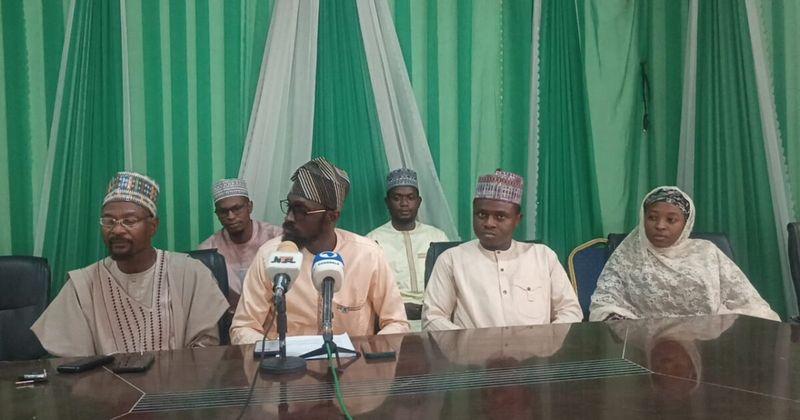
Speaking at a press conference held at the Nigeria Union of Journalists in Kano on Saturday, March 28, the association’s president, Dr Musa Dembele, criticised the proposed Medical and Dental Practitioners Act (Repeal and Re-enactment) Bill, 2026 (HB 2695).
He said, “The Medical and Dental Practitioners Act (Repeal and Re-enactment) Bill, 2026 (HB 2695) is not a reform but a targeted, calculated, and existential assault on the profession of radiography.”
Dembele described the bill as an attempt to impose a “jurisdictional override” that would effectively dismantle the Radiographers Registration Board of Nigeria.
“This is a legislative execution of a profession that has served Nigeria for over 50 years,” he said.
Citing Section 8(1) of the bill, he warned that granting exclusive authority to the Medical and Dental Council of Nigeria amounts to “a legislative nuclear weapon” capable of stripping the Radiographers Registration Board of Nigeria of its statutory responsibilities.
The association further accused the bill of “conceptual theft,” arguing that its redefinition of radiology seeks to eliminate radiography as a distinct scientific field.
“The bill seeks to legally erase radiography as an independent profession and subjugate radiographers to the disciplinary authority of a council composed of individuals with no expertise in radiographic science,” the association said.
On the financial implications, the group alleged that the bill promotes “extortion as regulation,” pointing to provisions that require 70 per cent of practising fees to be shared with the Nigerian Medical Association.
“This reveals the true motive, financial colonisation,” Dembele said.
The association also raised concerns about another proposal, HB 2699, the Radiographers Registration Board of Nigeria Amendment Bill, which it claims could weaken the board’s autonomy.
It criticised the planned inclusion of medical doctors on the board, describing it as “a fundamental violation of the doctrine of professional self-regulation,” and warned that increased ministerial oversight could politicise regulatory processes.
Referencing global standards, the association noted that radiography regulation in countries such as the United Kingdom, Canada, and Australia is led by professionals within the field.
It cautioned that Nigeria risks adopting a model that falls short of established international practices.
The association called on the National Assembly to reject the bill entirely to safeguard the integrity of Nigeria’s healthcare system.
It also advocated for a stakeholders’ summit to develop a unified regulatory framework that recognises the equal standing of all health professions, in line with practices in the United Kingdom, Canada, and Australia.
“The association aligns with the position of the Joint Health Sector Unions, medical laboratory scientists, physiotherapists, and other critical stakeholders who have also rejected similar legislative attempts,” he added.