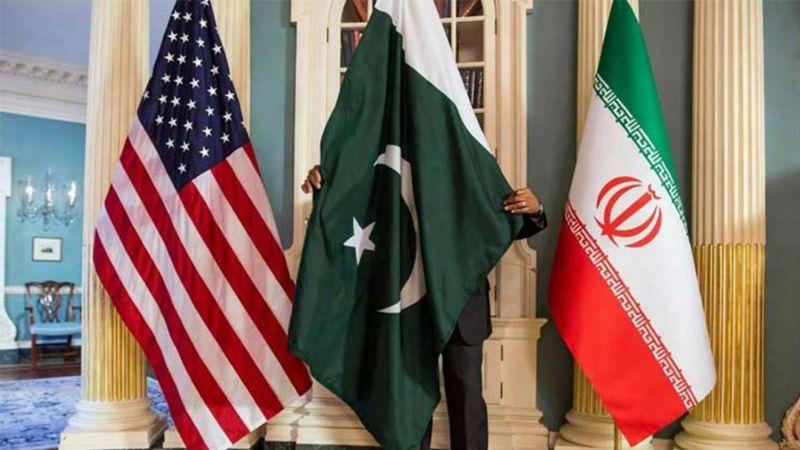
- Pakistan prepares to host crucial US-Iran peace talks in Islamabad amid tight security
- Iran’s participation remains uncertain due to ongoing Israeli strikes on Lebanon
- Tehran insists ceasefire compliance in Lebanon is key to joining negotiations
Pakistan is set to host high-stakes talks between the United States and Iran in Islamabad, but uncertainty looms over Tehran’s participation following deadly Israeli strikes on Lebanon that threaten the fragile ceasefire.
The negotiations, expected to address critical issues such as Iran’s nuclear enrichment programme and the free flow of oil through the Strait of Hormuz, come at a time of rising regional tension.
While Islamabad has intensified security and cleared a luxury hotel to accommodate delegates, Iran has signalled it may withdraw unless Israeli attacks on Lebanon cease.
“The holding of talks to end the war is dependent on the US adhering to its ceasefire commitments on all fronts, especially in Lebanon,” said Iran’s foreign ministry spokesman, Esmaeil Baqaei.
“If the travel plan is finalised, the composition of the delegation will also be announced,” he added.
Despite these concerns, Iran’s Revolutionary Guards reaffirmed their commitment to the ceasefire.
“We would like to inform you that the armed forces of the Islamic Republic of Iran have not launched anything at any country during the ceasefire hours until now,” they said.
Tensions escalated after Israel launched its heaviest strikes on Lebanon since Hezbollah entered the conflict in March, killing hundreds and shaking the already fragile truce brokered between Washington and Tehran.
Meanwhile, the US has confirmed that talks between Israel and Lebanon will take place in Washington next week as part of efforts to stabilise the region.
“We can confirm that the Department will host a meeting next week to discuss ongoing ceasefire negotiations with Israel and Lebanon,” a US State Department official said.
However, neither Israel nor Lebanon has officially confirmed their participation.
A Lebanese government official indicated that Beirut would only engage in talks if a ceasefire is first established.
Clashes have continued, with Hezbollah launching drone and rocket attacks on Israeli forces and towns, while air raid sirens sounded across Tel Aviv.
Israel’s refusal to halt its operations in Lebanon has further complicated Pakistan’s mediation efforts. Iranian officials described the Islamabad talks as “meaningless” under current conditions, stressing that Lebanon is an “inseparable part of the ceasefire.”
The situation has also sparked diplomatic tensions. Pakistan’s Defence Minister Khawaja Asif briefly posted a strongly worded criticism of Israel before deleting it:
“Israel is evil and a curse for humanity, while peace talks are underway in Islamabad, genocide is being committed in Lebanon,” he wrote, adding that he hoped “people who created this cancerous state on Palestinian land” would “burn in hell.”
Israel condemned the remarks, stating: “This is not a statement that can be tolerated from any government, especially not from one that claims to be a neutral arbiter for peace.”
Global leaders have expressed concern that the escalating violence could derail the peace process entirely.
German Chancellor Friedrich Merz warned that the destruction in Lebanon risks causing “the peace process as a whole to fail.”
Israeli Prime Minister Benjamin Netanyahu maintained that Lebanon is not covered by the ceasefire and vowed continued military action.
“Anyone who acts against Israeli civilians, we will strike them. We will continue to hit Hezbollah wherever necessary,” he said.
The US President Donald Trump, however, suggested Israel may be easing its operations, saying it was “scaling back” strikes and would adopt a more “low-key” approach.
A major sticking point in the negotiations remains the Strait of Hormuz, a vital global energy route. Trump accused Iran of violating the ceasefire terms:
“Iran is doing a very poor job, dishonourable some would say, of allowing Oil to go through the Strait of Hormuz,” he said. “That is not the agreement we have!”
Despite tensions, some movement has resumed, with shipping data showing that a non-Iranian oil tanker passed through the strait for the first time since the ceasefire began.
Iran-US ceasefire row deepens as Strait of Hormuz tensions trigger fresh fears
Meanwhile, TheRadar earlier reported that tensions in the Middle East surged once again as Iran accused the United States of breaching a fragile ceasefire agreement, despite assurances from the United States President, Donald Trump, that the truce remains in place.
Reports of fresh explosions across key Gulf states heightened fears of escalation, while uncertainty continues to surround the status of the Strait of Hormuz.
Tehran declared that the vital oil route is shut, a claim strongly disputed by Washington, which insists maritime traffic is ongoing.