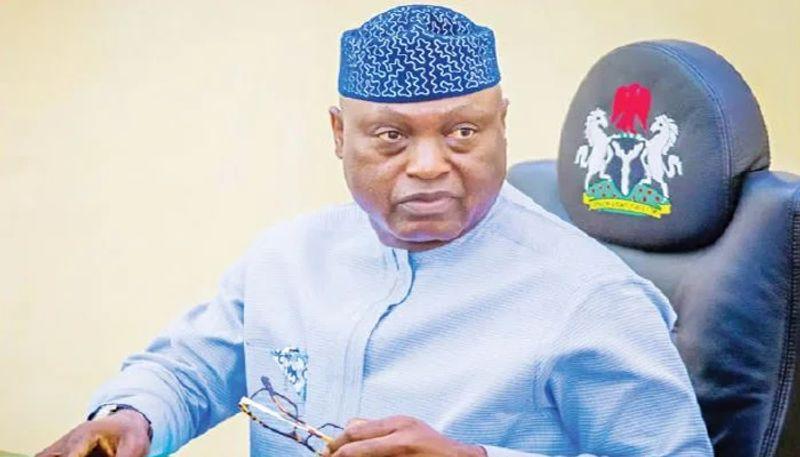
- Governor Biodun Oyebanji charged state-owned tertiary institutions to maintain stable academic calendars to improve educational quality
- He said disruptions harmed students and parents, urging dialogue and conflict resolution to prevent strikes.
- Oyebanji praised BOUESTI’s growth, congratulated its new Vice-Chancellor, and reaffirmed support for higher education reforms
Ekiti State Governor, Mr Biodun Oyebanji, has charged state-owned tertiary institutions to maintain a stable and predictable academic calendar, describing it as a critical factor in improving educational quality and restoring public confidence in the state’s higher education system.
The governor said frequent disruptions to academic activities undermine students’ learning outcomes and impose avoidable financial and emotional burdens on parents and guardians. He stressed that institutional stability remains essential to the growth and competitiveness of tertiary education in the state.
Oyebanji gave the charge in Ado Ekiti, the state capital, while receiving the senior management team of Bamidele Olumilua University of Education, Science and Technology, Ikere Ekiti (BOUESTI), led by its newly appointed Vice-Chancellor, Professor Babatunde Omojola.
According to a statement issued on Tuesday, the governor noted that a consistent academic calendar enhances academic excellence and boosts institutions' attractiveness to prospective students, researchers, and development partners.
“A stable academic calendar will not only enhance academic excellence, but also make the institution more attractive to prospective students, researchers and development partners,” Oyebanji said, reiterating that education remains central to his administration’s development agenda.
He urged university management, governing councils, staff, and labour unions to strengthen dialogue and adopt proactive conflict-resolution mechanisms to prevent avoidable strikes and prolonged closures that harm students and the overall academic environment.
The governor acknowledged BOUESTI’s rising profile as one of Nigeria's fastest-growing state-owned universities, attributing its progress largely to its stable academic calendar. He congratulated Professor Omojola on his appointment as the institution's second substantive Vice-Chancellor. He encouraged him to sustain the legacy of his predecessor, Professor Victor Adeoluwa, particularly by preserving institutional stability.
Oyebanji explained that the appointment of the new Vice-Chancellor was based strictly on merit, expressing confidence in Omojola’s capacity to consolidate existing achievements and further strengthen academic excellence, institutional capacity and global competitiveness at the university.
He also reaffirmed his administration’s commitment to sustained investment in infrastructure, staff welfare, and institutional reforms to make state-owned universities globally competitive.
“I am very happy with what is happening in BOUESTI, and I am very proud of the achievements recorded so far,” the governor said. “One thing responsible for your growth is your stable academic calendar. Students know that when they come to BOUESTI, they will spend four years for a four-year course and five years for a five-year course. That is why they are rushing to the institution. Whatever it is going to cost you, please ensure that this tradition remains unbroken.”
In his response, Professor Omojola thanked the governor for the confidence reposed in him and attributed the university’s achievements to the administration’s strong support for education.
He said his vision is to position BOUESTI among the top 10 universities in Nigeria, the top 100 in Africa, and the top 1,000 globally, adding that this goal will be pursued through sustained academic excellence, research innovation, and institutional stability.
Also present at the meeting were the Secretary to the State Government, Professor Habibat Adubiaro; the Chief of Staff, Mr Niyi Adebayo; Commissioner for Education, Dr Bimpe Aderiye; Special Adviser on Tertiary Education, Professor Akeem Azeez; and Special Adviser on Media, Mr Yinka Oyebode.
The governor reiterated his administration’s commitment to inclusive development, institutional reform, and continued investment in modernising public infrastructure across the state.