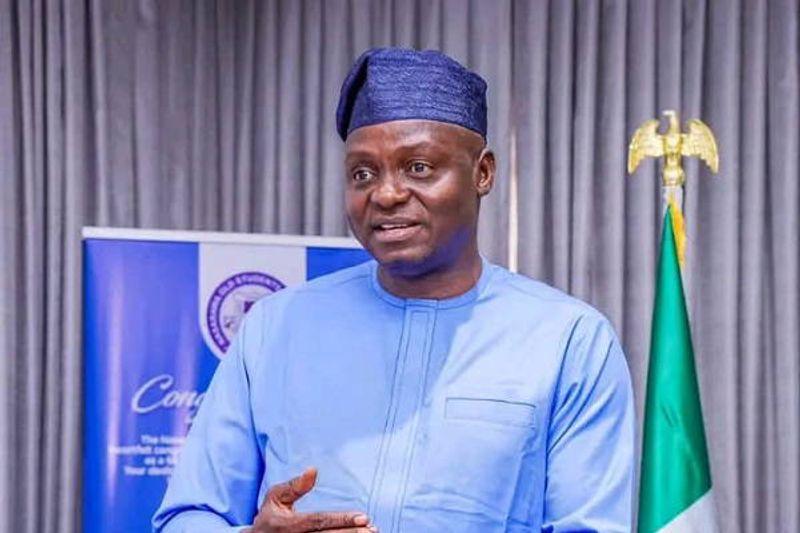
- Nentawe Yilwatda and Surajudeen Ajibola Basiru were re-elected as National Chairman and National Secretary of the All Progressives Congress during the 8th National Convention
- Yilwatda pledged to build a stronger, more inclusive, and disciplined party
- The convention chairman, Aminu Bello Masari, described the gathering as a “solemn assembly” and a defining democratic moment
Professor Nentawe Yilwatda and Senator Surajudeen Ajibola Basiru have been re-elected as National Chairman and National Secretary of the All Progressives Congress (APC), following the party’s 8th National Convention held in Abuja on Friday, March 27.
The convention, which doubled as the party’s fourth elective gathering, also saw all members of the National Working Committee (NWC) returned through a consensus arrangement and ratified via affirmative voice vote.
The newly sworn-in officials are expected to steer the party’s affairs for the next four years.
Key members of the NWC include Ali Dalori as Deputy National Chairman (North), Emma Eneukwu as Deputy National Chairman (South), Bashir Gumel as National Financial Secretary, and Murtala Kankia as National Legal Adviser, among others.
In his acceptance speech, Yilwatda outlined the vision of the new leadership, emphasizing unity, inclusiveness, and internal democracy.
“Our mission is clear. That together, we will build a Pan-African and Pan-Nigerian party that is stronger, transparent, inclusive, and more disciplined and united than ever.
“We will deepen internal democracy. So that every member is heard, we will strengthen our structures so that every person will trusts it.
“We will expand the reach, so that the message of renewed hope is heard in every community.
“We will empower our youth because they are not just the future, but they are the huge and important part of our today,” he said.
The convention drew top political figures, including President Bola Ahmed Tinubu, Vice President Kashim Shettima, and Senate President Godswill Akpabio, alongside 31 APC governors and other party stakeholders.
Held at the Eagle Square in Abuja, the event commenced around 8:15 p.m. under tight security, which significantly disrupted movement across the capital.
Security operatives cordoned off major roads leading to the venue, leaving many accredited journalists stranded.
Despite valid identification, several media personnel were denied access at checkpoints, with reports of threats from security agents.
Some journalists who eventually gained entry sought refuge at the Nasarawa State Pavilion but were later forced out by hostile delegates, further complicating coverage of the event.
While most NWC positions were filled through consensus, a few roles, including Deputy National Chairman (South) and National Welfare Secretary, remained contested, featuring candidates such as Emma Eneukwu, Ben Nwoye, Ignatius Nwapa, and Nduka Anyanwu.
Addressing delegates, President Tinubu stressed the importance of unity within the party and commended Governors AbdulRahman AbdulRazaq, Hope Uzodimma, and Dapo Abiodun for their roles in organizing a successful convention.
Earlier, former Katsina State Governor Aminu Bello Masari, who chaired the convention’s Central Coordinating Committee, described the gathering as a defining moment for Nigeria’s democracy.
“This convention is not a routine jugglery; it is a solemn assembly, a historic moment, and a powerful reminder of the strength of our democracy,” Masari stated.
“Delegates, the responsibility you carry today is immense. You are not here merely to cast a vote. You are here to shape history.”
Masari acknowledged prevailing national challenges, including insecurity and economic hardship, but framed them as opportunities for resilience and reform.
“Leadership is not about privilege; it is about service. It is not about titles; it is about trust. It is not about power; it is about unity,” he added.
Also speaking, Minister of Finance Wale Edun defended the administration’s economic reforms, noting improvements in key indicators.
“By choosing to act, you chose courage over comfort, you chose reform over delay, and you chose Nigeria and the people of Nigeria over politics,” Edun said.
He added that economic growth had risen from 2% to about 4% annually and highlighted ongoing efforts to strengthen agriculture, power, and industrial sectors through partnerships and policy reforms.