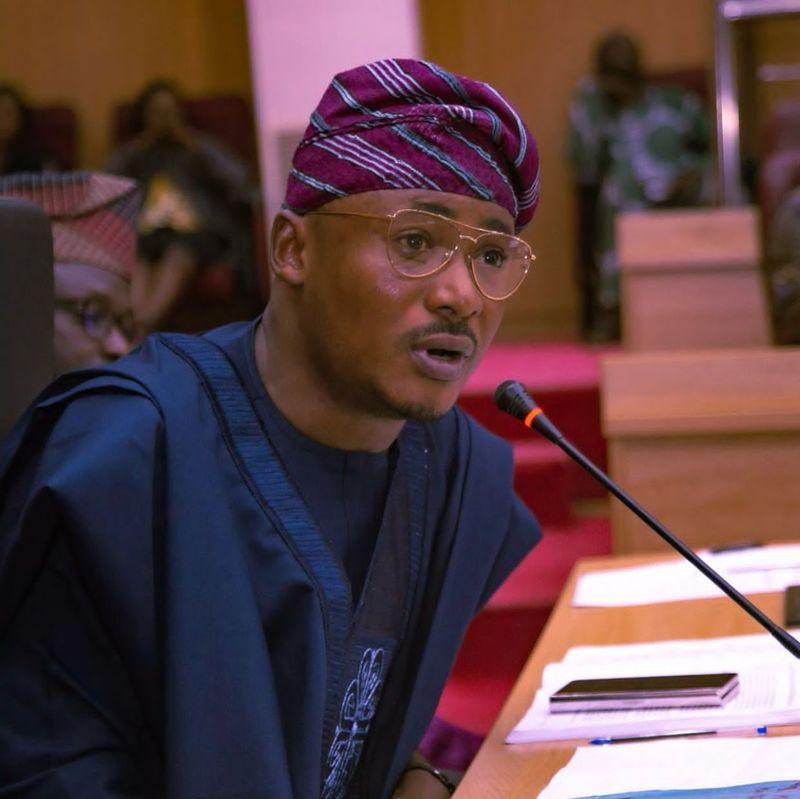
- Akinyode Oyewusi dismissed claims that the Osun State House of Assembly functioned as a rubber stamp of the executive arm
- The Deputy Speaker highlighted legislative interventions in education, infrastructure, security and governance across Osun State
- He also criticised opposition APC over local government autonomy issues and called for stronger democratic institutions in Nigeria
The Deputy Speaker of the Osun State House of Assembly, Akinyode Oyewusi, has dismissed claims that the state legislature operates as a rubber stamp of the executive arm of government, insisting that lawmakers remain a critical institution in strengthening Nigeria’s democracy.
Oyewusi made the remarks on Wednesday while speaking at the Nigeria Union of Journalists (NUJ), Osun State Council Guest Platform held in Osogbo. The event had the theme “The Role of Legislature in Shaping Democracy in Nigeria.”
He was represented at the programme by his media aide, Segun Amure.
According to him, the state Assembly has continued to play active roles in governance, including oversight functions, legislative interventions, and engagement with key state issues, contrary to perceptions that it merely endorses executive decisions.
The Deputy Speaker also used the opportunity to criticise the opposition All Progressives Congress (APC), accusing it of undermining local government autonomy in Osun State.
He argued that while local governments operated freely during the administration of former Governor Olagunsoye Oyinlola, autonomy was allegedly weakened under former Governor Rauf Aregbesola with the introduction of the Joint Accounts Committee (JAC).
Oyewusi said the centralisation of local government finances through the JAC system had significantly weakened grassroots governance, adding that no state in Nigeria currently operates full local government autonomy in practice.
He also warned that any officials found culpable in allegedly withholding local government funds would face appropriate sanctions, stressing that such actions undermine governance at the grassroots level.
Reiterating the legislature’s independence, Oyewusi rejected claims that the Assembly merely rubber-stamps executive proposals, insisting that lawmakers have intervened in several critical areas across the state.
He listed legislative involvement in issues such as the establishment of the University of Ilesa (UNILESA), workers’ audit processes, oversight responsibilities, and interventions in security matters, including the Akinlalu killings, where lawmakers reportedly visited victims alongside the executive arm.
The Deputy Speaker also highlighted ongoing infrastructure interventions, including the rehabilitation of the Akinlalu road, which he said had been abandoned since 1976, as well as work on the Ile-Ife bridge and the Ora Igbomina mini water works project.
He disclosed that the Assembly was planning a public engagement initiative aimed at improving transparency and bringing legislative activities closer to citizens.
On the health sector, Oyewusi said the administration of Governor Ademola Adeleke had improved primary healthcare centres across the state, though he alleged that withheld local government funds had negatively affected service delivery at the grassroots level.
He further emphasised the role of lawmakers in promoting peace and stability, urging political actors to avoid violence and prioritise unity before, during, and after elections.
Oyewusi also referenced communal and traditional disputes in areas such as Asipa, Ipetumodu, and Edunabon, stressing that traditional institutions remain vital to maintaining peace within communities.
He maintained that effective lawmaking, oversight, and appropriation functions are essential to democratic development, adding that Nigeria’s democracy would improve further if the Independent National Electoral Commission (INEC) is strengthened to operate independently.
In his remarks, Osun NUJ Chairman, Adeyemi Aboderin, called for a more robust Electoral Act that would deepen democratic practice in the country. He noted that while democracy begins with the legislature, its effectiveness is often constrained by executive dominance.
Aboderin expressed optimism that lawmakers would continue to improve their performance in the interest of good governance and democratic consolidation in Nigeria.