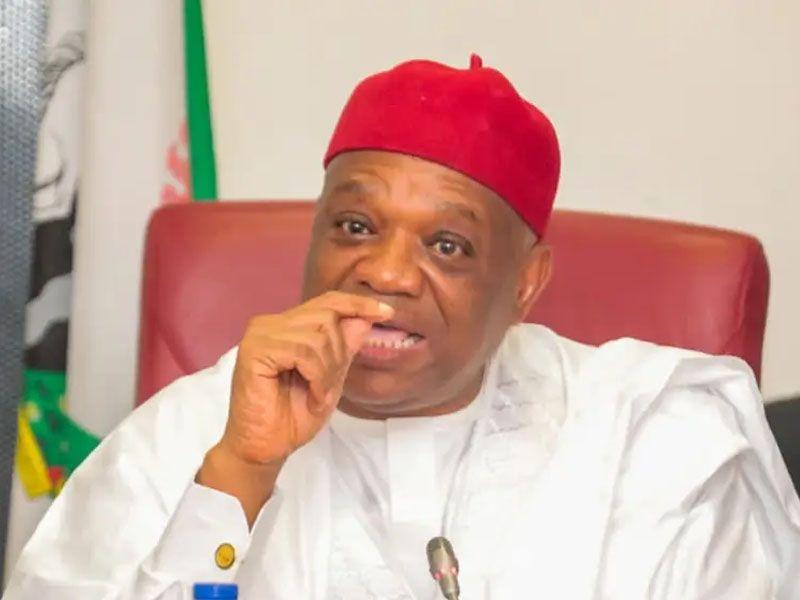
- Former Governor and Senator Orji Uzor Kalu announced he would oppose the re-election of Governor Alex Otti in 2027, citing party allegiance to All Progressives Congress
- Kalu emphasised that personal friendships should not compromise political commitments, acknowledging his cordial relationship with Otti but reaffirming party priorities
- He pledged to work for APC’s candidate while advocating for peace and political stability in Abia State, highlighting the influence of party loyalty on electoral dynamics in the region
Former Orji Uzor Kalu, who also represents Abia North in the National Assembly, has declared that he will oppose the re-election bid of Abia State Governor Alex Otti in the 2027 governorship elections.
Speaking in an interview on Sunrise Daily, Kalu emphasised that party loyalty must take precedence over personal friendships, signalling a clear divide along political lines.
The former governor acknowledged his cordial personal relationship with Otti but maintained that political differences should not compromise party commitments. “I always believe if he wants to be his party, be your party and vote for your party. I’m a member of APC. I will work for APC. He should work for Labour Party. We should not lose friendship,” Kalu stated.
He reiterated his allegiance to the All Progressives Congress (APC) and made it clear that he will support the party’s candidate in the upcoming election, while Otti, a member of the Labour Party, pursues his own political ambitions.
Kalu stressed that his priority is to maintain peace and political stability in Abia State, even as he firmly positioned himself against the incumbent governor’s re-election. “I will oppose it because my party will be fielding a candidate. That’s it. It is about the interest of the party,” he added.
The senator’s comments reflect the growing political tensions in Abia State ahead of the 2027 general elections, with party allegiances shaping the emerging contests. Kalu’s stance is likely to intensify the rivalry between the APC and Labour Party in the South East state, even as he seeks to preserve personal cordiality with Otti.
His remarks underscore the broader political dynamics in Nigeria, where party loyalty frequently dictates electoral strategies and alliances, sometimes overriding longstanding personal relationships between political figures.
Kalu concluded by reiterating his commitment to both party principles and maintaining harmony within the state’s political landscape, signalling that while politics may divide, personal respect can remain intact.