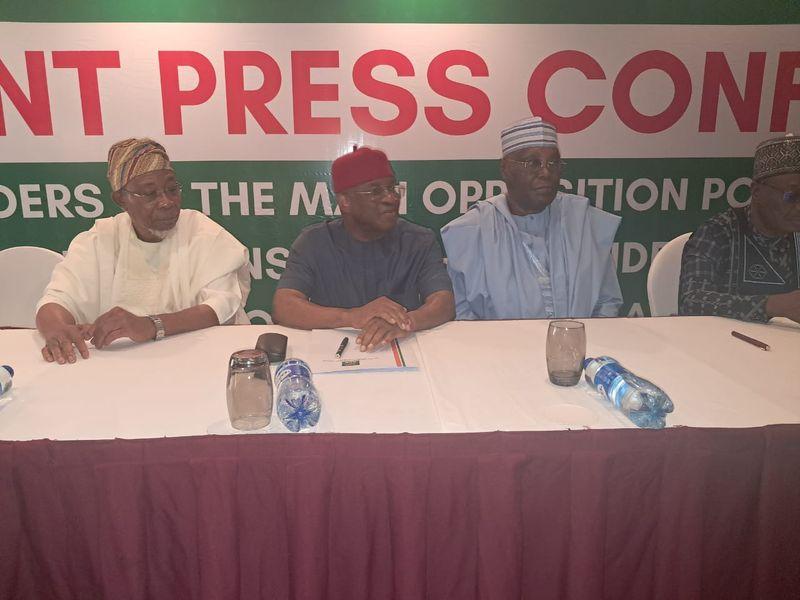
- Prominent opposition figures, including Atiku Abubakar, Peter Obi, David Mark, Rotimi Amaechi, Buba Galadima, and Rauf Aregbesola, met at Transcorp Hilton to discuss the Electoral Act 2026 amendment
- They raised concerns over restrictions on candidate nomination methods, shortened campaign periods, and revised INEC funding timelines under the new law
- Stakeholders, including ADC officials and former governors, engaged in consultations to articulate the opposition’s position and broader national political implications
Key opposition figures have gathered at the Transcorp Hilton to present their position on the recently amended Electoral Act 2026 (Amendment). Among those in attendance are former Vice-President Atiku Abubakar, 2023 Labour Party presidential candidate Peter Obi, former Senate President David Mark, former Rivers State Governor Rotimi Amaechi, NNPP chieftain Buba Galadima, and the African Democratic Congress National Secretary Rauf Aregbesola.
The meeting, taking place at the Lagos/Osun Hall of Transcorp Hilton, also includes stakeholders such as ADC National Publicity Secretary Bolaji Abdullahi, Senator Dino Melaye, former ADC National Chairman Ralph Nwosu, and former Cross River State Governor Liyel Imoke.

The opposition leaders are expected to address journalists on contentious provisions of the Electoral Act, including restrictions on candidate nomination methods. Under the 2022 Electoral Act, parties could nominate candidates through direct primaries, indirect primaries by delegates, or by consensus. The 2026 amendment now limits options to only direct primaries and consensus arrangements.

Other significant changes include shortened campaign periods and primary timelines, as well as the release of funding for the Independent National Electoral Commission six months before an election, rather than the previous 12 months. The leaders are expected to articulate their position on these provisions and discuss broader national political concerns.