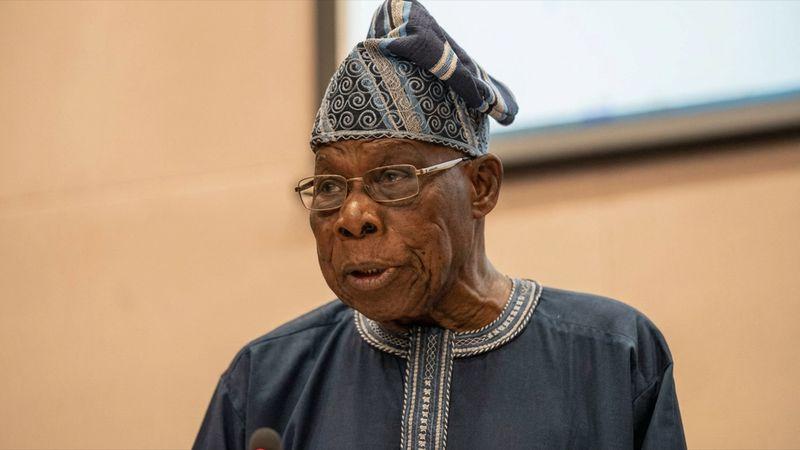
- Former President Olusegun Obasanjo had reiterated that Nigeria’s state-owned refineries were unlikely to function effectively, citing years of mismanagement and structural flaws
- He had pointed to the success of NLNG as proof that public-private partnerships offered a more sustainable model, while recalling failed efforts to привлече Shell and a reversed Dangote deal that might have transformed the sector
- Meanwhile, NNPC had continued seeking technical partners, though concerns persisted over competitiveness, governance, and the long-term viability of the refineries
Former Nigerian President Olusegun Obasanjo has reiterated his long-held view that the country’s state-owned refineries are unlikely to become functional, as the Nigerian National Petroleum Company Limited (NNPC) continues efforts to secure technical partners for the Port Harcourt, Warri, and Kaduna facilities.
Speaking during a televised interview on Sony Irabor Live on Saturday evening, Obasanjo criticised the management and structural framework of Nigeria’s refining sector, arguing that past and present approaches have been fundamentally flawed. He emphasised that public-private partnerships (PPPs) remain the most viable model for sustaining large-scale infrastructure in the country, pointing to the success of the Nigeria Liquefied Natural Gas project as a key example.
According to him, NLNG has thrived due to its ownership structure, where private investors hold a majority stake, while the Federal Government retains a minority share. In contrast, he lamented that government-run ventures such as the refineries have consistently underperformed.
Obasanjo also disclosed that during his presidency, he made several attempts to involve Shell in managing Nigeria’s refineries. However, the multinational oil firm declined the offers, citing multiple concerns. These included the relatively small capacity of Nigeria’s refineries compared to global standards, poor maintenance practices, limited profitability in downstream operations, and widespread corruption within the system.
He recounted that Shell executives informed him that their primary profits were derived from upstream activities, with downstream operations serving more as a support function than a significant revenue stream. They also noted that Nigeria’s refinery capacities—ranging between 60,000 and 100,000 barrels per day—were considerably below the global benchmark of 250,000 to 300,000 barrels.
The former president further criticised the technical state of the facilities, alleging that unqualified personnel had often been engaged for maintenance, leaving the plants in poor condition.
Obasanjo revealed that he once believed a breakthrough had been achieved when industrialist Aliko Dangote offered $750 million for a 51 per cent stake in two of the refineries. However, the deal was later reversed under the administration of the late Umaru Musa Yar’Adua, reportedly due to pressure from NNPC officials.
He expressed regret over the reversal, arguing that the opportunity could have transformed Nigeria’s refining capacity. Instead, he claimed that billions of dollars have since been spent on rehabilitation efforts with little to show for it. Obasanjo cited estimates suggesting that around $16 billion has been invested in the refineries—an amount close to what Dangote reportedly spent building his privately owned refinery.
Recent developments indicate that NNPC aims to finalise the selection of technical partners by June 2026. The company’s Group Chief Executive Officer has acknowledged that despite rehabilitation efforts, the refineries remain below international operational standards and struggle to compete commercially, particularly against newer private facilities.
Dangote himself has echoed similar concerns, maintaining that the state-owned refineries may never function efficiently. His own refinery project, widely regarded as Africa’s largest, was initiated after the collapse of the earlier privatisation deal.
As debate continues, the future of Nigeria’s refining sector remains uncertain, with persistent questions over governance, investment strategy, and the role of private sector participation.