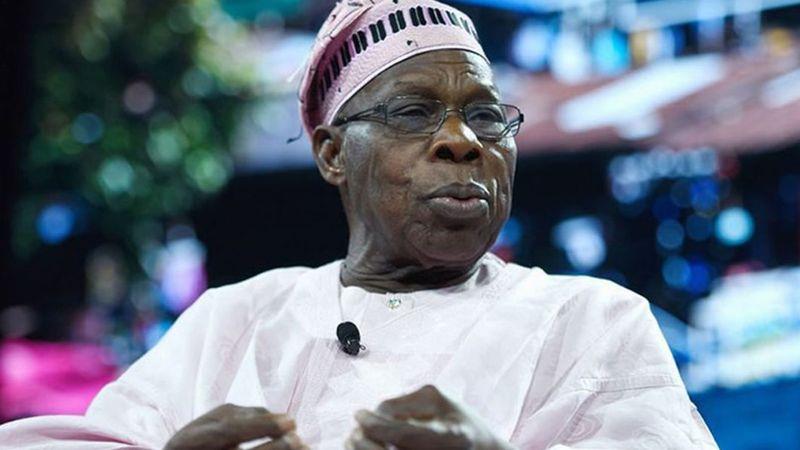
- Former President Olusegun Obasanjo has criticised the lack of continuity in agricultural policies as a key factor contributing to food insecurity in Africa
- Obasanjo stated that governments should focus on creating an enabling environment for private enterprises rather than engaging directly in production
- He made his thoughts public at the unveiling of Okun Rice by entrepreneur Dr. Biodun Onalaja
Former President of Nigeria, Chief Olusegun Obasanjo, has blamed lack of continuity and policy somersault as one of the major hindrances to achieving food security in Africa and the continent’s overall development.
Obasanjo said that the government should also avoid getting involved in production but rather provide the enabling environment that could allow the private sector to drive the country's economy.
The two-term civilian president said that the hunger crisis the nation and the continent are currently battling would not have been this worse if the culture of continuity in developmental and food production efforts had been sustained.
Obasanjo revealed this on Thursday, October 24, at the unveiling of Okun Rice held at Asero, Abeokuta.
Obasanjo said it is bad that successive governments do not encourage the culture of continuity, which has significantly impacted food production and agricultural practices in the country.
He said “Part of our problem in Nigeria and Africa as a whole is lack of continuity and this is very bad for every development at family level, state level, national level and continental.
“What I found so ridiculous is that because there has been no continuity in so many things we are doing, you will hear people saying “for the first time ever” as if Nigeria is just beginning today, whereas the problem is lack of continuity.
“When you go back you will find out that some people have done that which they are talking about in the past and if we had continued, our situation wouldn’t have been as bad as it is, particularly in the area of food production.
“I have always said it that the government has no business in production, the primary duty of the government is to provide the enabling environment for agricultural production and other business enterprises to thrive so as to achieve food security.”
He added, “So, I am saying that for us to achieve increased food production and achieve food sufficiency at the state, national and continental level, the government must be ready to provide the enabling environment and ensure continuity of assisted agricultural policies to enhance food production.”
Obasanjo lauded the Chief Executive Officer of Hyst Global Business Limited, Dr Biodun Onalaja for his courage and perseverance, hailing him for bracing all odds to invest in local production of rice and boosting food sufficiency in the country.
The former President said that the entrepreneur urged him to also prioritise supporting the local rice farmers.
Onalaja lauded Obasanjo’s visionary leadership, particularly in the area of boosting food production in the country, saying that his guidance and support over the years has been a major source of encouragement.
Onalaja said that Okun Rice Mill has the capacity to produce 100 metric tonnes of high-quality rice daily in various packing options from 1kg to 50kg.
He disclosed that the enterprise is aimed at creating employment opportunities and achieving sustainable food production in the country.
Nigeria’s external debt rose by N22.77trn within 10 months of Tinubu’s administration
Meanwhile, TheRadar reported that as of March 2024, Nigeria’s external debt stood at N56.02 trillion, a N22.77 trillion increase from the N33.25 trillion it was at the end of President Muhammadu Buhari’s administration.
According to data from the Debt Management Office (DMO), aggregated and posted by StatiSense on X (formerly Twitter) on August 30, the figure was achieved in just 10 months of President Bola Tinubu’s administration.