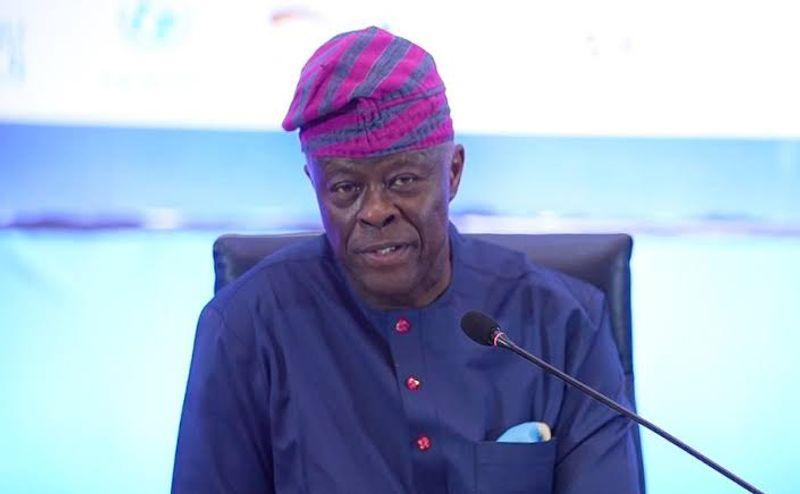
- Minister Edun criticised past inefficiencies in the subsidy system, stating it allowed significant profits with little value added to the economy
- The Minister disclosed $20 billion in savings from the removal of petrol subsidies and transition to a market-based foreign exchange pricing system
- TheRadar compiled public reactions following the Minister’s statement
Nigerians have reacted to the Minister of Finance and coordinating minister of the economy, Wale Edun’s announcement that the Nigerian government’s decision to end petrol subsidies and transition to a market-based foreign exchange pricing system has resulted in savings of about $20 billion.
This was disclosed at the validation event for the federal civil service policies and guidelines, which marked the first 100 days in office of Mrs Esther Didi Walso-Jack as Head of Civil Service of the Federation, held in Abuja on Friday, November 22.
Minister Edun explains reinvestment of subsidy savings
Edun mentioned that subsidies once accounted for five per cent of Nigeria’s GDP, but emphasised that the situation has now changed. “Between them, they were costing five per cent of GDP,” Edun stated.
The Minister highlighted the importance of these savings, detailing their potential effects, “If you say GDP was on average, let’s say $400 billion, we all know what five per cent of that is – $20 billion of funds that could be going into infrastructure, health, social services, education.”
He further explained that the funds once consumed by subsidies are now being reinvested into the government's resources for key developmental projects.
“The real change that has happened with the measures of Mr President is that nobody can wake up and their target for the day or for the week or the month or the year is to get access to cheap funding, cheap funding exchange from central bank, which they can now flip. And overnight, they become wealthy from no value added for doing virtually nothing, except you know the right people.”
The Minister also addressed the shortcomings of the petrol subsidy system, which had previously permitted people to make significant gains with minimal economic impact.
“Similarly, they can no longer try and be part of a new peak market and very inefficient petrol subsidy regime as a way of making money overnight,” Edun stated.
Nigerians react to Edun’s statement
The Minister's statement has sparked public reactions, with questions circulating around the whereabouts of the money and why the president continues to take out loans.
TheRadar compiled some of the public reactions below:
“But the government is borrowing 20 billion dollars to finance the budget. So what is the essence of the saving,” Paul of Truth stated.
“Yet balablu keeps borrowing like his life depends on it. Continue, one day bush meat go catch the hunter,” Vivian Umukoro reacted.
“Economy on paper, manipulation of numbers with no real and tangible impact on the real economy and collective livelihood of the subject of the state,” Muhammad Tahir Adamu added.
“So where is the money? How was it shared? Where is my own?,” Xandyy asked.
“and una dey go borrow 2bill usd? how this your lie take hold water?,” King Imas reacted.
Tinubu confirms progress of Nigeria's economic plan, praises Customs for driving growth
Meanwhile, TheRadar earlier reported that President Bola Tinubu expressed confidence that his economic plan for Nigeria was going as planned.
The President emphasised key reforms such as fuel subsidy removal and exchange rate unification.