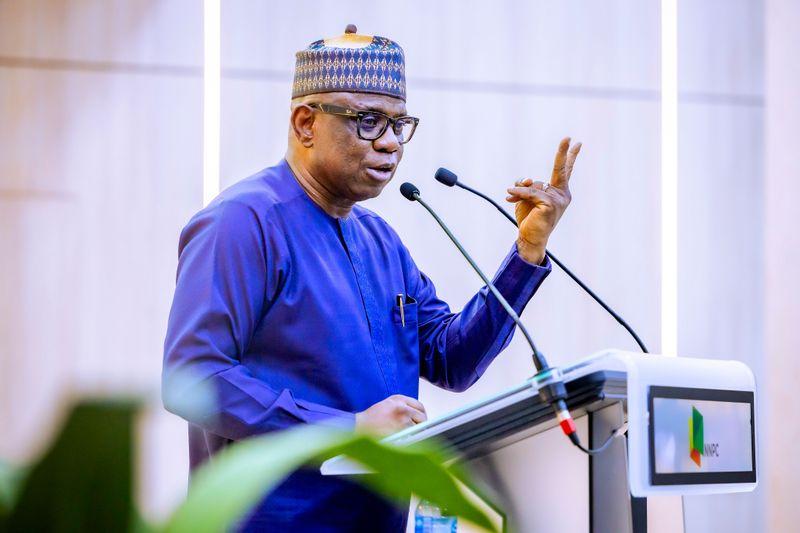
- The Chief Executive Officer of NNPC, Mr. Bashir Ojulari, revealed that state-owned refineries will be shut down after an internal review shows “monumental losses”
- Ojulari cites escalating costs and contractor inefficiencies as reasons for closure
- He also credited Dangote Refinery for easing national energy pressures and allowing better NNPC decisions
The Nigerian National Petroleum Company Limited (NNPC Ltd.) has announced the closure of Nigeria’s state-owned refineries following internal assessments that revealed the facilities were operating at “monumental losses” and destroying national value.
The disclosure was made by NNPC Ltd.’s Group Chief Executive Officer, Mr. Bashir Ojulari, during a Fireside Chat on Securing Nigeria’s Energy Future at the Nigeria International Energy Summit (NIES) 2026 in Abuja on Wednesday, February 4.
Ojulari explained that the shutdown followed a comprehensive technical and commercial review, prompted by public frustration over years of heavy investment in refineries that yielded little in terms of performance.
“When we came in, refineries were a hot topic. Nigerians were angry, expectations were very high, and we were under extreme pressure.
“After a detailed review, it became clear that we were simply wasting money. When we looked at the net outcome, we were leaking value with no clear line of sight to profitability. That trajectory would have meant value destruction for the next 30 years. We were not going to do that,” Ojulari said.
According to Ojulari, the refineries, located in Port Harcourt, Warri, and Kaduna, averaged only 50 to 55 percent capacity utilisation despite monthly crude supply, while operating costs and contractor fees continued to escalate, making further operations economically unjustifiable.
The refineries have long struggled with chronic underperformance, despite repeated turnaround maintenance efforts and billions of naira in public spending.
Successive administrations often prioritised financing and engineering, procurement, and construction (EPC) contracts without adequate focus on long-term operations and maintenance.
Ojulari argued that this created a system where multiple layers of contractors extracted value without accountability, resulting in the production of mid-grade petroleum products whose market value failed to justify the cost of crude oil supplied.
He also highlighted the steep learning curve his upstream-focused team faced in understanding downstream operations.
“Lack of ‘skin in the game’ by operators was a key flaw. Financing, EPC, and operations and maintenance contracts were all designed to extract value rather than sustain assets,” he said.
To address these challenges, NNPC plans to move from contractor-led operations to an equity partnership model, inviting experienced refinery operators to acquire stakes, manage day-to-day operations, and help rebuild local technical capacity.
Ojulari emphasised that the approach prioritises commercial sustainability rather than asset stripping.
He revealed that discussions are underway with potential investors, including a major Chinese petrochemical firm, with site inspections expected soon.
Ojulari also praised the Dangote Refinery for alleviating pressure on Nigeria’s energy system.
“Whether you love Dangote or hate him, thank God for the Dangote Refinery,” Ojulari said, adding that its presence gives NNPC room to make better, less pressured decisions.
NNPC to settle $6bn debt on petrol supplies, says Finance Minister Wale Edun
Meanwhile, TheRadar earlier reported that Wale Edun, the Minister of Finance and Coordinating Minister of the Economy, announced that the Nigerian National Petroleum Company (NNPC) Limited was set to begin settling its $6 billion debt to suppliers.
The resolution came after the removal of petrol subsidies on May 29, 2023, although foreign exchange subsidies have continued to impact NNPC.