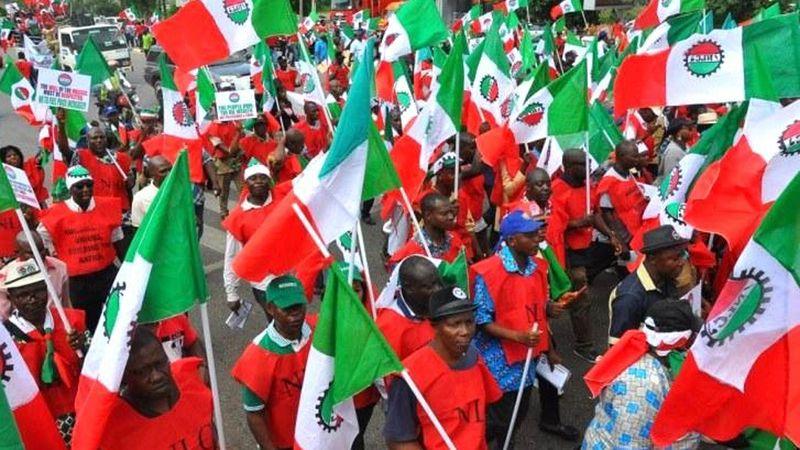
- NLC and OPS rejected Nigeria's unemployment figures, accusing the National Bureau of Statistics (NBS) of presenting misleading data on the country's job market
- They argued that the drop in unemployment rate to 4.3% in Q2 2024 does not reflect economic realities, citing challenges faced by businesses and workers
- They then called for a review of the NBS methodology and a more accurate representation of job quality and the health of key economic sectors
The Nigerian Labour Congress (NLC) has criticised the National Bureau of Statistics (NBS) for its recently released unemployment data, which showed a decline in the national unemployment rate to 4.3% in Q2 2024.
The NLC dismissed the report as "fiction," accusing the NBS of presenting a misleading narrative that contradicted the harsh economic realities faced by Nigerians.
Chris Onyeka, the NLC’s National Assistant General Secretary, described the figures as "a fabrication" intended to mislead the public. He argued that the country's unemployment situation is worsening, citing closures of factories, increasing inventory, and reduced consumer spending.
Onyeka further questioned the validity of the data, suggesting that it was a manipulation of figures aimed at presenting a false picture of the economy. He also challenged the NBS to provide evidence of the sectors creating jobs, as many employers continue to report economic difficulties and declining demand.
Similarly, the Organised Private Sector (OPS) echoed these concerns, with Gabriel Idahosa, President of the Lagos Chamber of Commerce and Industry (LCCI), describing the drop in the unemployment rate as a "technical improvement" in the methodology of calculating employment, rather than an actual improvement in the economic conditions. Idahosa stressed that the improvement in figures did not align with the visible challenges in the economy.
Dr. Muda Yusuf, Director of the Centre for Promotion of Private Enterprise, also rejected the NBS data, calling for a review of the methodology used in gathering employment figures.
He noted that the country’s key economic sectors, such as agriculture, manufacturing, and trade, are slowing down, making it difficult to see where the jobs are coming from. He emphasized the difficulties faced by small businesses and entrepreneurs, which are contributing to a shrinking formal sector.
The NBS Unemployment Report
The NBS report, released on Monday, claimed a drop in the unemployment rate from 5.3% in Q1 2024 to 4.3% in Q2 2024, marking a gradual recovery from 5.0% in Q3 2023. It highlighted improved labour market conditions, with the Labour Force Participation Rate rising to 79.5% from 77.3% in the previous quarter. The Employment-to-Population Ratio also improved, reaching 76.1% in Q2 2024 from 73.2% in Q1.
The report revealed that self-employment continued to dominate, making up 85.6% of total employment, and informal employment rose slightly to 93.0%. Urban unemployment fell to 5.2% in Q2 2024, down from 6.0% in the previous quarter, while rural unemployment was even lower at 2.8%. Additionally, youth unemployment for ages 15–24 dropped significantly from 8.4% to 6.5%.
However, the report did not address the concerns raised by the NLC and OPS about the quality of the jobs created, the challenges facing small businesses, and the mismatch between official statistics and lived experiences.
Criticism of Methodology and Employment Quality
Several experts, including Dr. Femi Egbesola, National President of the Association of Small Business Owners of Nigeria, suggested that the decline in unemployment figures may result from changes in how employment is classified. For instance, shifts in the definition of employment, such as counting part-time or gig-based roles, could artificially lower the unemployment rate without improving income levels or job quality.
He also pointed to the growth of informal sector employment, which may not guarantee meaningful livelihoods or contribute significantly to the economy.
Economist Gabriel Idahosa highlighted the need for a methodology that better reflects the actual employment situation, emphasizing that self-employment or informal work should not be confused with stable, well-paying jobs that guarantee livelihoods. He also underscored the challenges faced by small businesses in the context of inflation, high energy costs, and exchange rate volatility.
NLC leader Ajaero slams FG, calls for an end to frequent petrol price increases
Meanwhile, TheRadar earlier reported that the Nigeria Labour Congress (NLC) demanded immediate reversal of the latest petrol price hike.
Labour President, Joe Ajaero criticised the government for repeatedly raising fuel prices without addressing workers’ minimum wage.