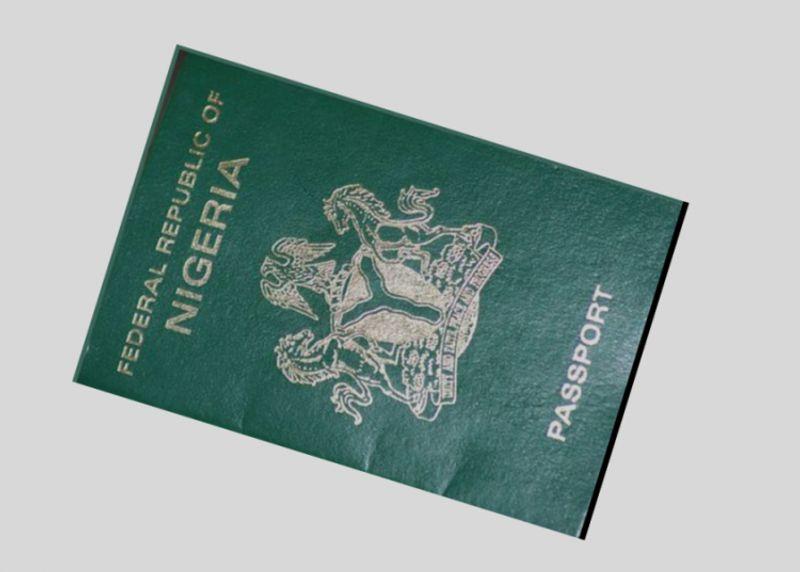
- Nigeria’s passport rose six places on the Henley Passport Index, moving from 95th in January 2024 to 89th in April 2026
- Despite the ranking gain, Nigerians can now access fewer countries without a prior visa as visa-free access dropped from 46 destinations in January 2025 to 44 in April 2026
- Analysts say migration pressure, weak diplomacy and domestic instability continue to hurt Nigeria’s global mobility
Nigeria’s passport has climbed six places on the global passport ladder since President Bola Tinubu took office in May 2023, but the improvement masks a more sobering reality: Nigerians can now travel to fewer countries without securing a visa in advance.
According to the April 2026 edition of the Henley & Partners Passport Index, Nigeria moved from 95th position in January 2024 to 89th in April 2026.
Yet despite the improved ranking, the number of destinations Nigerian passport holders can access without a prior visa has dropped from 45 in January 2024 to 44 in April 2026.
The data suggests that Nigeria’s rise in the rankings reflects not a significant strengthening of its passport, but rather a decline in the mobility power of other countries previously ranked above it.
In practical terms, Nigerians now enjoy access to fewer countries than they did a year ago, despite the country’s improved global standing.
A review of the Henley Passport Index shows that Nigeria had access to 46 destinations in January 2025, but that number has now fallen to 44.
The drop follows policy changes by several countries that have quietly moved Nigeria into stricter visa categories.
Among the most notable changes is Ethiopia, which ended visa-on-arrival access for Nigerians in October 2022 and now requires travellers to obtain visas through its embassy in Abuja before departure.
Once regarded as one of the easiest African destinations for Nigerians to visit, Ethiopia has become significantly less accessible.
Other countries that have tightened entry rules for Nigerians include Zambia, Zimbabwe, Lesotho, Mauritania, São Tomé and Príncipe, and Somalia, all of which now require Nigerians to obtain visas before travel.
Although Nigeria lost access in some markets, it also gained entry into nine new destinations between 2025 and 2026, including Fiji, Micronesia, Mozambique, Rwanda, Togo, Samoa, Palau, Niue, and Montserrat.
However, most of these countries maintain broadly relaxed visa policies for developing nations, limiting the extent to which the gains reflect stronger diplomatic leverage by Nigeria.
The Henley Passport Index, now in its 21st year, ranks 199 passports using data from the International Air Transport Association and measures global mobility based on the number of destinations passport holders can enter without first obtaining a visa.
Historically, Nigeria’s passport has weakened considerably.
In 2006, it ranked 62nd globally. Two decades later, it has fallen 27 places to 89th, underlining the long-term erosion of Nigeria’s travel mobility.
Within West Africa, Nigeria continues to trail many of its peers. Ghana ranks 67th globally with access to 67 visa-free destinations, while The Gambia ranks 66th with 68. Senegal sits at 77th with 56 destinations, while Burkina Faso, Côte d’Ivoire and Guinea-Bissau also rank ahead of Nigeria.
Across Africa, South Africa remains the continent’s strongest passport, ranking 46th globally with access to 100 destinations. Botswana follows with 81 destinations, while Namibia, Morocco, Kenya and Ghana also outperform Nigeria in visa-free travel access.
Globally, Singapore retains the world’s most powerful passport with access to 192 destinations without a prior visa, while Afghanistan remains the weakest, with access to just 23 destinations.
Analysts say Nigeria’s shrinking visa-free access reflects broader concerns about governance, migration pressure and the country’s international perception
Charles Onunaiju, Research Director at the Centre for China Studies in Abuja, said worsening domestic conditions have contributed to tighter scrutiny of Nigerian travellers abroad.
He said many countries now impose tougher travel restrictions on Nigerians because of rising migration pressures and the growing perception that more Nigerians are desperate to leave the country in search of better opportunities.
A former official of the Nigeria Immigration Service, argued that visa-free access is driven largely by bilateral agreements and regional arrangements, rather than by passport technology alone.
According to the former official, while Henley’s ranking offers useful insight into travel access, the Nigeria Immigration Service remains focused on improving passport security and ensuring compliance with standards set by the International Civil Aviation Organization.
Ghana approves visa-free entry for all African nationals
Meanwhile, TheRadar earlier reported that the President of Ghana, Nana Addo Dankwa Akufo-Addo, had approved a groundbreaking policy granting visa-free entry to Ghana for all African nationals.
With the initiative, Ghana joined an exclusive group of African nations offering visa-free access to all African passport holders, including Rwanda, Seychelles, The Gambia, and Benin.
This policy underscored Ghana’s commitment to enhancing the free movement of people, goods, and services across the continent, a key objective of the African Continental Free Trade Area (AfCFTA).