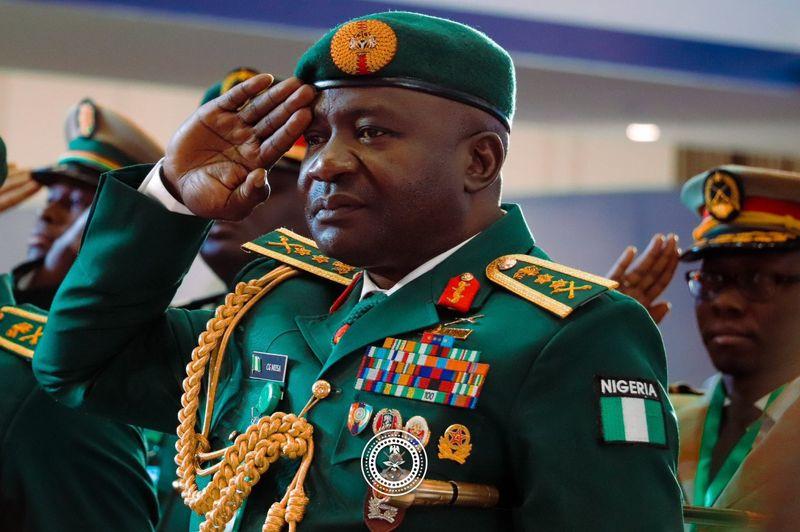
- Nigeria and Türkiye have agreed to establish a military training facility in Nigeria with an initial group of Nigerian military personnel travelling to Türkiye for training
- A permanent coastal location has already been identified, while a temporary site will begin operations
- Nigerian troops will receive training in counterterrorism, Special Forces operations, intelligence, counter-drone warfare and UN missions
Nigeria and Türkiye have agreed to establish a major military training facility in Nigeria as part of a broader defence partnership aimed at improving the country’s security capacity.
The agreement was reached during bilateral discussions between Nigeria’s Minister of Defence, Christopher Musa, and his Turkish counterpart at the Antalya Diplomacy Forum 2026.
According to a statement issued by the Ministry of Defence’s Chief Information Officer, Queeneth Iheoma-Hart, the planned centre will become a long-term hub for military training and capacity building.
Nigeria has already identified a coastal site for the permanent facility, while a temporary site will be used to begin operations.
The agreement will also see Nigerian military personnel receive specialised training in Special Forces operations, counterterrorism, intelligence integration, counter-drone warfare, counter-IED operations and United Nations pre-deployment exercises.
“The Minister of Defence, General Christopher Gwabin Musa (retd.), led a high-level Nigerian delegation to productive bilateral talks with the Turkish Minister of Defence at the Antalya Diplomacy Forum 2026,” the statement said.
It added that “Türkiye proposed structured, scalable training programmes for Nigerian armed forces in areas including Special Forces operations, counterterrorism, intelligence integration, counter-drone and counter-IED operations, and UN pre-deployment training.”
As part of the arrangement, an initial group of Nigerian personnel will be deployed to Türkiye for training.
The programme will also include Turkish language lessons and field training exercises.
Both countries also agreed to establish “a major military training facility in Nigeria as a long-term centre of excellence,” while Nigeria will provide a temporary training location ahead of the permanent site’s completion.
Beyond training, the defence partnership includes technology transfer, defence industry collaboration and joint development of military capabilities.
The two countries also pledged cooperation in surveillance systems, unmanned aerial platforms and satellite-enabled monitoring to tackle increasingly complex security threats.
According to the statement, there was also “agreement to begin immediate technical engagements to define and implement integrated border management, enhanced intelligence sharing and coordinated responses to technologically sophisticated non-state threats.”
Türkiye further offered to share best practices on reintegration programmes to support Nigeria’s management of surrendered fighters and community reintegration efforts.
The agreement also covers improvements in logistics, maintenance systems and training for the Nigerian Air Force, alongside discussions on the possible acquisition of helicopters and unmanned systems.
Naval cooperation is expected to form another key aspect of the partnership, with Nigerian officials set to engage Turkish authorities on maritime training and the potential purchase of naval platforms to improve maritime security.
Speaking on the outcome of the talks, Christopher Musa described the agreement as “a significant step forward” in Nigeria–Türkiye defence relations.
“We are committed to delivering tangible, measurable results that strengthen our national security and advance the Renewed Hope Agenda,” he said.
Reacting to the development, security expert Ahmed Usman welcomed the initiative but warned that military success would depend not only on new tactics and training, but also on the welfare of troops.
He stressed that while specialised military training is important in addressing insurgency and banditry, “a well-motivated force is a more effective force.”
Usman called for better remuneration, insurance, psychological support and living conditions for security personnel operating in dangerous environments.
He warned that without improving troop welfare, the gains from advanced military training and modern warfare tactics could be weakened by low morale and exhaustion among frontline personnel.
Nigeria launches Armed Forces Medical College amid 340,000-doctor shortfall
Meanwhile, TheRadar earlier reported that the Federal Government had announced plans to establish the Armed Forces College of Medicine and Health Sciences (AFCOM&HS), a bold initiative aimed at boosting military medical readiness while expanding Nigeria’s healthcare training capacity.
As part of the NESRI 6-Point Agenda, particularly its focus on strengthening STEMM education, the proposed college is designed to create a sustainable pipeline of combat casualty-trained doctors, trauma surgeons, emergency response medics, military public health experts, disaster and humanitarian response professionals, and other allied health specialists for the Armed Forces.