- Nigeria disbursed ₦2.3 trillion to security agencies in special intervention funds
- Additional ₦450 billion and ₦40 billion were released for allowances and security operations
- Insecurity remained the top constraint for businesses despite increased spending
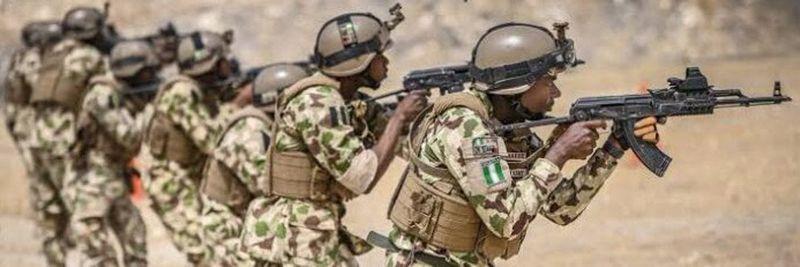
Military and paramilitary agencies in Nigeria received a total of ₦2.3 trillion in special intervention funding between October 2023 and September 2025, according to documents from the Federation Account Allocation Committee (FAAC).
The records, obtained from the Office of the Accountant-General of the Federation, show that the funds were disbursed in 23 tranches of ₦100 billion each under a dedicated intervention programme designed to support security operations.
The ledger indicates that the intervention account functioned primarily as a transit channel, with each inflow matched by an equivalent disbursement, leaving no residual balance after payments were made to security agencies.
The funding programme was executed in three phases. The first phase, covering allocations from September 2023 to June 2024, accounted for ₦1 trillion across 10 tranches. A second phase, spanning July 2024 to April 2025, added another ₦1 trillion in similar instalments.
A third phase, which began in mid-2025, contributed an additional ₦300 billion through three tranches, bringing the total to ₦2.3 trillion over nearly two years.
While the documents confirm the scale and consistency of the disbursements, they do not provide details on how the funds were distributed among the armed forces and paramilitary agencies, nor do they specify the projects or operations financed.
In a related development, the Federal Government also released ₦450 billion for non-regular allowances to security personnel within a three-month period in 2025. The payments, drawn from non-oil revenues, were issued in three tranches of ₦150 billion each between April and June.
Additionally, ₦40 billion was allocated for security funding through the Office of the National Security Adviser in September 2025, further underscoring the scale of government spending on security.
Despite these substantial investments, insecurity continues to pose a major challenge to Nigeria’s economy. Findings from the Central Bank of Nigeria (CBN) Business Expectations Survey for February 2026 identified insecurity as the most pressing constraint facing businesses.
According to the report, insecurity ranked highest with an index score of 71.1, surpassing other concerns such as high taxes and inadequate power supply.
The findings highlight a persistent gap between government spending on security and the lived realities of businesses and citizens, with safety concerns continuing to weigh heavily on economic activity and investment decisions.
Analysts say the data raises important questions about the effectiveness, transparency, and impact of intervention funding, as Nigeria grapples with ongoing security challenges despite record levels of expenditure.