
- Despite suing Binance for $80 billion, the government affirms its willingness to support regulated crypto operations
- The Federal Government accuses Binance of causing economic losses and violating financial regulations
- However, the Minister of Information, Mohammed Idris, clarifies that the lawsuit is aimed at strengthening crypto regulations
Despite an ongoing $80 billion lawsuit against Binance, the Nigerian government has reaffirmed its openness to cryptocurrency companies, emphasising its commitment to regulatory compliance rather than targeting specific firms.
Last month, the Federal Government sued Binance, the world’s largest cryptocurrency exchange, citing economic losses allegedly linked to its operations in Nigeria.
The lawsuit came after Nigerian authorities detained Binance’s US-based staff member, Tigran Gambaryan, in connection with a money laundering investigation.
Gambaryan was held for eight months before being released, and the charges against him were later dropped.
Binance, which ceased all transactions in Nigeria in March 2024, has denied the allegations.
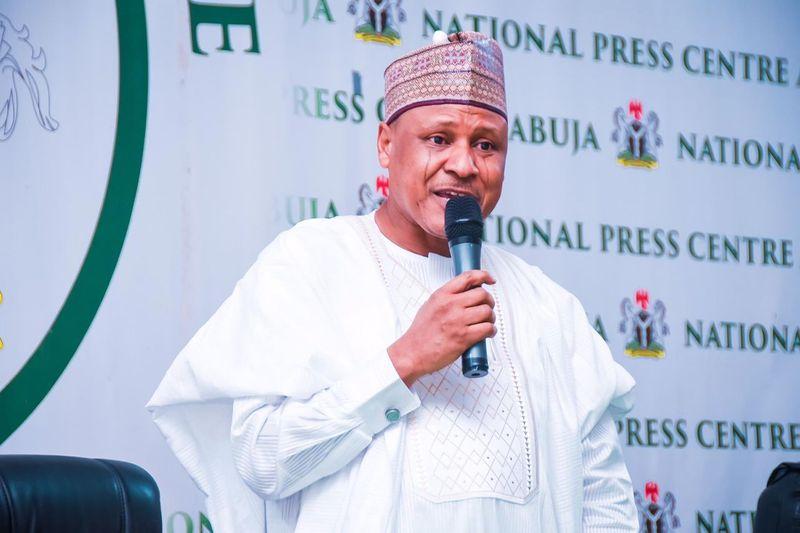
In an interview with Semafor, a news platform, on Friday, March 21, the Minister of Information and National Orientation, Mohammed Idris, clarified that the legal action against Binance was part of efforts to regulate the crypto sector, not an attack on digital asset companies.
“We are ensuring that no one comes and operates without regulation,” Idris stated.
He pointed out that other crypto firms continue to operate in Nigeria without facing legal challenges, reinforcing that compliance with financial regulations is the key issue.
“There are other companies operating in the crypto sector in Nigeria; you don’t see them facing charges,” he added.
The minister also raised concerns about the potential misuse of cryptocurrencies for illegal activities such as money laundering, terrorism financing, and tax evasion.
According to him, ensuring that crypto transactions align with financial regulations is crucial to maintaining economic stability.
Idris stressed that illicit financial flows pose a global threat and that Nigeria is not alone in its efforts to tackle these risks.
He emphasised the need for international collaboration to regulate digital transactions effectively.
“It is not just Nigeria. Internationally, it’s also important to address illicit financial flows. You can’t have a huge amount of transactions that do not meet the operations of financial dealers,” he stated.
Binance executive Gambaryan releases names of Nigerian legislators in $150M bribe scandal
Meanwhile, TheRadar earlier reported that Tigran Gambaryan, the Head of Financial Crime at cryptocurrency firm Binance, named three Nigerian lawmakers who allegedly demanded a $150 million bribe from him.
In his statement, he identified the lawmakers as Philip Agbese, Deputy Spokesperson for the House of Assembly; Ginger Obinna Onwusibe, Chairman of the House of Representatives Committee on Anti-Corruption; and Peter Akpanke, a member representing the Obanliku/Obudu/Bekwara constituency.
