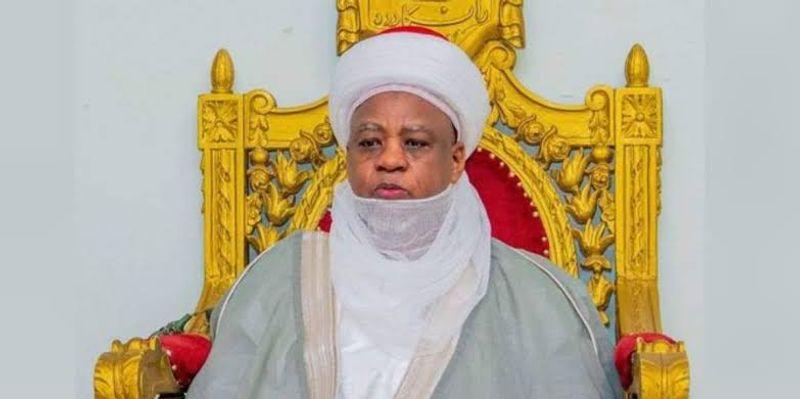
- The Sultan of Sokoto and the Nigerian Supreme Council for Islamic Affairs spiked tension among Southwesterners after they defended Sharia law panels
- However, the Society for Yoruba Culture Renaissance has urged the preservation of the region's peaceful coexistence and rich cultural heritage
- The group also criticised the impact of Sharia law in northern Nigeria, linking it to increased suffering and insecurity
A group representing the Society for Yoruba Culture Renaissance strongly opposed the establishment of Sharia panels in southwestern states, including Oyo and Ekiti.
In a press statement released on Thursday, January 30, the group declared that the application of Sharia law was foreign to Yoruba society and could potentially disrupt the peaceful coexistence between people of different religious backgrounds.
“Yoruba is an ethnic nation with a unique culture, and we will not allow Arab culture to erode ours. In Yorubaland, people of the same parents practice different religions and coexist peacefully, a situation not often seen in Northern society.
“We want this harmony to continue in the Southwest, so we reject any attempt to impose Sharia law that could sever relationships between family members.”
“Keep Sharia law in Sokoto and other Northern states. Yorubaland will maintain its peaceful nature and uphold its cultural values,” the group stated.
The statement also criticised the impact of Sharia law in northern Nigeria, claiming it had not benefited society and had instead worsened the suffering of the people.
Ekiti government rejects recognition of Sharia panels
“The Sharia law practised in the north has not added value to the society but has exacerbated the suffering of the people. We call attention to the origins of Boko Haram and other terrorist groups, which began with the implementation of Sharia law. We do not want such destabilisation in our society.”
The group’s remarks followed the recent public sitting of the Independent Sharia Arbitration Panel in Ekiti State, held at the Oja Oba Central Mosque in Ado-Ekiti.
The Ekiti State Government responded by saying that the state's legal framework did not recognise Sharia Courts or the Independent Sharia Arbitration Panel.
Sultan of Sokoto’s NSCIA pushes for Sharia law in Southwest
However, the Nigerian Supreme Council for Islamic Affairs (NSCIA), led by the Sultan of Sokoto, Alhaji Muhammad Sa'ad Abubakar, defended the establishment of the Sharia panels, stating that it was legal under the 1999 Constitution of Nigeria (as amended), specifically Section 275.
The NSCIA urged governors and traditional rulers in southern Nigeria to respect the constitutional rights of Muslims to practice their religion, without obstruction.
Reacting, the Society for Yoruba Culture Renaissance argued that Sharia law was an Arabic cultural practice suited to societies with a predominantly Muslim population, a situation not reflective of Yorubaland.
Yoruba group rejects Sultan’s call for Sharia
“The Sultan of Sokoto, as the title implies, is the Sultan of Sokoto, and his emirate does not include Yorubaland. Islam has existed in Yorubaland for centuries, and Yoruba Muslims have never been marginalised or denied their rights. Claims of preventing students from wearing hijab are false and serve only to blackmail the peace-loving Yoruba people.
“We reject any attempt to disguise the invasion or eradication of our culture and values. The Usman Danfodio Jihad eroded the culture of the Hausas, and we do not want the same to happen in our society. Yoruba people will settle their internal issues independently and focus on addressing the myriads of issues affecting our communities.”
The group also accused the Sultan of Sokoto of attempting to stir religious tension in southwestern Nigeria by advocating for the implementation of Sharia law in the region.
Yoruba group vows to protect values, criticises Sultan
The group said, “Our attention has been drawn to the misguided press release by the Nigeria Supreme Council of Islamic Affairs.
“Since Yoruba Afenifere, the pan-Yoruba group, has refused to respond to such a divisive play by the Sultan of Sokoto that is capable of causing religious crisis in Yorubaland, our group, the Society for Yoruba Culture Renaissance, has taken it upon ourselves to respond to such a disrespectful press release.
“The Yoruba people firmly reject the imposition of Sharia law or any Sharia panel in Yorubaland. Sharia law is alien to our society, as it is an Arabic cultural practice suited for societies with over 80% Muslim population. Yorubaland has a rich history of traditional values, culture, and language that we hold dear.
“Our ‘Omoluabi’ ethos is sacrosanct, and it is this ethos that has ensured peaceful coexistence among Yoruba people of different religious beliefs for over 300 years. Unlike the frequent religious crises in Sokoto and other Sharia states in Northern Nigeria, Yorubaland has remained peaceful.”
Afenifere, CAN, other groups reject push for Sharia law in Southwest
Meanwhile, TheRadar earlier reported that Christian and Muslim leaders in the Southwest rejected the Supreme Council for Islamic Affairs' push for a Shari’a arbitration panel, citing concerns over its implications.
Governments and traditional rulers, including in Ekiti, objected to the panel, asserting that existing legal frameworks were sufficient for resolving disputes within the Muslim community.