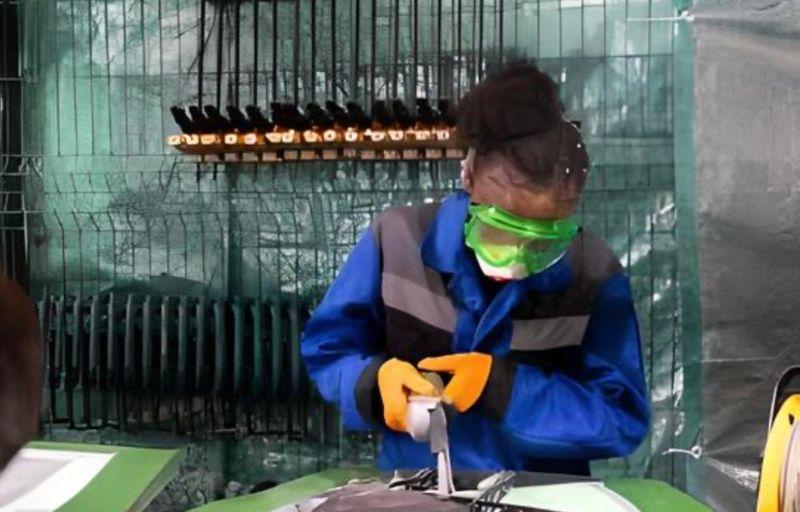
- The Alabuga Start programme, Russia has drawn significant attention for its recruitment practices across Africa, Asia, and Latin America
- African women reportedly recruited online with promises of adventure are now involved in key weapons production in Russia
- Many workers reported harsh conditions, long hours, and exposure to dangerous chemicals
Nigerians and other Africans recruited through online platforms to work in Russia have alleged they were deceived into building drones for Ukraine's military operations.
In interviews with the Associated Press (AP), several women voiced grievances about gruelling work hours under constant monitoring, unfulfilled promises regarding wages and studies, and exposure to harsh chemicals that caused skin irritation and scarring.
Social media ads lure young African women
"I don’t really know how to build drones," said an African woman who had left her job back home to take the Russian offer.
The social media ads offered young African women a free flight, cash, and the promise of an exciting adventure in Europe. All they had to do was finish a computer game and a short 100-word Russian vocabulary test.
The Alabuga Start programme’s Facebook page indicated that 182 women were recruited in the first half of this year, mainly from Central and East Africa. The initiative also reached out to South America and Asia to support women in beginning their careers.
Recruits meet weapons factory not advertised hospitality programs
According to messages on Alabuga's Telegram channel, officials organised recruiting events in Uganda and attempted to recruit from orphanages. Additionally, Russian officials have visited over 26 embassies in Moscow to promote the programme.
The campaign did not provide any reasons for not seeking older women or men. However, some analysts speculated that officials may think younger women are easier to manage.
Upon reaching Russia’s Tatarstan region, some realised they weren’t participating in the advertised work-study programmes in hospitality and catering but would be working in a weapons factory, assembling thousands of Iranian-designed drones to be fired at Ukraine.
Airframe worker reveals struggle to afford essentials after deductions
Recruits were initially promised $700 a month by the programme, but later, social media announcements placed the figure at over USD 500.
According to the airframe assembly worker, her salary was cut to cover accommodation, airfare, medical expenses, and Russian-language classes, making it difficult for her to pay for essentials like bus fare with the remaining amount.
In an interview with AP, the airframe worker stated that recruits are instructed on how to construct the drones and apply a caustic substance that has a consistency similar to yoghurt.
Chemicals cause painful skin irritation, airframe worker
According to her, many workers are without protective equipment, and she added that the chemicals made her face feel like it was being pricked by tiny needles, creating small, itchy holes in her cheeks.
"Goodness, I could scratch myself forever! I don’t think I could ever get tired of it," she remarked.
"So many girls are suffering," she added. A video sent to AP displayed another woman dressed in an Alabuga uniform, with her face affected in a similar way.
Young Nigerian women, others target for wartime labour shortages
Although one woman enjoyed her time at Alabuga, citing good pay and the chance to meet new people and experience a different culture, the majority of those interviewed by AP felt differently about their compensation and believed that life there did not meet their expectations.
To combat a wartime labour shortage, Russia has been targeting young women aged 18-22 from countries like Uganda, Rwanda, Kenya, South Sudan, Sierra Leone, Nigeria, and Sri Lanka, with plans to extend recruitment into more areas of Asia and Latin America.
As a result, around 200 African women, alongside Russian vocational students as young as 16, are now responsible for some of Moscow's key weapons production in a plant located in the Alabuga Special Economic Zone in Tatarstan, roughly 1,000 kilometres (600 miles) east of Moscow, according to an AP investigation.
Difficult working conditions for African women at Alabuga facility
Fabian Hinz, a drone expert with the International Institute for Strategic Studies, confirmed the use of caustic substances in their manufacturing.
AP contacted the authorities in 22 countries from which Alabuga claimed to have recruited citizens for the program. Most did not reply, while others stated they would investigate.
The AP investigation, which involved satellite imagery analysis of the industrial site, internal document reviews, interviews with several African women employed there, and the discovery of numerous recruitment videos from the “Alabuga Start” program, sheds light on the difficult working conditions they face.
About 90% in Alabuga start programme on drone production
According to experts and the AP investigation, Alabuga is the only Russian production facility that recruits women from Africa, Asia, and South America for weapons manufacturing.
David Albright, a former UN weapons inspector now with the Washington-based Institute for Science and International Security, stated that about 90 per cent of the foreign women recruited through the Alabuga Start program are involved in drone production, primarily focusing on tasks that require minimal skill.
Documents leaked last year and confirmed by Albright and another drone expert reveal that the workforce is projected to expand from just under 900 people in 2023 to over 2,600 by 2025. These documents indicated that foreign women primarily handle drone assembly, as well as the use of chemicals and painting them.
Japa: “Stop going to countries worse than Nigeria” - NIDCOM chairman Dabiri warns
Meanwhile, TheRadar earlier reported that the Nigerians in Diaspora Commission (NIDCOM) Chairman, Hon. Abike Dabiri-Erewa appealed to Nigerians to stop fleeing to worse countries.
She mentioned that some Nigerians who were evacuated from Mali are among the girls shouting for help from a prison in Mali in a viral video.