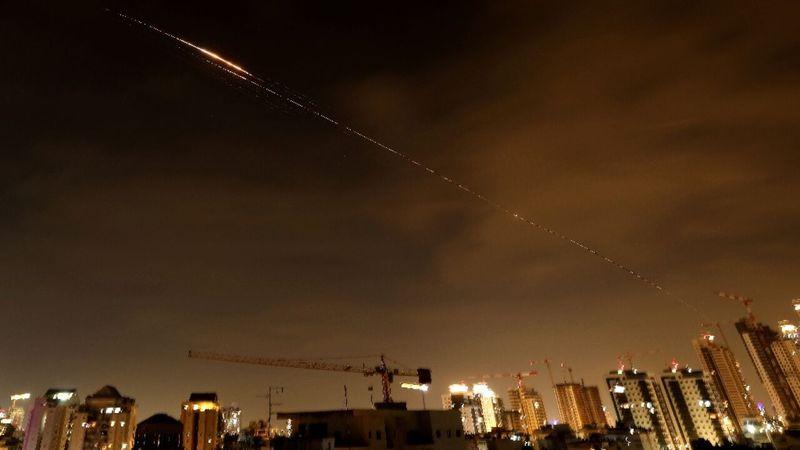
- Israel has launched new airstrikes on Tehran, the capital of Iran, as the conflict with Iran intensifies
- Iran threatened to attack regional infrastructures after Trump’s 48-hour ultimatum
- Thousands reported dead in Iran as war enters fourth week
Israel launched a fresh round of airstrikes on Iran’s capital, Tehran, on Monday, March 23, as tensions escalated in a widening conflict that is now shaking global energy markets.
According to Iranian state media, multiple explosions were heard across the city, while regional powers including Saudi Arabia and the United Arab Emirates reported intercepting incoming missiles and drones.
The war, sparked by joint Israel-US operations against Iran, has entered its fourth week, with devastating consequences for global oil supply.
The head of the International Energy Agency, Fatih Birol, revealed that at least 40 major energy facilities across the oil-rich region have been “severely or very severely damaged.”
Iran has responded to the ongoing strikes by launching missiles and drones targeting Israel, US diplomatic missions, and key infrastructure across the Gulf. It has also tightened control over the Strait of Hormuz, a critical route responsible for transporting roughly one-fifth of the world’s crude oil.
With oil prices climbing above $100 per barrel amid fears of supply disruption, US President Donald Trump issued a stark warning, threatening to “obliterate” Iran’s power plants if the Strait is not reopened within 48 hours.
The ultimatum, set to expire late Monday night GMT, drew a sharp response from Iran. Parliament Speaker Mohammad Bagher Ghalibaf declared that key infrastructure across the region would “be considered legitimate targets and will be irreversibly destroyed” if the threat is carried out.
Highlighting the scale of the crisis, Birol warned that about 11 million barrels of oil per day have already been wiped off global supply, exceeding losses seen during back-to-back oil crises in the 1970s.
“No country will be immune to the effects of this crisis if it continues to go in this direction. So there is a need for global efforts,” he said during a briefing in Canberra.
Iran eyes Hormuz tolls as markets react
Asian markets dipped on Monday, March 23, while oil prices surged again.
Iran has selectively allowed ships from allied nations to pass through the Strait of Hormuz but warned that vessels linked to countries backing the attacks could be blocked.
Lawmakers in Tehran are also considering imposing tolls on ships using the route.
Ghalibaf emphasised that maritime operations would “not return to its pre-war status.”
Despite earlier remarks about possibly “winding down” the conflict, Trump’s latest threats signal a potential escalation.
Conflict expands to Lebanon
Israeli Prime Minister Benjamin Netanyahu indicated that the military campaign could stretch over several weeks, targeting Iran and its regional allies.
Israel has intensified operations against Hezbollah in Lebanon, including strikes on strategic bridges near the Litani River. The Israeli military claims the structures were used for militant movements.
“Citizens of Israel, we face more weeks of fighting against Iran and Hezbollah,” said military spokesperson Brigadier General Effie Defrin.
Lebanon has borne a heavy toll, with over 1,000 fatalities and more than one million people displaced, according to authorities.
Lebanese President Joseph Aoun condemned the bridge attacks, stating they “represent a dangerous escalation and flagrant violation of Lebanon’s sovereignty and are considered a prelude to a ground invasion.”
Prime Minister Nawaf Salam, however, partly blamed Hezbollah’s involvement, noting:
“It was declared that this war was in retaliation for the assassination of Khamenei, so this means this war was imposed upon us.”
Missile strikes hit Southern Israel
Despite Israel’s advanced air defence systems, Iranian missiles breached defences and struck two southern towns, including Dimona, near the country’s sensitive nuclear facility.
Dozens were injured in the attacks.
“We thought we were safe,” said Galit Amir, a resident of Dimona. “We didn’t expect this.”
Netanyahu vowed to personally pursue senior commanders of Iran’s Revolutionary Guards as he inspected damage in Arad.
Iran claimed the Dimona strike was retaliation for an earlier attack on its nuclear facility in Natanz. Israel, however, said it was “not aware of a strike” on the site.
According to the US-based Human Rights Activists News Agency, at least 3,230 people have died in Iran since the conflict began, including over 1,400 civilians.