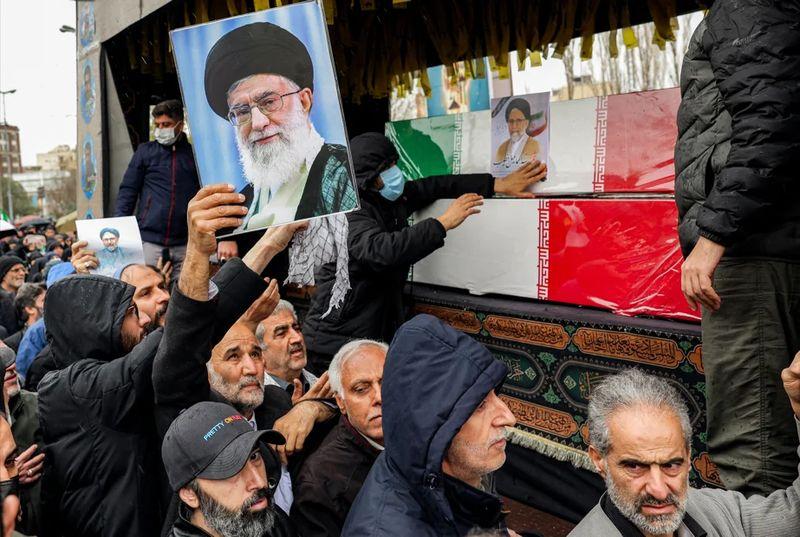
- Ali Khamenei was reportedly killed in early US-Israeli airstrikes, with Mojtaba Khamenei said to have assumed leadership
- Several top figures, including Ali Larijani and Mohammad Pakpour, were killed, severely impacting Iran’s leadership
- Despite heavy losses, Iran continued military operations, while Benjamin Netanyahu described the country’s leadership as collapsing
A wave of coordinated US-Israeli airstrikes has reportedly dealt a devastating blow to Iran’s leadership, with multiple high-ranking political and military figures killed after nearly three weeks of intense conflict.
Among those reported dead is Iran’s long-serving supreme leader, Ali Khamenei, whose death marks a historic turning point for the Islamic Republic. According to reports, Khamenei was killed in the opening hours of the war on 28 February during a strike targeting a high-level meeting in Tehran. Several members of his family were also said to have died in the attack.
Despite the loss, Iran has moved swiftly to maintain continuity in leadership. Khamenei’s son, Mojtaba Khamenei, reportedly survived the strike and has assumed the role of supreme leader, although he has yet to make a public appearance.
Israeli Prime Minister, Benjamin Netanyahu, described Iran as “being decimated”, while Israeli military statements characterised the country’s leadership structure as a “house of cards that is collapsing”. Nevertheless, Iranian authorities have continued military operations, demonstrating resilience despite heavy losses.
Other prominent figures killed include former national security council chief, Ali Larijani, who died in an Israeli strike on 17 March in the Tehran region. Larijani, a key figure in Iran’s political establishment for decades, had appeared publicly at a pro-government rally just days before his death.
The conflict has also severely impacted Iran’s military command. Revolutionary Guards commander-in-chief, Mohammad Pakpour, was killed on the first day of the war. He had only assumed the role in 2025 and has since been replaced by Ahmad Vahidi.
Among other casualties is senior adviser Ali Shamkhani, a long-standing figure in Iran’s defence establishment, who was killed in an early strike. Intelligence Minister Esmael Khatib and Defence Minister Aziz Nasirzadeh were also reported killed, alongside Basij commander Gholamreza Soleimani.
In the latest development, Revolutionary Guards spokesman Ali Mohammad Naini was killed in a pre-dawn strike on Friday, which Iranian authorities condemned as a “cowardly” attack by the United States and Israel.
Further losses include Mohammad Shirazi, head of the supreme leader’s military office, and armed forces chief of staff Abdolrahim Mousavi, both of whom were killed at the outset of hostilities.
While the scale of the casualties represents one of the most significant blows to Iran’s ruling structure in decades, analysts note that the Islamic Republic has thus far demonstrated an ability to rapidly replace key figures and sustain its war effort. The conflict continues to evolve, with fears of further escalation across the region remaining high.