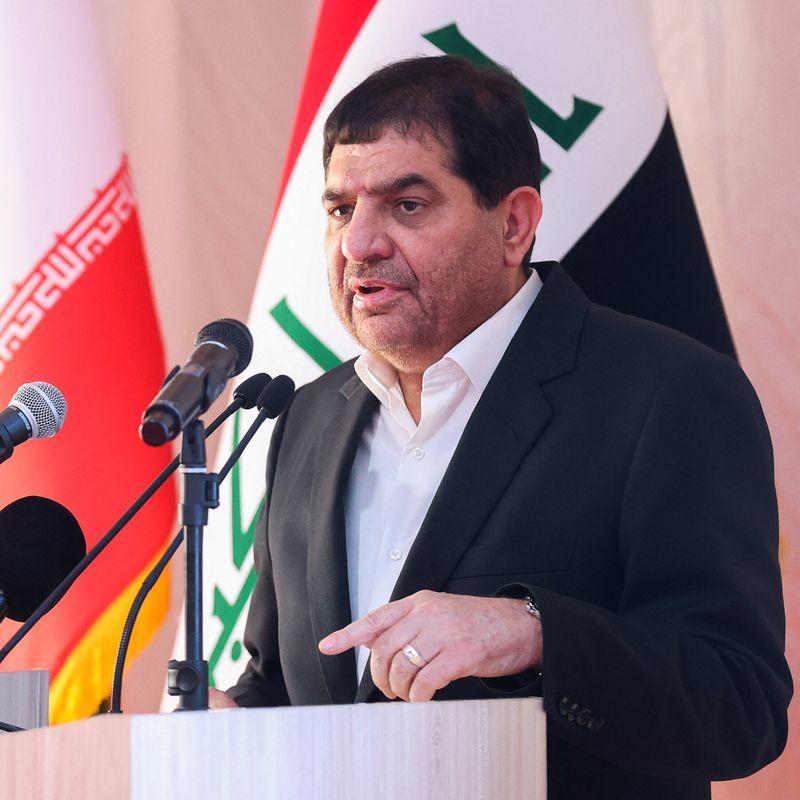
- Mohammad Mokhber stated that Iran would not negotiate with the United States following Khamenei’s death
- He emphasised Tehran’s distrust of Washington and readiness to continue regional military operations
- The announcement coincided with preparations for Khamenei’s state funeral and ongoing US-Israeli strikes in Tehran
Mohammad Mokhber, a senior aide to the late Supreme Leader Ayatollah Ali Khamenei, has declared that Iran has no intention of negotiating with the United States, signalling that the country is prepared to continue military operations in the Middle East for as long as necessary.
Speaking to state television on Wednesday, Mokhber emphasised that Tehran has no trust in Washington and sees no basis for dialogue. “We will not go into any negotiation with the US. The Americans cannot be trusted. We can continue the war as long as we want,” he said.
The statement comes in the wake of the US-Israeli strikes that killed Khamenei over the weekend, an event that has heightened tensions across the region. Mokhber’s comments underline Tehran’s determination to assert its strategic position despite mounting international pressure.
Iran has announced plans for a three-day state funeral for the late Supreme Leader. According to the Islamic Development Coordination Council, “Starting at 10:00 pm (1830 GMT), the faithful will be able to pay a final homage to the body of the martyred guide of the nation by visiting the Imam Khomeini Grand Mosque” in Tehran. Khamenei, who was 86 at the time of his death, is expected to be buried in his hometown of Mashhad in northeastern Iran.
Strikes have continued to impact Tehran since Saturday, targeting military and government infrastructure, though authorities have indicated that funeral arrangements will proceed with proper precautions for the expected large crowds. The postponement of some ceremonies earlier this week was reportedly due to logistical considerations related to the anticipated participation of millions of mourners.
Observers note that Mokhber’s remarks reflect a hardline position within Iran’s political and military leadership. Analysts have suggested that Iran may escalate regional operations in response to the killing of its Supreme Leader, further complicating diplomatic efforts and heightening the risk of broader conflict.
The combination of ongoing strikes, the state funeral of Khamenei, and Iran’s public refusal to engage with the United States paints a picture of a nation entering a tense period, where domestic mourning intersects with international hostilities.
Iranian authorities have assured citizens that all security measures will be taken during the funeral ceremonies and that the leadership remains committed to protecting the nation’s sovereignty in the face of foreign aggression.