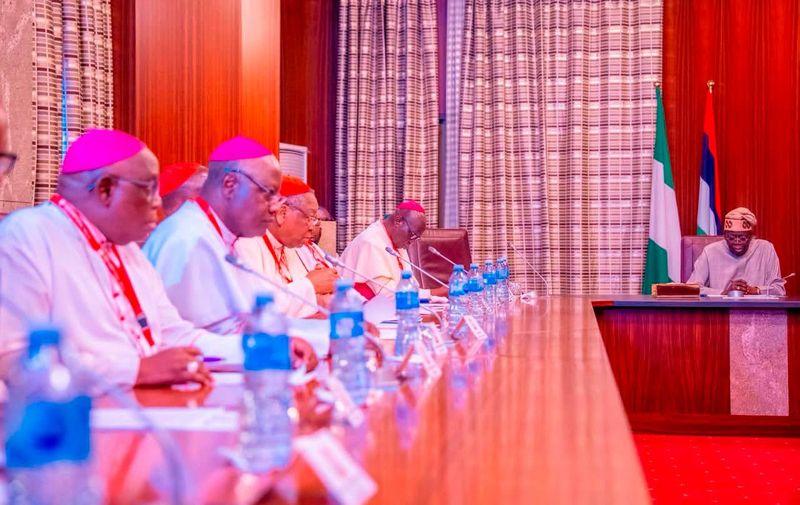
- The Onaiyekan vs Presidency controversy has entered a new phase driven by social media reactions as Presidential aide Temitope Ajayi defended President Tinubu in a public statement
- The statement accused Cardinal John Onaiyekan of abusing "clerical privilege" and rather than calming tensions, the response sparked widespread criticism from Nigerians on X
- The debate has expanded beyond politics into questions about the Church's role in speaking truth to power
Sometimes, the biggest political battle doesn't happen at the podium, it happens in the comment section.
What began as a disagreement between Cardinal John Onaiyekan and the Presidency has now exploded into a full-blown social media showdown after presidential aide Temitope Ajayi released a lengthy defence of President Bola Tinubu, accusing the respected cleric of abusing "clerical privilege."
Instead of ending the controversy, the statement appeared to pour fuel on it, with Nigerians on X flooding the replies with criticism, historical references, and blunt reminders that speeches and intelligence briefings do little to ease the country's economic hardship.
The online reaction has shifted the conversation beyond a Villa meeting or a television interview. It has become a wider debate about free speech, accountability, the Church's role in speaking truth to power, and whether public officials can dictate who gets to tell their side of a meeting with the President.
As both sides dig in, one thing is clear: this saga is no longer just happening inside Aso Rock, it now belongs to the streets and social media.
The long statement from Aso Rock
Presidential aide Temitope Ajayi released a full statement, posted via Bayo Onanuga's page, defending the President and criticising Cardinal Onaiyekan's TV appearance.
His central argument: the Cardinal broke an unspoken trust by going on ARISE News to share his own account of a private Villa meeting. Ajayi described it, in his own words, as an "abuse of clerical privilege."
Ajayi's statement also defended Tinubu's economic record, pointing to states now paying civil servants and pensioners more consistently than in previous years as evidence of progress.
He further argued that the President has access to better information than the bishops do, since Tinubu receives daily security and intelligence briefings that the public never sees.
In short, the message was: the President has the full picture. There was no need to air it on television.
The public wasn't convinced
Nigerians read the statement and responded with force, mostly in the replies.
One user pushed back strongly, arguing that no Nigerian needs presidential permission before speaking about matters that affect their own lives, since the President is accountable to citizens, not the other way around.
Another comment went straight for the core issue, pointing out that intelligence briefings and newspaper reading don't put food on anyone's table or reduce the number of Nigerians living in poverty.
A third response brought historical context, noting that the Catholic Church has been challenging kings and rulers on matters of justice long before many modern nations even existed, and referenced Pope John Paul II's intervention in the Ogoni Nine case under the Abacha regime.
That last point stood out. Few expected a social media reply to bring centuries of Church history into a 2026 political dispute, but it happened.
The "Prophets speaking truth to power" perspective
Some responses took a more spiritual angle.
One user compared Onaiyekan to Old Testament prophets who delivered uncomfortable truths to kings and faced backlash for it, suggesting the Presidency's strong reaction only proves the message hit its mark.
Another challenged the entire "clerical privilege" framing outright, arguing there is no rule preventing a Cardinal from speaking publicly simply because he met with a public official.
Whether or not you agree, one thing is certain: no one read that lengthy statement and simply moved on quietly.
Why the church's role matters here
Several responses pointed to the Catholic Church's long global history of speaking out on governance and justice, framing it not as a uniquely Nigerian issue, but as centuries of established tradition. That context is doing significant work in shaping public opinion.
It also helps explain why many Nigerians, including non-Catholics, are siding with the Cardinal. For a lot of people, this isn't really "Church versus Government," it's "ordinary voice versus power," and Onaiyekan simply happens to be the one wearing the collar.
Where does this leave things?
The Presidency attempted to close the matter with a detailed, structured defence. Instead, it triggered a second wave of criticism, this time from everyday Nigerians online, not just politicians and clergy.
Given the tone of these responses, this story isn't cooling down anytime soon. If anything, the online reaction has just extended its shelf life.