- Independent National Electoral Commission (INEC) fixes February 20, 2027 for Presidential and National Assembly elections
- While Governorship and State Houses of Assembly polls are scheduled for March 6, 2027
- The INEC Chairman, Professor Joash Amupitan, says timetable complies strictly with constitutional provisions
The Independent National Electoral Commission (INEC) has officially fixed February 20, 2027, for the Presidential and National Assembly elections, while Governorship and State Houses of Assembly polls will take place on March 6, 2027.
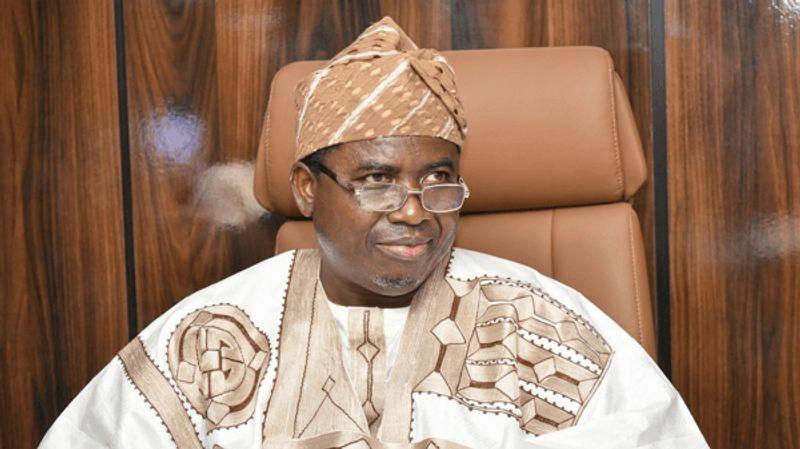
INEC Chairman, Professor Joash Amupitan, announced the timetable at a news conference in Abuja, formally setting the 2027 general election process in motion.
Breaking down the timeline, he stated that the Presidential and National Assembly elections will be conducted nationwide on February 20, 2027, followed by Governorship and State Assembly elections two weeks later, on March 6, 2027.
Speaking on the constitutional basis for the announcement, Amupitan said the decision aligns strictly with relevant provisions of the law.
“By virtue of the Constitution of the Federal Republic of Nigeria, 1999 as amended, the tenure of the President, the Vice-President, the Governors, and Deputy Governors of states of the Federation, except Anambra State, Bayasa State, Edo States, Ekiti States, Imo State, Ogi, Kondo, and National States, will expire on the 28th day of May, 2027,” he said.
He added that, “membership of the National and State Assemblies will stand dissolved on the 8th day of June, 2021.”
Citing constitutional timelines, the INEC Chairman explained: “Pursuant to Section 76(2), 116(2), 132(2), and 178(2) of the Constitution of the Federal Republic of Nigeria, 1999 as amended, elections to the said offices shall hold not earlier than 150 days, and not later than 30 days, before the expiration of the term of office of the holders.”
He stressed that the Commission’s action was fully backed by law.
“This action we are taking today is pursuant to the provisions of the Constitution of Nigeria, and in particular, Section 28, subsection 1 of the Electoral Act, 2022, which mandates the Commission to publish the notice of election not later than 360 days before the date appointed for the election,” he said.
Reaffirming the Commission’s independence, Amupitan stated: “Let me reiterate that the authority and power to publish the date of election is that of the Independent National Electoral Commission.”
He outlined the offices to be contested in the 2027 general elections, noting that, “The 2027 general election will hold nationwide for the following offices: President and Vice-President of the Federal Republic of Nigeria; Governors and Deputy Governors of the states of the Federation, except those states I had mentioned; members of the Senate; members of the House of Representatives; and members of the Houses of Assembly of states.”
Formally declaring the commencement of the electoral process, he said: “Therefore, in exercise of the powers conferred on the Commission by the Constitution of the Federal Republic of Nigeria, 1999 as amended, and the Electoral Act of 2022, and all other powers enabling it in that behalf, the Commission hereby sets in motion the electoral process for the 2027 general election, and fixes the date of the 2027 general election as follows: Presidential and National Assembly election will come on the 20th February, 2027; Governorship and State Houses of Assembly will be on the 6th March, 2027.”
According to him, “The detailed timetable and schedule of activities have been uploaded to the Commission’s website this morning, and have been circulated to registered political parties and relevant stakeholders.”
He further directed that, “All the 36 Resident Electoral Commissioners and that of the FCT are hereby directed to publish the notices in each constituency in respect of which an election is to be held.”
“These dates reflect our commitment to ensuring that our electoral processes are transparent, credible, and adhere to the provisions of our laws,” he added.
On the next steps in the process, Amupitan said: “In accordance with the approved timetable and schedule of activities, primaries will be conducted within the statutory period stipulated by law. Submissions of nomination forms by political parties will commence and close within the designated windows as provided in the schedule, which I will just release. Campaigns by political parties shall commence on the date specified by law and end 24 hours before the election.”
Addressing ongoing discussions about reforms, he also commented on the proposed amendments to the electoral framework currently before lawmakers.
“I must also take a moment to address the current Electoral Amendment Bill that is pending in the National Assembly. This Bill has sparked important discussions and concern among the various stakeholders in our democracy,” he said.
“We recognise the necessity of enhancing our electoral framework to ensure that it meets the ever-evolving needs of our society and reflects our aspiration for free, fair, and credible election.”
The announcement comes amid growing concerns over the delayed passage of the amended Electoral Act currently before the National Assembly. INEC had earlier indicated on February 4 that it had completed work on the election timetable and schedule of activities despite the delay.
The Commission also noted that while it had submitted its timetable to lawmakers, certain aspects of the schedule could be adjusted depending on when the amended Electoral Act is eventually passed.