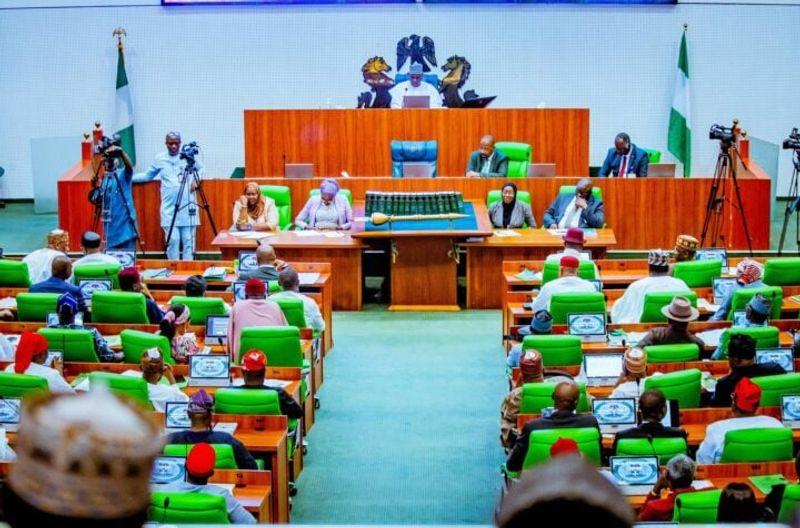
- The House of Representatives approved the second reading of the 2026 budget of N58.47 trillion, titled “The Budget of Consolidation, Renewed Resilience and Shared Prosperity”
- Sectoral allocations prioritised security (₦5.41 trillion), infrastructure (₦3.56 trillion), education (₦3.54 trillion), and health (₦2.48 trillion)
- The House enters a two-week recess to work on the budget before the final passage scheduled for 17 February 2026
The House of Representatives on Thursday approved the proposed 2026 budget of N58.47 trillion for the second reading, signalling a major step towards the federal government’s fiscal plans for the coming year.
The budget, titled “The Budget of Consolidation, Renewed Resilience and Shared Prosperity”, was presented to a joint session of the National Assembly by President Bola Tinubu on 19 December 2025. It is designed to strengthen macroeconomic stability, enhance security, and boost capital project allocations across the country.
Addressing his colleagues on the general principles of the Appropriation Bill, House Leader Prof. Julius Ihonvbere highlighted the challenges faced by the current administration, noting that President Tinubu assumed office during a difficult period. He explained that the ongoing economic reforms might involve short-term pains but would, in the long term, yield sustainable development and multi-layered prosperity.
Prof. Ihonvbere cited several indicators of economic improvement, including a projected 3.98 per cent growth rate for 2026, a decline in inflation to 14.45 per cent from approximately 25 per cent, rising revenues, growth in exports, and expanded foreign direct investment. He also emphasised the stability of the naira, now trading at about ₦1,400 to the US dollar, compared with over ₦1,800 previously, and praised the nation’s external reserves, which have reached a seven-year high of around $47 billion—enough to cover more than ten months of imports.
“Development that is not sustainable is not development at all,” Ihonvbere stated. “We have not printed a single naira since this government came into office. That fiscal discipline has helped stabilise the economy.”
The 2026 budget projects total revenue of ₦34.33 trillion and total expenditure of ₦58.18 trillion, resulting in a deficit of ₦23.85 trillion. Non-debt recurrent expenditure is pegged at ₦15.25 trillion, while capital expenditure rises to ₦26.08 trillion, reflecting a departure from past budgets where recurrent spending outweighed investment in development.
Sectoral allocations prioritise security and defence (₦5.41 trillion), infrastructure (₦3.56 trillion), education (₦3.54 trillion), and health (₦2.48 trillion). The budget assumptions include an oil benchmark of $64.85 per barrel and oil production of 1.84 million barrels per day.
With no contributions from lawmakers, Speaker Tajudeen Abbas called for a vote, and members overwhelmingly supported the second reading. The House has now entered a two-week recess to allow members to work on the budget before its final passage when the chamber resumes on 17 February 2026.