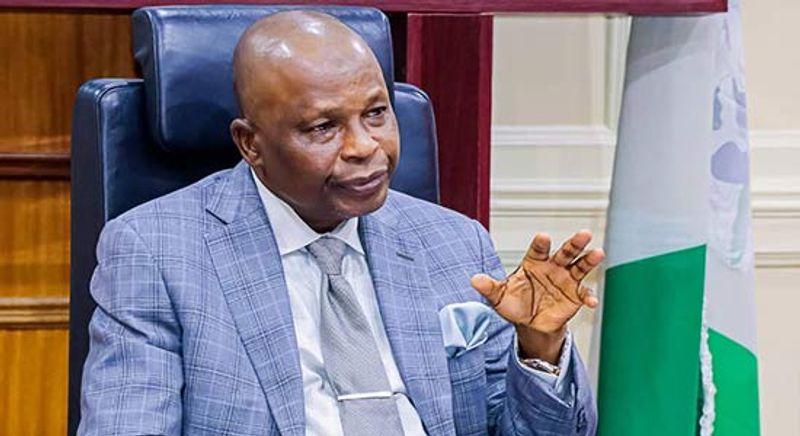
- The Attorney General of the Federation, Lateef Fagbemi, has threatened contempt charges against state governors for ignoring the Supreme Court's ruling on local government autonomy
- Fagbemi further criticised Anambra State’s Local Government Administration Bill 2024 for violating the Supreme Court’s ruling
- Fagbemi then warned state governors and attorneys-general that defying the Supreme Court's judgment on local government autonomy could lead to contempt charges and disciplinary actions
The Attorney General of the Federation and Minister of Justice, Prince Lateef Fagbemi (SAN), has issued a stern warning to state governors who continue to defy the Supreme Court's ruling on local government autonomy.
Fagbemi threatened to pursue contempt of court charges if the governors persist in bypassing the landmark judgment.
The Supreme Court’s decision, handed down on July 11, 2024, affirmed the financial autonomy of Nigeria's 774 local government areas, prohibiting governors from controlling the funds designated for local councils.
The ruling also mandated that the Accountant-General of the Federation directly transfer local government allocations to their respective accounts, declaring the withholding of funds by state governments unconstitutional.
Speaking at the 2024 annual conference of the National Association of Judiciary Correspondents in Abuja, Fagbemi stated that any defiance of the Supreme Court’s ruling would be treated seriously.
He pointed out that some states had already enacted laws contrary to the judgment, including the establishment of state-controlled local government accounts, which runs counter to the apex court's directive.
The minister referenced the ongoing challenges the Federal Government faces in implementing the judgment, citing "practical impediments." Despite this, he made it clear that the federal authorities would take legal action against any state violating the ruling.
Fagbemi highlighted that the Supreme Court ruling also prevented governors from dissolving democratically elected local government councils and replacing them with caretaker committees. These actions, he noted, were unconstitutional and undermined the principles of local government autonomy.
In particular, Fagbemi criticised recent legislative moves in Anambra State, where the House of Assembly passed the Local Government Administration Bill 2024. This bill mandates that all federal allocations to local governments be deposited into a “State Joint Local Government Account,” with a significant portion then diverted to a consolidated state account. Labour Party lawmakers in the assembly condemned this legislation, stating it violates the Supreme Court ruling.
Anambra Governor Chukwuma Soludo defended the bill, arguing that it ensured transparency and collaboration across government levels. However, Fagbemi rejected this justification, urging states not to "tread within the precincts of contempt of court."
The AGF also warned state attorneys-general to avoid actions that could attract disciplinary action from the Legal Practitioners’ Disciplinary Committee for professional misconduct.
He underscored that failing to uphold the constitution could lead to severe legal consequences, with implications for those complicit in aiding the defiance of the ruling.
Fagbemi invoked the Nigerian Constitution’s Section 1(2), which asserts that Nigeria must be governed in accordance with the Constitution, warning that attempts to undermine the law amounted to treason.
In his address, Fagbemi emphasised the importance of local government autonomy in empowering grassroots governance and improving transparency. He further cautioned local government chairmen not to misuse public funds, stating that any mismanagement would result in imprisonment.
The AGF also reiterated that local government officials must prioritise their constitutional duties, ensuring access to primary education, quality healthcare for pregnant women and infants, and social welfare for vulnerable groups.
He stressed that any actions outside the scope of their constitutional mandates, such as building airports, would not be tolerated.
With Supreme Court ruling, how much should LGs have received as FAAC revenue in H1 2024?
Meanwhile, TheRadar earlier reported the Supreme Court of Nigeria, on July 12, ruled that the 774 Local Governments Councils (LGs) be allowed to receive and manage their funds themselves, saying it was unconstitutional for state governors to hold funds allocated for LG administration.
Following the ruling, TheRadar outlined how much LGs should have earned in the first half of 2024.