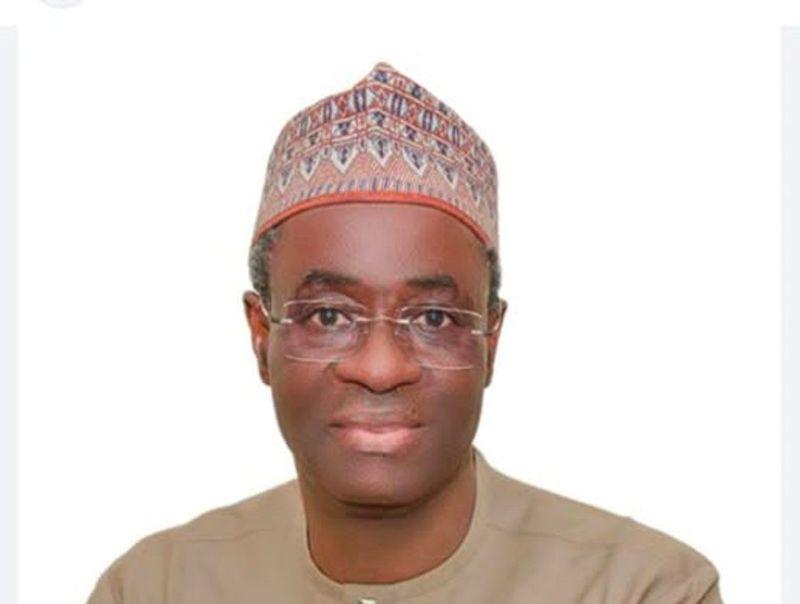
- The Director-General of the Budget Office, Tanimu Yakubu, disclosed that the Federal Government plans to share electricity subsidy costs with states and local governments
- President Tinubu orders subsidies to be made explicit, tracked, and legally enforceable
- Yakubu revealed that the 2026 Budget will focus on fewer, delivery-ready, and well-financed capital projects
The Federal Government has announced plans to stop bearing electricity subsidy costs alone, unveiling a framework that will distribute the burden among federal, state, and local governments beginning in 2026.
The Director-General of the Budget Office of the Federation, Tanimu Yakubu, disclosed this in Abuja on Monday, February 2, during a training and sensitisation workshop for ministries, departments, and agencies (MDAs) on the 2026 post-budget preparation process using the Government Integrated Financial Management Information System Budget Preparation Sub-System (GIFMIS-BPS).
Yakubu said President Bola Tinubu had ordered that electricity subsidies be made explicit, properly tracked, and fairly shared across the three tiers of government, warning that the current arrangement creates hidden liabilities and recurring instability in the power sector.
“If we want a stable power sector, we must pay for the choices we make,” he said. “When tariffs are held below cost, a gap is created. That gap is a subsidy. And a subsidy is a bill.”
He stressed that from 2026, the Federal Government would no longer treat electricity subsidies as an open-ended obligation, particularly where policy decisions and political benefits are jointly enjoyed across different levels of government.
“In 2026, we will stop pretending that this bill can be left to the Federal Government alone, especially where the policy choice or the political benefit is shared across tiers of government,” he added.
According to Yakubu, the President has directed that existing electricity sector laws be applied to ensure subsidy sharing is practical, transparent, and enforceable.
“This means subsidy costs must be explicit, tracked, and funded, so they do not return as arrears, liquidity crises, or hidden liabilities in the market,” he said. “If any tier of government chooses affordability interventions, the funding responsibilities must be clear, agreed, and enforceable.”
He explained that the move was not meant as a sanction but as a way to align incentives and improve efficiency in the power sector.
“This is not punishment. It is alignment,” Yakubu said. “When everyone carries a fair share of the cost, everyone also has an incentive to support cost-reflective efficiency, targeted protection for the vulnerable, and a power market that can actually deliver.”
He urged MDAs to clearly reflect subsidy-related costs in their 2026 budget submissions and avoid pushing unfunded liabilities into the electricity market.
Beyond power subsidies, Yakubu said the 2026 budget would depart from rollover budgeting and fragmented project lists, practices he noted had weakened execution and accountability in the past.
“The 2026 Budget corrects this. It is built as one coherent implementation framework,” he said, describing the new approach as a “single-train” framework designed to improve prioritisation, strengthen control, and reduce duplication.
“One plan. One pipeline. One execution logic,” he added. “It allows the government to know, at any point, what we have committed to deliver.”
Yakubu also revealed that President Tinubu had ordered a review of the Fiscal Responsibility framework to make fiscal rules more dynamic and enforceable rather than discarding them.
“Fiscal rules are the guardrails of the government,” he said. “Without guardrails, spending becomes impulsive, debt becomes casual, and the budget becomes a statement of intent rather than a tool of delivery.”
He noted that the review would introduce clearer fiscal anchors, defined escape clauses for genuine shocks, and a credible return-to-compliance path, alongside stronger reporting on contingent liabilities.
For MDAs, he said this would reshape how proposals are assessed, with a greater focus on sustainability and measurable outcomes.
“You will not only be asked what you want to spend. You will be asked how it fits the fiscal rules, how it affects sustainability, and what measurable results it will deliver,” Yakubu said.
He added that the 2026 budget would further shift emphasis from long project lists to properly financed and delivery-ready projects.
“A long list of projects is not a development strategy,” he said. “What citizens feel is delivery, completed roads, reliable power, functional schools, and working hospitals.”
Yakubu explained that capital projects submitted for funding must demonstrate readiness, sequencing, clear financing strategies, and defined timelines, noting that fewer but better-funded projects would yield greater impact.
He described GIFMIS-BPS as central to restoring budget credibility, calling it “the operating system for credible budgeting” because of its role in improving transparency and traceability from submission to execution.
“The success of the Renewed Hope Agenda is shared,” he said. “The Budget Office will coordinate and enforce standards. But delivery depends on every MDA. Nigerians expect results. And through a credible 2026 budget, we must deliver.”
The workshop aimed at aligning MDAs with the new budget expectations, strengthening compliance, and tightening the link between planning, financing, and performance in the 2026 fiscal year.
Federal Government plans major energy overhaul, aims for 20 hours of power by 2027
Meanwhile, TheRadar earlier reported that the Federal Government aimed for 20 hours of daily electricity by 2027, dependent on securing investment in oil and gas.
Olu Verheijen emphasised the need for investment to meet power goals amid Nigeria's national grid breakdowns.