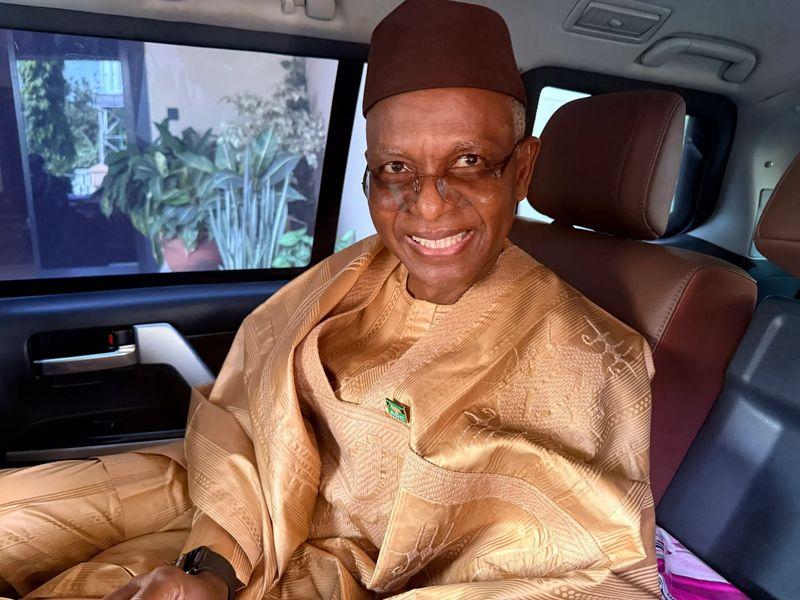
- Nasir El-Rufai was released by the Economic and Financial Crimes Commission after days of questioning, only to be immediately taken into custody by the Independent Corrupt Practices Commission
- The Federal Government filed a three-count charge at the Federal High Court in Abuja, alleging unlawful interception of communications belonging to National Security Adviser Nuhu Ribadu under the Cybercrimes Act and the Nigerian Communications Act
- The Department of State Services reportedly reopened its investigation into the 2019 disappearance of academic Abubakar Idris, as scrutiny around Mr El-Rufai intensified
Former Kaduna State governor, Nasir El-Rufai, has been released by Nigeria’s anti-graft agency, the Economic and Financial Crimes Commission (EFCC), only to be taken into custody shortly afterwards by operatives of the Independent Corrupt Practices Commission (ICPC).
Sources within the EFCC confirmed on Wednesday evening that Mr El-Rufai was freed after several days of questioning but was immediately re-arrested by the ICPC. “We have released him today, but he was shortly picked up after he was released by ICPC,” a source disclosed.
Efforts to obtain official confirmation from the ICPC proved unsuccessful, as calls to its spokesman, John Odey, went unanswered. Mr El-Rufai’s counsel, A. U. Mustapha (SAN), declined to provide clarification when contacted, stating only: “It is too late to talk. Let’s talk tomorrow.” Attempts to reach his media aide, Muyiwa Adeleye, were also unsuccessful.
Mr El-Rufai had presented himself at the EFCC headquarters in Abuja at around 10am on Monday and remained in custody until Wednesday. His detention followed the filing of criminal charges by the Federal Government at the Federal High Court in Abuja. The three-count charge, marked FHC/ABJ/CR/99/2026, centres on allegations of unlawful interception of the telephone communications of the National Security Adviser, Nuhu Ribadu.
The charges were brought under the Cybercrimes (Prohibition, Prevention, etc.) Amendment Act, 2024, and the Nigerian Communications Act, 2003. Prosecutors allege that during a 13 February 2026 appearance on Arise TV’s Prime Time programme in Abuja, Mr El-Rufai admitted that he and unnamed associates had unlawfully intercepted the NSA’s phone conversations and listened to them.
In one count, the government claims he acknowledged participating in the interception, contrary to Section 12(1) of the Cybercrimes Act. Another alleges that he knowingly associated with an individual responsible for the unlawful surveillance without reporting the matter to authorities. A third count accuses him and others still at large of deploying technical equipment in Abuja in 2026 to intercept communications, contrary to Section 131(2) of the Nigerian Communications Act.
During the televised interview, Mr El-Rufai claimed he had become aware of an alleged plan to arrest him after listening to a leaked conversation involving Mr Ribadu. “The government thinks that they are the only ones who listen to calls. But we also have our ways,” he said.
Meanwhile, Nigeria’s domestic intelligence agency, the Department of State Services (DSS), has reportedly reopened its investigation into the 2019 disappearance of Abubakar Idris, popularly known as Dadiyata. The academic, a lecturer at the Federal University Dutsinma in Katsina State, was declared missing on 1 August 2019 after gunmen allegedly abducted him from his residence in Kaduna. His whereabouts remain unknown.
Security sources indicated that the DSS recently seized Mr El-Rufai’s passport at Nnamdi Azikiwe International Airport in Abuja to prevent him travelling abroad. Investigators are also said to be examining social media posts made by his sons, Bello and Bashir, in the aftermath of Dadiyata’s disappearance, and may invite them for questioning as part of the renewed inquiry.
The unfolding developments mark a dramatic escalation in legal and political tensions surrounding the former governor, as multiple agencies pursue parallel investigations.