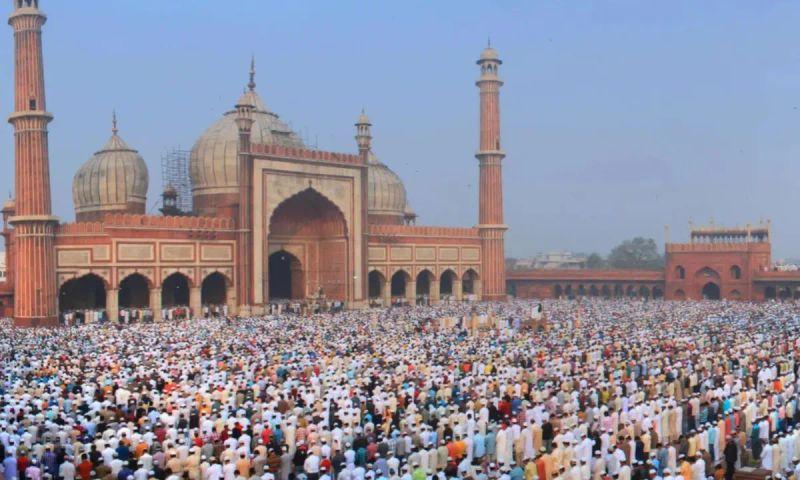
- A Sokoto cleric, Sheikh Musa Lukuwa, observed Eid al-Fitr on Thursday, contrary to the Sultan’s Friday declaration
- The Sultan of Sokoto had announced no moon sighting in Nigeria, extending Ramadan fasting by one day
- Lukuwa based his decision on reported sightings in neighbouring Niger Republic while arguing that proximity validates such sightings over distant Nigerian cities
A Sokoto-based Islamic scholar, Sheikh Musa Lukuwa, on Thursday, March 19, led his followers in observing Eid al-Fitr prayers, defying the directive of the Sultan of Sokoto, Muhammad Sa’ad Abubakar III, who had earlier declared Friday as the official day for Sallah.
Lukuwa conducted the two-unit Eid prayer at his Mabera mosque at about 9:10 a.m., just hours after the Sultan announced that the Shawwal crescent moon had not been sighted anywhere in Nigeria, thereby extending Ramadan by one more day.
In a message shared on social media, the cleric defended his decision, citing verified reports of moon sightings from neighbouring Niger Republic.
“Niger Republic is very close to us, about 100 kilometres away.
“If we accept reports from cities like Kano or even Lagos, which are farther away, there is no reason to reject confirmed sightings from a neighbouring country,” he said.
He emphasised that his action was not meant to challenge the Sultan’s authority but was guided by religious conviction.
“We usually follow the Sultan’s directive in starting and ending Ramadan. However, when it is clear that the moon has been sighted, we must act in accordance with the teachings of the Prophet, even if it differs from the Sultan’s declaration,” he stated.
Providing historical context, Lukuwa referenced the era of Abubakar Mahmoud Gummi, noting that Islamic scholars previously announced moon sightings independently before the responsibility was centralised under the Sultan to ensure unity among Muslims.
He maintained that the Sultan’s decision in this instance was incorrect.
According to reports, the cleric informed his followers around midnight and instructed them to gather for Eid prayers on Thursday morning.
In Nigeria, the Sultan of Sokoto, who also serves as President-General of the Nigerian Supreme Council for Islamic Affairs, remains the recognised authority for declaring the beginning and end of Ramadan based on verified moon sightings nationwide. His pronouncements are widely observed to promote unity among Muslims.
However, disagreements over moon sightings, particularly when reports originate from neighbouring countries, have occasionally resulted in differing observances among clerics and communities, especially in northern Nigeria.
This is not the first time Lukuwa and his followers have taken a stance contrary to the Sultan’s declaration, highlighting an ongoing debate within Islamic jurisprudence over whether moon sightings beyond national borders should be accepted.