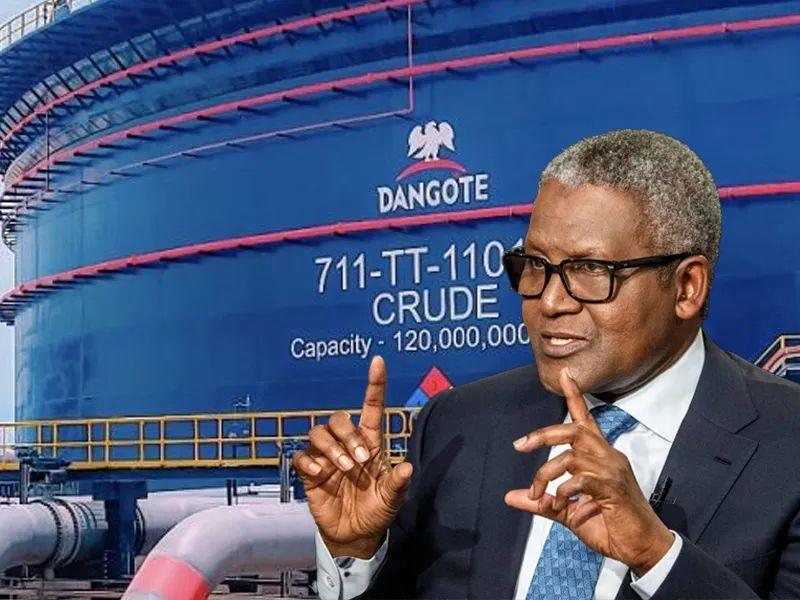
- Dangote rejected NNPC’s request to increase its 7.25 per cent stake in the refinery
- Petrol supply from the Dangote Refinery rose to 3.18 billion litres in Q1 2026
- Dangote disclosed plans to allow broader Nigerian ownership through a future public offering
The President of Aliko Dangote has revealed that the Dangote Group rejected attempts by the Nigerian National Petroleum Company Limited to increase its stake in the Dangote Petroleum Refinery, insisting that the company wants more Nigerians to participate in the refinery through future public ownership.
Dangote disclosed this during an interview with Nicolai Tangen, where he explained that the state-owned oil company currently holds a 7.25 per cent stake in the $20bn Lekki-based refinery.
According to the billionaire industrialist, the decision to reject further acquisition requests from the Nigerian National Petroleum Company Limited was driven by plans to eventually list the refinery publicly and broaden ownership among Nigerians.
“The national oil company already owns 7.25 per cent, and they are trying to buy more. We are the ones that said no; we want to now spread it and have everybody be part of it,” Dangote said during the interview.
The refinery, regarded as Africa’s largest single-train refinery, has continued to expand its footprint in Nigeria’s downstream petroleum sector. Findings showed that petrol supply from the facility surged to 3.18 billion litres in the first quarter of 2026, while fuel imports dropped sharply to 965.52 million litres within the same period.
Industry data further indicated that the average domestic ex-depot petrol price from the refinery between January and March 2026 stood at approximately ₦1,000 per litre. This meant the refinery supplied more than ₦3.2tn worth of petrol into the domestic market during the review period.
The refinery’s growing export performance has also reportedly been boosted by tensions between the United States and Iran, which disrupted segments of the global oil market and created fresh opportunities for refined petroleum exports.
The NNPC initially agreed to acquire a 20 per cent stake in the refinery in 2021 for $1bn, with an option to purchase the remaining 12.75 per cent by June 2024. However, the deal was later scaled back after the national oil company failed to complete the balance payment.
Dangote had previously clarified in 2024 that the NNPC ultimately retained only 7.2 per cent ownership in the refinery, contrary to public assumptions that it held a full 20 per cent stake.
During the latest interview, Dangote also announced plans to guarantee dollar-denominated dividends to investors across the group’s businesses, including cement, fertiliser, petrochemicals and refining operations.
He explained that the group’s strong export earnings would support the move, adding that approximately 80 per cent of future revenues are expected to be generated in foreign currency.
Dangote also reflected on the sacrifices made to complete the refinery project, revealing that he sold luxury properties in both the United States and the United Kingdom to focus entirely on building industrial capacity in Nigeria.
The businessman credited several financial institutions, including Afreximbank, Africa Finance Corporation, Zenith Bank, Access Bank and UBA, for supporting the refinery project after naira devaluation affected initial funding plans.
He added that the group’s business strategy remains focused on reducing Nigeria’s dependence on imports through backward integration and local production.