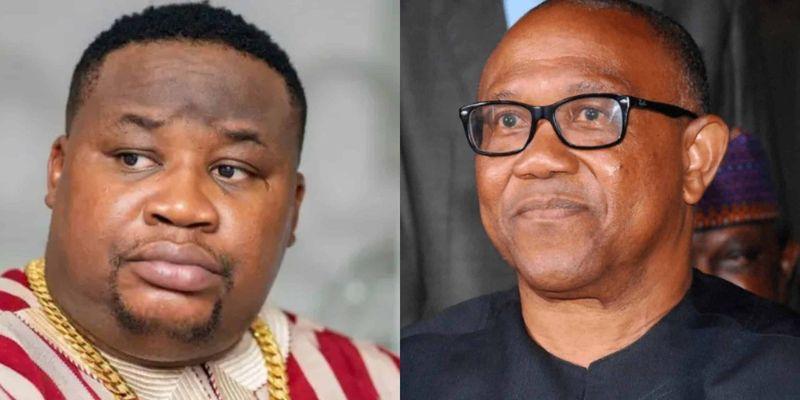
- Cubana Chief Priest, formerly a supporter of Peter Obi, disclosed plans to oppose him in the 2027 elections
- He defended his past EFCC interactions as a mark of success and dismissed criticism of his political realignment
- The announcement reignited discussions on celebrity influence, regional dynamics, and evolving alliances in Nigerian politics ahead of the next presidential race
Nigerian celebrity socialite and businessman, Pascal Okechukwu, popularly known as Cubana Chief Priest, has disclosed plans to oppose former Labour Party presidential candidate Peter Obi in the 2027 elections.
The revelation came during a tense exchange with followers on his Instagram account, where questions were raised about his recent political realignment and involvement with the pro-Tinubu group, the City Boy Movement. Cubana Chief Priest, who actively supported Obi during the 2023 polls, confirmed his intention to work against him in the next election.
“Yes ooo hope say no be crime cuz I worked for Obi last election even as special adviser to an APC governor,” he wrote in response to a follower.
The statement sparked backlash on social media, with critics pointing to his past interactions with the Economic and Financial Crimes Commission (EFCC). Some suggested that aligning with the current administration would not necessarily shield him from potential scrutiny.
Cubana Chief Priest, however, dismissed the criticism, framing visits to the anti-graft agency as a badge of honour. “If you never go EFCC for Naija you never make am,” he said, adding a defiant tone to the conversation.
The discussion later touched on the South-East region and the impact of regional support during the 2023 election. While some commentators argued that stronger backing from influential figures might have improved Obi’s performance, Cubana Chief Priest reacted sharply. He urged critics to support whoever they wish but questioned what such sentiments had concretely contributed to the development of the South-East.
His remarks have reignited debates about celebrity involvement in Nigerian politics, particularly regarding the influence of high-profile figures on voter behaviour and regional dynamics.
Cubana Chief Priest’s shift underscores the complex alliances forming ahead of the 2027 presidential election, highlighting the interplay between celebrity influence, political loyalty, and regional interests in Nigeria’s evolving political landscape.
This development adds to a growing narrative of high-profile defections and strategic repositioning as politicians and influencers position themselves for the upcoming election cycle.