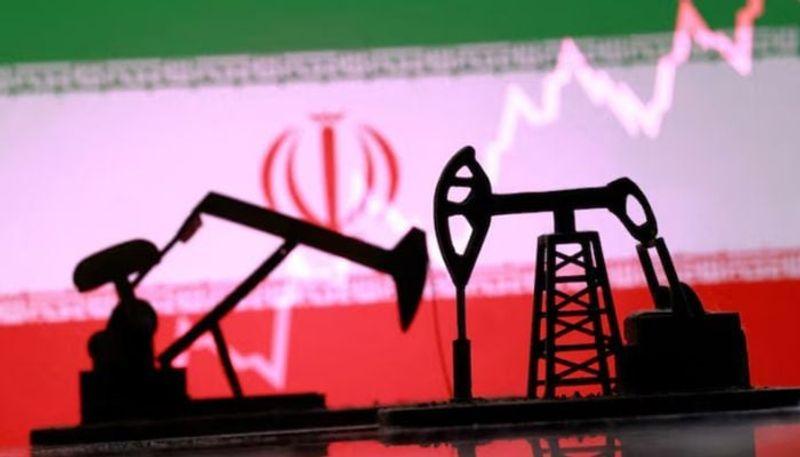
- Global crude oil prices rose sharply by 5.98% to $108.3 per barrel amid escalating tensions between the US and Iran
- Iran rejected the US 15-point peace proposal, calling it one-sided and biased towards US and Israeli interests
- Tehran maintained it is still open to diplomacy but sees no realistic framework for negotiations at present
Global oil prices surged again on Thursday, March 26, climbing to $108.3 per barrel, as tensions deepened between the United States and Iran following Tehran’s rejection of Washington’s proposed 15-point peace plan.
The spike, representing a 5.98 percent increase, reflects growing uncertainty in the international energy market as diplomatic efforts to end the ongoing US-Israel war with Iran continue to stall.
Iranian officials criticised the proposal, describing it as one-sided and heavily skewed in favour of the United States and Israel.
Despite the rejection, Tehran indicated it has not completely ruled out diplomacy.
“The price had dropped from $103 to $98 per barrel on Wednesday after the US President Donald Trump disclosed that America was in talks with Iran to end the crisis which has had a significant impact on energy prices across the globe.”
However, optimism quickly faded after Iran pushed back against the plan.
A senior Iranian official, speaking to Reuters, noted that although diplomacy remains an option, there is currently no realistic framework for meaningful negotiations.
Tehran also reaffirmed its stance on controlling the Strait of Hormuz, a critical global oil transit route, insisting on its sovereign right over the waterway.
An official quoted by Iran’s Islamic Revolutionary Guard Corps-affiliated Tasnim News Agency stated that Iran’s control of the strait was its “natural and legal right”.
The US proposal reportedly included demands for Iran to dismantle its nuclear programme, limit its missile capabilities, relinquish control over the Strait of Hormuz, and end support for regional proxy groups.
But Iranian authorities dismissed the plan as insufficient and biased.
According to one official, the proposal “lacked the minimum requirements for success” and primarily served US and Israeli interests.
He added that if realism prevailed in Washington, “a path forward may still be found” to resolve the crisis.
Meanwhile, US President Donald Trump intensified pressure on Tehran, urging Iranian leaders to take negotiations seriously.
“They better get serious soon, before it is too late, because once that happens, there is no turning back, and it won’t be pretty,” Trump warned in a Truth Social post.
He also claimed that Iran was “begging” for a deal, suggesting that Iranian officials were reluctant to publicly acknowledge negotiations out of fear of domestic backlash.
“They figure they’ll be killed by their own people,” Trump said.
Despite describing Iranians as “great negotiators,” Trump expressed uncertainty about reaching an agreement, noting that it was up to Iran to convince him to halt military actions.
He added that the United States still had additional targets “to hit before we leave.”
In a separate development, Iran reportedly rejected key figures involved in earlier negotiations, including US envoy Steve Witkoff and Jared Kushner, citing a lack of trust.
Iranian officials instead indicated a preference for engaging with Vice President J.D. Vance, whom they view as more sceptical of US military intervention in the Middle East.
“With the previous negotiating team, there’s no chance,” a diplomatic source said.
“The Iranian side regards the request for negotiations as another round of deception for the US-Israeli regime to find out a loophole to aggravate the strikes again.”
The source added, “If the negotiations are going to have any outcome, JD Vance should join. With Witkoff and Kushner, nothing will come out of it. We have seen that in the past.”
Trump, however, dismissed suggestions that he was eager for a deal.
“I’m not desperate,” he said, insisting that Iran was being “beat to shit” and was “begging” for negotiations.
On the military front, Israel announced it had killed Iranian naval commander Alireza Tangsiri, who was reportedly overseeing efforts to block the Strait of Hormuz.
Israeli Defence Minister Israel Katz said Tangsiri “was directly responsible” for the attempted closure of the strait.
Prime Minister Benjamin Netanyahu described the operation as “yet another example” of US-Israel cooperation, adding that Israel would continue to “forcefully strike” targets across Iran.
As tensions escalate and diplomacy falters, the global oil market remains on edge, with potential implications for fuel prices worldwide, including Nigeria, where petrol costs have already surged sharply.
“In Nigeria, petrol prices remain high with government-owned retail outfit, NNPC Limited selling at N1,261 per litre in Abuja and major marketers dispensing at N1,371 per litre.
“Before the crisis began in late February, NNPC sold at N860 per litre while major marketers dispensed at N880 per litre.”