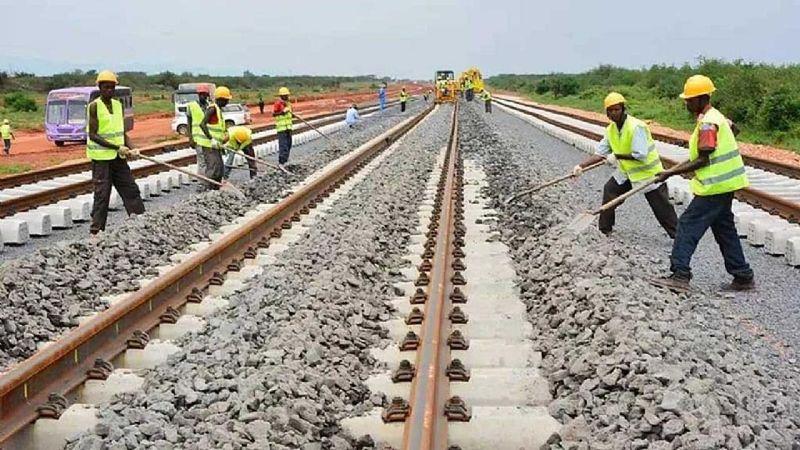
- Construction on the $1.96 billion rail project between Nigeria and Niger continues despite compensation disputes for displaced individuals
- Thousands of displaced persons remain unpaid as part of the Kano-Maradi rail project, with some farmers accusing contractors of underpayment
- While compensation issues persist, locals remain hopeful the rail project will bring economic growth and improved transportation to affected areas
Construction on the $1.96 billion Kano-Maradi rail project has resumed, despite challenges arising from the strained diplomatic ties between Nigeria and Niger.
The rail project, set to connect Kano, Katsina, and Jigawa states in Nigeria with Maradi in Niger, is progressing, with work already completed in some areas. However, it has been marred by unresolved compensation issues for thousands of displaced persons.
The project, initially approved by Nigeria’s Federal Executive Council in September 2020, is largely financed by the African Development Bank (AfDB) and is expected to be completed by 2026.
The railway line will pass through 122 communities in Nigeria and several in Niger, but thousands of people displaced by the project are yet to be fully compensated.
Of the estimated 19,284 displaced individuals, 16,032 have been compensated, but over 3,200 remain unpaid, with some expressing dissatisfaction with the amounts received.
Farmers from Kano, Katsina, and Jigawa states have voiced concerns about the compensation process, citing delays and inadequate payments.
Some have even accused the project’s contractors of underpaying them and mishandling the valuation of their assets.
Despite this, many residents remain optimistic about the project’s potential to bring economic benefits, particularly in terms of job creation and improved transportation.
The project’s completion is seen as a critical infrastructure development that will boost trade, facilitate transportation, and create new opportunities for the communities along its route.
However, the compensation disputes have raised concerns about the fair treatment of displaced individuals, with the final audit report recommending a review of the compensation process to align with AfDB policies.
FG begins free 40-day CNG bus service for Abuja residents
Meanwhile, TheRadar reported that in a bid to alleviate the financial burden on commuters in the nation’s capital, the Federal Government has launched a free Compressed Natural Gas (CNG) bus service in Abuja.
The service, which began operations on December 2, 2024, is designed to ease transportation costs for residents in the city.
The announcement was made by the Presidential CNG Initiative, which shared a video on its X (formerly Twitter) page, showing the buses in operation. The CNG buses will run along major routes connecting suburban areas to key locations in Abuja, including routes from Mararaba to Eagle Square and the Berger bus stop.