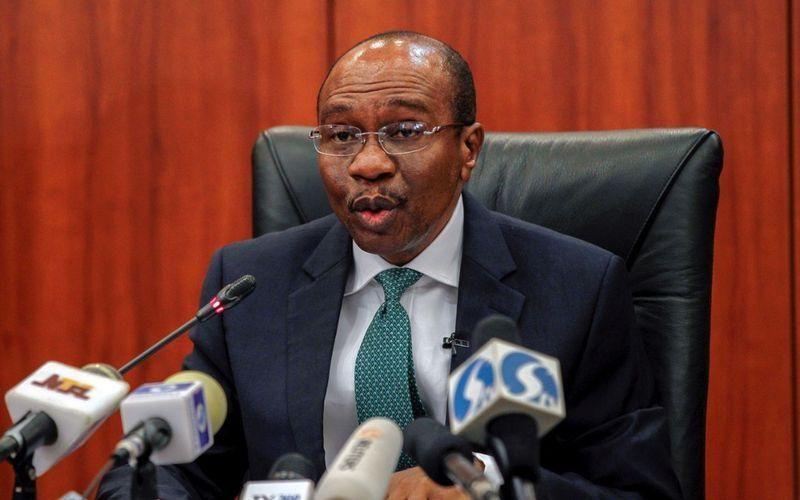
- The Supreme Court gave Nigeria's anti-corruption fight a rare "finish line" moment
- Emefiele's forfeited assets, including houses, dollars, and share certificates are now permanently the Federal Government's, with zero appeal room left
- Asset forfeiture doesn't equal jail time, so the real accountability question is still open
7 houses, one $2 million-plus stash, and zero mercy.
That's the scorecard after the Supreme Court finally slammed the gavel on Godwin Emefiele, the man who used to control every naira in your pocket.
This isn't just about one ex-CBN governor losing his houses. It's a stress test for whether Nigeria's anti-corruption machine actually works or whether it just looks like it works until the cameras turn off.
We're about to break down what happened, why it took years to get here, and the one part of this story nobody is talking about.
Godwin Emefiele ran the Central Bank of Nigeria from 2014 to 2023, the same man behind the naira redesign wahala that had all of us queuing at ATMs.
After he left office, the EFCC came knocking with a case that landed at the Federal High Court in Lagos. In November 2024, the court ordered the final forfeiture of seven properties, millions of dollars, and share certificates linked to him, ruling they were reasonably suspected to be proceeds of unlawful activity.
Then, in 2025, Emefiele's legal team pushed back at the Court of Appeal and won. The appellate court said some parties claiming ownership of the properties weren't given fair hearing, and sent the whole case back to square one for a retrial.
That's when EFCC did what EFCC does, they ran straight to the Supreme Court.
What the Supreme Court said next is the part that should worry every "big man" in Nigeria currently sleeping well at night.
The final verdict
On July 17, 2026, a five-member panel of the Supreme Court, led by a Justice, unanimously set aside the Court of Appeal's decision and restored the original forfeiture order.
The properties, the millions of dollars, the share certificates, all of it now belongs to the Federal Government.
The court reportedly held that Emefiele failed to prove the assets were acquired through legitimate means.
That single sentence is doing a lot of work. Because in Nigeria, "prove your money is clean" has historically been the hardest sentence to enforce against anybody with real power.
Why this case is bigger than one man's houses
Nigeria doesn't have a shortage of corruption cases. What Nigeria has always had a shortage of is corruption cases that actually reach the finish line.
Think about it. How many EFCC "arrests" have you seen trend on Twitter/X, only for the story to quietly disappear six months later? How many "financial crime" headlines end in silence instead of sentencing?
This case is different because it didn't just start, it finished. All the way to the apex court.
3 things that made this case stick
- It went through every single layer: High Court → Court of Appeal → Supreme Court — and still landed on forfeiture.
- It was asset-focused, not just headline-focused: The EFCC didn't just chase a conviction; they went after the actual money and property.
- It happened to someone who used to be the system: The man who literally controlled Nigeria's money supply.
That last point matters the most. When the person who used to sign off on monetary policy for over 200 million Nigerians ends up losing his properties to that same government, it sends a message down the food chain or at least, that's the theory.
Does this change anything for everyday Nigerians?
Asset forfeiture is not the same thing as jail time. Emefiele still has other criminal charges pending in courts in Abuja and Lagos, separate from this forfeiture matter.
So while social media is celebrating "Emefiele don loss him property," the man himself hasn't necessarily been convicted and sentenced for a crime. Forfeiture proceedings are about the assets, not automatically about a criminal conviction.
That distinction matters because it's the exact gap Nigeria's elite have used for decades: lose the property, keep your freedom, wait for the news cycle to move on, resurface in three years as a "respected elder statesman."
What this reveals about Nigeria's anti-corruption fight
The Emefiele case proves three things about where Nigeria's corruption fight actually stands right now:
1. The institutions can work when there's pressure and time.
This case dragged from 2024 to 2026. That's not "swift justice." That's a marathon most ordinary Nigerians can't afford to run, but the system eventually delivered a result.
2. Asset recovery is becoming the EFCC's real weapon.
Convictions are hard to secure in Nigerian courts. But going after the money and property directly? That's proving more effective and harder to dodge with legal gymnastics.
3. High office is no longer automatic immunity.
An ex-CBN governor lost his assets, but how many mid-level government contractors, local government chairmen, and ministry officials with far less scrutiny are sitting on billions right now with zero forfeiture proceedings in sight?
The Supreme Court closing this case is a real win. It shows Nigeria's courts can follow a corruption case all the way to a final, unappealable verdict.
But if we're being real about "beyond the headlines," the true test isn't one high-profile forfeiture. It's whether the EFCC brings this same energy to the thousands of smaller corruption cases that never make it past a post.
Until that happens, cases like this will keep trending for a weekend and then fade, just like every other one before it.
Malami challenges EFCC in Court over interim forfeiture of assets, denies wrongdoing
Meanwhile, TheRadar earlier reported that former Attorney General of the Federation, Abubakar Malami, mounted a robust legal challenge against the Economic and Financial Crimes Commission (EFCC) over the interim forfeiture of multiple properties, insisting that the assets were lawfully acquired and not proceeds of crime.
Malami argued that the commission failed to present any prima facie evidence directly connecting the properties to criminal activity.
The court had been set to decide whether the properties would be permanently forfeited or returned.